Iron Supplements Guide 2026: Evidence-Based & Ranked
Learn who needs iron supplements, what bloodwork to get, and which forms won’t wreck your stomach. Covers dosing science most doctors skip.
- Never supplement iron without bloodwork first — your body has no way to excrete excess iron
- Iron bisglycinate (Ferrochel) achieves equivalent repletion at half the dose of ferrous sulfate, with far fewer side effects
- Every-other-day dosing absorbs ~40% more iron per dose than daily dosing (Stoffel et al., Lancet Haematology)
- Always take iron with vitamin C and away from calcium, coffee, and tea
Iron supplements should never be taken without bloodwork confirming a deficiency — your body has no regulated mechanism to excrete excess iron, so what comes in stays in unless you bleed. Unchecked iron overload damages the liver, heart, and pancreas, and hereditary hemochromatosis affects roughly 1 in 200 people of Northern European descent.
Here’s the thing about iron that makes it fundamentally different from, say, zinc or magnesium: your body has no regulated mechanism to excrete excess iron. What comes in, stays in — unless you bleed. This means iron is one of the very few supplements that can be genuinely harmful if you take it without a legitimate need. Iron overload damages the liver, heart, and pancreas, and hereditary hemochromatosis (a genetic condition causing iron accumulation) affects roughly 1 in 200 people of Northern European descent.
This guide covers who actually needs iron, what to test and what the numbers mean, which forms work (and which will wreck your stomach), and a dosing trick backed by a Lancet study that most doctors still aren’t using.
Who Actually Needs Iron Supplementation?
Iron deficiency is the most common nutritional deficiency worldwide, affecting an estimated 1.6 billion people according to the WHO. But it isn’t evenly distributed. Certain groups are far more likely to be running low:
- Menstruating women. This is the single largest at-risk group. Menstrual blood loss accounts for significant iron depletion each cycle, and studies estimate that up to 33% of menstruating women in developed countries have iron deficiency, with rates climbing higher among those with heavy periods. A 2014 study in PLOS ONE (Percy et al.) found that nearly 20% of menstruating women in the UK had ferritin below 15 ng/mL — the threshold for outright depletion. Strong evidence
- Pregnant women. Iron requirements roughly double during pregnancy (from 18mg to 27mg daily) to support expanded blood volume and fetal development. The American College of Obstetricians and Gynecologists recommends routine iron supplementation during pregnancy for this reason.
- Vegetarians and vegans. This one catches people off guard. Plant foods contain only non-heme iron, which is absorbed at a rate of 2–20% compared to 15–35% for heme iron from animal sources. That’s not a small difference — it’s potentially an order of magnitude. Phytates in grains and legumes further reduce absorption. The NIH sets the RDA for vegetarians at 1.8x the standard recommendation to account for this gap.
- Endurance athletes. Iron losses in athletes come from multiple angles: foot-strike hemolysis (red blood cells literally rupturing from the impact of running), iron lost through sweat (roughly 0.3–0.4mg per liter), GI micro-bleeding from intense exercise, and dilution from expanded plasma volume. A 2019 review in Nutrients (Sim et al.) found that iron deficiency without anemia affected up to 35% of female athletes and 11% of male athletes. Strong evidence
- Frequent blood donors. Each standard whole blood donation removes approximately 200–250mg of iron. Donating every 8 weeks (the typical minimum interval) can deplete stores faster than diet alone can replenish them, particularly in women. If you donate regularly and feel progressively more fatigued, get your ferritin checked.
If you don’t fall into any of these categories — particularly if you’re a non-menstruating adult who eats red meat regularly — you almost certainly don’t need iron supplementation, and taking it “just in case” carries real risk.
The Tests That Actually Matter
Most people who’ve had bloodwork done have seen their hemoglobin level. If hemoglobin is normal, they assume their iron is fine. This is wrong. You can have entirely normal hemoglobin while running on empty iron stores — a condition called iron deficiency without anemia. Your body prioritizes keeping hemoglobin stable for oxygen transport, so it raids storage iron first. By the time hemoglobin drops, you’re already deeply depleted.
The marker you need is ferritin. Ferritin reflects your body’s iron stores, not just what’s circulating right now. Here’s how to read it:
- Below 15 ng/mL: Depleted stores. You are iron deficient, full stop.
- 15–30 ng/mL: Low stores. Functional deficiency likely, especially if you have symptoms (fatigue, brain fog, cold hands and feet, breathlessness on exertion). Many hematologists consider this range deficient even if the lab report marks it “normal.”
- 30–100 ng/mL: Adequate. This is where most people feel their best. Optimal is generally considered 40–100 ng/mL for energy, cognition, and exercise performance.
- Above 150 ng/mL: Worth investigating — especially if unexplained. Could indicate hemochromatosis, inflammation (ferritin rises as an acute-phase reactant), or excessive supplementation.
One important caveat: ferritin is an acute-phase protein, meaning it spikes during infection, inflammation, or illness — even when iron stores are actually low. If you’re sick or dealing with chronic inflammation, ask your doctor to also check transferrin saturation and total iron-binding capacity (TIBC) for a clearer picture. For help understanding what’s actually listed on your supplement bottles, see our guide to reading supplement labels.
Iron Forms: Why Your Choice Matters More Than You Think
Not all iron supplements are created equal, and the form you choose will dramatically affect both how much iron you absorb and how miserable you feel taking it.
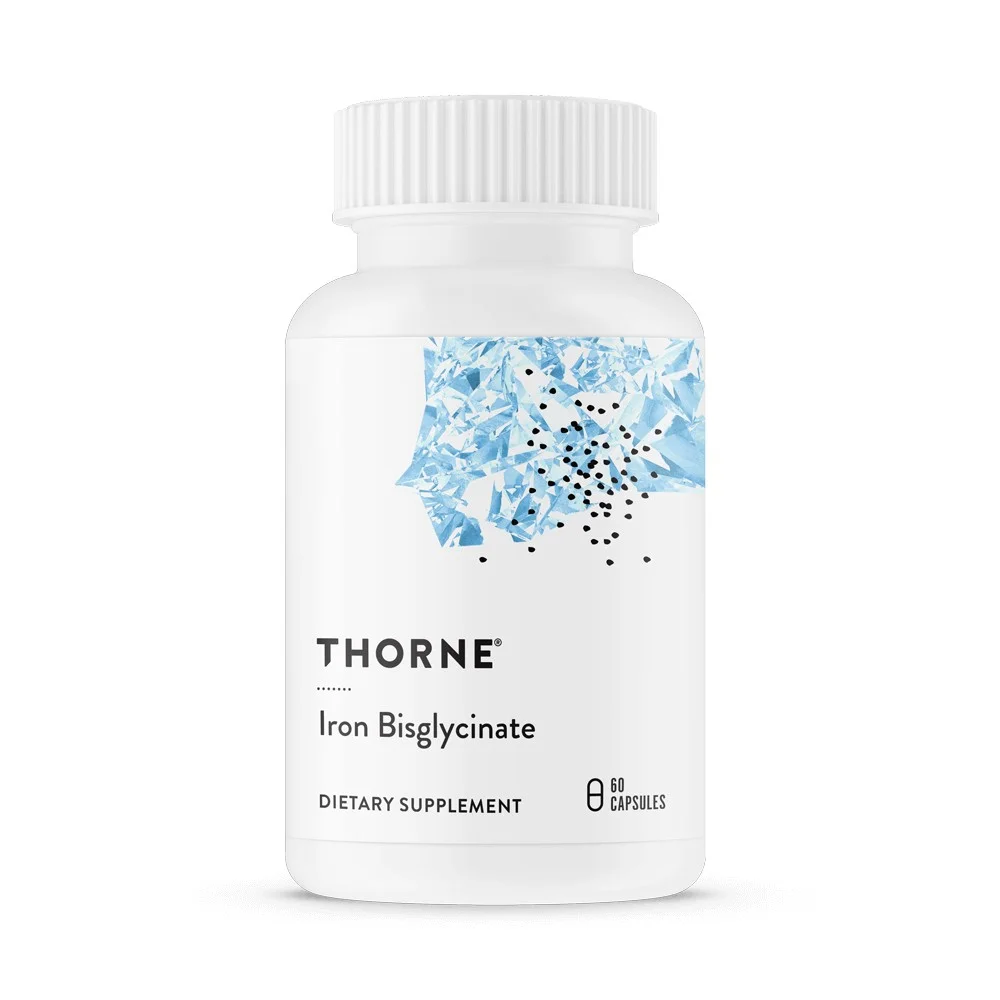
- Iron bisglycinate (Ferrochel®) — The gold standard. This chelated form wraps elemental iron in two glycine molecules, protecting it from interactions with other nutrients and food components in the gut. A 2014 study in Current Therapeutic Research (Name et al.) showed iron bisglycinate achieved equivalent iron repletion to ferrous sulfate at half the dose, with significantly fewer GI side effects. Strong evidence If you can find it, buy it. The branded form Ferrochel® has the most clinical data behind it.
- Ferrous sulfate — The classic, cheap, widely prescribed form. It works — ferrous sulfate has decades of clinical use behind it. The problem is tolerability. Studies report GI side effects (nausea, constipation, cramping, dark stools) in 30–40% of people. This is the supplement that gives iron its terrible reputation for stomach distress. If cost is the primary concern, it’s fine. But a supplement you can’t tolerate is a supplement you won’t take.
- Ferrous fumarate — Middle ground. Slightly better tolerated than sulfate in some people, similar absorption. Contains a higher percentage of elemental iron per milligram (33% vs 20% for sulfate), so the pills tend to be smaller.
- Ferrous gluconate — Lower elemental iron content per tablet but generally gentler. Often used when people can’t tolerate sulfate or fumarate.
- Carbonyl iron — Highly purified elemental iron particles that dissolve slowly in stomach acid. The gradual release makes it very well-tolerated and reduces the risk of accidental toxicity (particularly important in households with children). Absorption is somewhat lower than ferrous salts, so it’s better suited for maintenance than aggressive repletion.
- Slow-release formulations — These are marketed as “gentle” iron, and they are easier on the stomach. The trade-off? They release iron further down the intestinal tract, past the primary absorption site in the duodenum, resulting in significantly lower bioavailability. You feel better taking them, but you absorb less. For mild deficiency, this may be acceptable. For serious repletion, it’s not ideal.
The Every-Other-Day Dosing Breakthrough
This might be the most practically useful piece of information in this guide, and it comes from a study most doctors haven’t read yet.
The mechanism involves hepcidin, the master hormone regulating iron absorption. When you take an iron dose, hepcidin levels spike within 6–8 hours and remain elevated for about 24 hours. While hepcidin is elevated, your gut actively blocks iron absorption. So that second daily dose? Much of it passes straight through.
By spacing doses 48 hours apart, hepcidin returns to baseline between doses, allowing each dose to be absorbed more efficiently.
Practical application: Instead of taking 60mg of elemental iron every day and feeling terrible, take it Monday, Wednesday, and Friday. You absorb more iron per dose, experience fewer side effects, and — counterintuitively — may replete your stores just as fast. This is especially useful during the repletion phase when doses are higher. For more on optimizing when you take each supplement in your stack, see our supplement timing guide.
Absorption Boosters and Blockers
Iron absorption is remarkably sensitive to what you eat and drink around the time you take it. Getting this right can double your effective absorption; getting it wrong can cut it by 60% or more.
Take WITH:
- Vitamin C — The single most effective absorption enhancer. Vitamin C reduces ferric iron (Fe3+) to ferrous iron (Fe2+), the form your gut can actually absorb. A classic study by Hallberg et al. (1989, American Journal of Clinical Nutrition) showed that 100mg of vitamin C taken alongside non-heme iron increased absorption by 4.1x. A glass of orange juice or a 250mg vitamin C tablet with your iron dose is the simplest high-impact move you can make.
- Meat, fish, or poultry — Animal protein contains a “meat factor” that enhances non-heme iron absorption through mechanisms not fully understood. If you eat animal products, taking your iron supplement with a meal that includes some protein helps.
AVOID within 2 hours:
- Calcium and dairy — Calcium inhibits both heme and non-heme iron absorption. This is one of the few nutrient interactions that affects both forms. A 200mg calcium dose can reduce iron absorption by up to 50–60% (Hallberg et al., 1991, American Journal of Clinical Nutrition).
- Coffee and tea — Tannins and polyphenols bind iron in the gut, forming insoluble complexes. A single cup of tea with a meal can reduce non-heme iron absorption by 60–70%. Coffee is slightly less aggressive but still significant at 40% reduction. Morning coffee lovers: take your iron at lunch or dinner instead.
- Zinc supplements — At supplemental doses (not food doses), zinc and iron compete for the same absorption transporters. If you take both, space them by at least 2 hours. See our supplement timing guide for a full scheduling framework.
- Antacids and PPIs — These reduce stomach acid, which is required to solubilize iron salts. Chronic PPI use is an underrecognized cause of iron deficiency.
Dosing Guidelines
Iron dosing depends entirely on why you’re taking it. This is not a mineral where “more is better” logic applies.
- Maintenance (preventing deficiency): 18–27mg elemental iron daily — appropriate for menstruating women, vegetarians, or others at ongoing risk. This covers the RDA (18mg for premenopausal women, 8mg for men and postmenopausal women, 27mg during pregnancy) with some margin for imperfect absorption.
- Correcting deficiency: 60–120mg elemental iron, taken every other day (per the Stoffel protocol above), for 8–12 weeks. This should be done under medical supervision with follow-up ferritin testing to confirm repletion and avoid overshoot.
- Upper limit: The NIH Tolerable Upper Intake Level for iron is 45mg/day for adults. Therapeutic doses above this are appropriate only under clinical guidance.
When to Worry: Signs of Iron Overload
Because iron accumulates without a natural excretion pathway, supplementing when you don’t need it creates a slow-building problem. Early symptoms of iron overload include:
- Joint pain (especially in the knuckles and first two fingers)
- Chronic fatigue that worsens over time
- Abdominal pain
- Unexplained weight loss
- Bronze or gray skin discoloration
Long-term iron overload damages the liver (cirrhosis), heart (cardiomyopathy), and pancreas (diabetes). This is precisely why the “get tested first” rule exists for iron and essentially no other common supplement. It isn’t paternalism — it’s biochemistry.
Iron and Your Multivitamin
Most standard multivitamins include 18mg of iron. If you’re a man or postmenopausal woman with adequate iron stores, this is unnecessary and potentially counterproductive. This is one reason many high-quality multivitamins come in “iron-free” formulations — and it’s worth seeking those out if you don’t have a documented need. Our multivitamin guide covers how to choose the right formulation for your situation. And if you’re thinking about where iron fits in a broader supplement routine, our stack-building guide walks through prioritization.
How to Get Ferritin Tested (Without Fighting Your Doctor)
Getting a ferritin test is the single most important step before touching an iron supplement, yet most routine bloodwork doesn't include it. A standard complete blood count (CBC) measures hemoglobin and hematocrit — markers that only flag iron problems after your stores are already deeply depleted. Ferritin, the marker that actually reflects your iron reserves, requires a separate order.
Ask for It by Name
At your next GP visit, don't say "check my iron." That typically gets you a CBC and maybe a serum iron level — neither of which tells you what you need to know. Say this instead:
That's it. Most providers will add it without pushback — it's a routine, inexpensive blood draw. If your doctor pushes back or says your CBC is "fine," remind them that ferritin below 30 ng/mL can cause symptoms even with normal hemoglobin. The section above on iron deficiency without anemia explains exactly why this matters.
Direct-to-Consumer Lab Options
If you'd rather skip the appointment entirely, several services let you order a ferritin test yourself. Expect to pay $25–$50 out of pocket at companies like Quest Direct, LabCorp OnDemand, or online aggregators such as Walk-In Lab or Ulta Lab Tests. You order online, visit a local draw site, and get results in 1–3 business days — no prescription needed in most U.S. states.
Once you have your number, revisit the ferritin ranges earlier in this guide to understand what it means. Then — and only then — decide whether supplementation makes sense. For guidance on reading the labels of whatever you end up buying, see our supplement label guide.
Elemental Iron Quick-Reference Table
The elemental iron content of your supplement is what actually matters — not the compound weight on the front of the bottle. A "325mg iron" tablet almost certainly contains 325mg of the iron compound, not 325mg of absorbable iron. The difference is enormous, and it's the single most common source of confusion when people compare products or try to hit a dosing target.
This table breaks it down for the six forms you'll actually encounter:
| Iron Form | Elemental Iron % | Example Product | Typical Pill Size | GI Tolerability | Relative Cost |
|---|---|---|---|---|---|
| Ferrous sulfate | ~20% | Nature Made 325mg (65mg elemental) | 325mg | Poor | $ |
| Ferrous fumarate | ~33% | Vitron-C 200mg (65mg elemental) | 200mg | Fair | $ |
| Ferrous gluconate | ~12% | Fergon 240mg (27mg elemental) | 240mg | Good | $ |
| Iron bisglycinate | ~20% | Thorne Iron Bisglycinate 25mg | 25–36mg elemental | Very Good | $$ |
| Carbonyl iron | ~98% | Feosol Original 45mg | 45mg | Very Good | $$ |
| Liquid iron (ferrous sulfate or gluconate) | Varies by product | Floradix 10mg/10mL | 10–15mg per dose | Good | $$$ |
Notice that carbonyl iron is nearly 98% elemental, but its slow dissolution in stomach acid means effective absorption is lower than that percentage suggests. And bisglycinate's real advantage isn't the elemental percentage — it's the dramatically better absorption per milligram due to chelation, as demonstrated by Name et al. (2014). Moderate evidence You often need less elemental iron from bisglycinate to achieve the same repletion as higher doses of ferrous sulfate.
For a deeper walkthrough of how to decode what's actually in any supplement bottle, see our label reading guide.
Iron for People With GI Conditions or On Acid-Suppressing Drugs
Iron absorption for people with GI conditions or on acid-suppressing drugs follows different rules than for the general population — and standard oral supplementation protocols can fail or even cause harm. If you fall into one of these categories, the advice elsewhere in this guide needs significant modification.
Inflammatory Bowel Disease (IBD)
Oral iron is a particular problem if you have Crohn's disease or ulcerative colitis. Unabsorbed iron in the gut generates reactive oxygen species and shifts the microbiome toward pro-inflammatory species. A 2015 Cochrane review (Defined et al.) found that oral iron worsened disease activity markers in some IBD patients. Moderate evidence For this reason, European Crohn's and Colitis Organisation (ECCO) guidelines recommend intravenous iron as first-line therapy for IBD patients with active inflammation or documented oral iron intolerance. Talk to your gastroenterologist — do not self-supplement orally.
Celiac Disease
Iron deficiency that doesn't respond to supplementation is one of the most common presentations of undiagnosed celiac disease. Villous atrophy in the duodenum — the primary site of iron absorption — means oral iron simply has nowhere to go. A 2020 study in Nutrients (Stefanelli et al.) found that refractory iron deficiency was present in up to 46% of celiac patients at diagnosis. Moderate evidence If you've supplemented consistently for 8–12 weeks without meaningful ferritin improvement, ask your doctor about celiac screening before increasing your dose.
PPI and H2 Blocker Users
Proton pump inhibitors (omeprazole, pantoprazole) and H2 blockers (famotidine, ranitidine) reduce stomach acid — the very thing needed to solubilize ferrous iron salts. A 2015 meta-analysis (Lam et al., Expert Review of Clinical Pharmacology) linked chronic PPI use to significantly increased risk of iron deficiency. Moderate evidence If you're on long-term acid suppression, iron bisglycinate is the preferred form because it doesn't require an acidic environment for absorption. Even so, monitor ferritin more frequently — every 3–4 months — and discuss whether your acid-suppressing medication is still necessary with your prescriber.
The UL Contradiction Explained: Why Therapeutic Doses Exceed the 45mg Daily Limit
If you've read the dosing section carefully, you may have noticed something that doesn't add up: the NIH sets the Tolerable Upper Intake Level (UL) for iron at 45mg/day for adults, yet therapeutic repletion protocols call for 60–120mg of elemental iron per dose. That's not an oversight — it's a distinction that matters enormously for your safety.
The 45mg UL applies to chronic, unsupervised daily supplementation in healthy adults. It's designed to prevent GI side effects — nausea, cramping, constipation — in people supplementing without medical guidance. The Institute of Medicine set this threshold in 2001 based primarily on gastrointestinal tolerability data, not organ toxicity at that dose range. Moderate evidence It's a guardrail for self-directed use, not a ceiling on what's medically appropriate.
Therapeutic doses of 60–120mg every other day exceed the UL by design. The Stoffel et al. (2017) protocol discussed in this guide was conducted under clinical supervision with lab monitoring. These aren't casual maintenance doses — they're time-limited interventions (typically 8–12 weeks) aimed at correcting confirmed deficiency, tracked with follow-up ferritin testing.
Think of it this way: the UL tells you where self-supplementation should stop. Everything above that line is physician territory. If your provider has prescribed or recommended a repletion protocol above 45mg, that's appropriate medicine. If you're dosing above 45mg because you read about it online — including in this guide — without bloodwork and clinical follow-up, you're taking a real risk with a mineral that accumulates permanently. See our dosing guidelines above and bring them to your next appointment.
Iron Supplements During Pregnancy: What's Safe Without a Doctor
Iron supplements during pregnancy occupy a unique clinical space: this is one of the few situations where major medical bodies recommend supplementation even before confirming deficiency. The American College of Obstetricians and Gynecologists (ACOG) and WHO both recommend routine low-dose iron supplementation for all pregnant women because requirements nearly double — from 18mg to 27mg of elemental iron daily — to support expanded maternal blood volume and fetal development.
What You Can Safely Do Over the Counter
Most prenatal vitamins already contain 27–28mg of elemental iron, which covers the full pregnancy RDA. If your prenatal includes this amount and your ferritin is within a normal range, you likely don't need additional iron supplements during pregnancy. Stacking a separate iron tablet on top of a complete prenatal is a common mistake that pushes you well past the 45mg tolerable upper limit without clinical justification. Check your prenatal label — our label reading guide can help you find the elemental iron content.
If your prenatal contains less than 27mg, a small top-up to reach that threshold is generally considered safe OTC. Beyond that — particularly therapeutic doses of 60–120mg used to correct confirmed deficiency — you need provider oversight with repeat ferritin and hemoglobin monitoring.
Managing Pregnancy GI Intolerance
Pregnancy already brings nausea, constipation, and reflux. Ferrous sulfate makes all three worse. Two strategies have decent evidence behind them:
Iron bisglycinate is substantially better tolerated. Name et al. (2018, Journal of Perinatal Medicine) found that pregnant women taking bisglycinate reported significantly fewer GI side effects than those on ferrous sulfate, with comparable improvements in hemoglobin. Liquid iron formulations (typically iron protein succinylate or ferric pyrophosphate) allow flexible micro-dosing — starting low and titrating up — which can help women whose first-trimester nausea makes swallowing iron tablets impossible. Moderate evidence
The every-other-day dosing protocol (Stoffel et al., 2017) has not been extensively studied in pregnant populations specifically, so consult your healthcare provider before applying it. For broader context on how iron fits alongside other prenatal nutrients, see our stack-building guide.
Who Should Talk to a Doctor First
Iron supplementation is well-studied and straightforward for otherwise healthy adults with confirmed deficiency. But several populations face absorption challenges, interaction risks, or diagnostic complexity that make clinical guidance essential before starting — or continuing — a protocol.
None of the above is medical advice. Bring your full supplement list — including what you're considering — to your next provider visit.
Frequently Asked Questions
Why does iron cause constipation and dark stools?
Unabsorbed iron in the gut has two effects. First, it feeds iron-loving bacteria that shift the microbial balance and slow intestinal motility, leading to constipation. Second, iron reacts with hydrogen sulfide in the colon to form iron sulfide, which is black — hence the dark stools. Both effects are dose-dependent and more common with ferrous sulfate than chelated forms like iron bisglycinate. Switching to bisglycinate, reducing the dose, or moving to every-other-day dosing usually resolves these issues. If constipation persists, adding magnesium (which has a mild laxative effect) at a different time of day can help counterbalance it.
Can I take iron and calcium at the same time?
You shouldn’t. Calcium inhibits iron absorption at both the heme and non-heme level — a 200mg calcium dose can reduce iron uptake by 50–60%. This includes calcium from dairy products, not just supplements. Space iron and calcium by at least 2 hours. A common strategy is to take iron in the morning with vitamin C and calcium in the evening, or vice versa. See our supplement timing guide for specific scheduling recommendations.
How long does it take to correct iron deficiency?
Most people notice symptom improvement (reduced fatigue, better exercise tolerance, clearer thinking) within 2–4 weeks of starting supplementation as hemoglobin begins to rise. However, fully repleting ferritin stores typically takes 3–6 months of consistent supplementation. Don’t stop early just because you feel better — your hemoglobin recovers long before your storage iron does. Get follow-up ferritin testing at 8–12 weeks to track progress and adjust dosing.
Is heme iron from supplements better than non-heme?
Heme iron supplements (derived from bovine hemoglobin) do absorb better — at roughly 15–35% versus 2–20% for non-heme forms. They’re also less affected by food interactions (phytates, tannins, calcium). However, some research suggests that heme iron may increase oxidative stress and has been associated with slightly elevated colorectal cancer risk at very high intakes. For most people correcting a deficiency, well-absorbed non-heme forms like iron bisglycinate provide an excellent balance of efficacy, tolerability, and safety. Heme iron supplements are a reasonable option for people who cannot tolerate any non-heme form.
How do I get a ferritin test if my doctor won't order one?
Direct-to-consumer lab services let you order a ferritin test without a physician's order. Services like Ulta Lab Tests and Any Lab Test Now typically charge $30–50 cash pay for a standalone ferritin panel. Alternatively, when seeing your GP, request ferritin by name — not just a CBC or hemoglobin — and explain your symptoms. Many doctors default to hemoglobin alone, which the guide notes is insufficient for catching iron deficiency without anemia.
How much elemental iron is in my specific iron supplement?
Elemental iron content varies significantly by form. Ferrous fumarate is approximately 33% elemental iron; ferrous sulfate, 20%; iron bisglycinate, roughly 20%; and ferrous gluconate, about 12%. Practically: a 325mg ferrous sulfate tablet delivers ~65mg elemental iron, while a 100mg bisglycinate capsule delivers ~20mg. Always check the Supplement Facts panel for the elemental iron figure — the compound weight on the front label is not what your body absorbs.
Can I take iron while pregnant without a doctor's prescription?
The guide doesn't address whether self-initiating OTC iron during pregnancy is appropriate, and this is a case where consulting your OB or midwife matters. While the guide notes ACOG supports 27mg daily during pregnancy, gestational iron needs vary, GI side effects can be more severe in pregnancy, and monitoring for overload requires clinical context. OTC iron at standard prenatal doses is widely used, but dosing and form decisions during pregnancy should be confirmed with your healthcare provider.
Iron bisglycinate vs. ferrous sulfate — which is cheaper and by how much?
The guide doesn't provide specific pricing, but iron bisglycinate typically costs 2–4x more per dose than ferrous sulfate. However, bisglycinate achieves equivalent repletion at roughly half the dose (per the 2014 Name et al. study cited in the guide), which narrows the real cost gap considerably. If tolerability isn't an issue, ferrous sulfate is a defensible budget choice. If GI side effects cause you to stop taking it — which happens in 30–40% of users — bisglycinate's higher sticker price may be the cheaper option in practice.
What do I do if my ferritin is above 150 but I have no symptoms?
The guide doesn't cover next steps for mildly elevated ferritin beyond flagging it as worth investigating. Ferritin above 150 ng/mL without a clear cause — such as recent illness or inflammation — warrants follow-up with your physician. The guide mentions HFE gene testing for hereditary hemochromatosis and notes that ferritin also rises as an acute-phase reactant. For specific guidance on which tests to request or whether to discontinue iron-containing supplements, consult a physician, as next steps depend on your full clinical picture.
Is liquid iron better than pills for people with GI issues?
The guide doesn't address liquid iron formulations directly. Generally, the same principles apply: the iron form matters more than the delivery format. Liquid bisglycinate or liquid ferrous gluconate may be easier to tolerate for people with swallowing difficulties or severe nausea. The guide does establish that chelated forms like bisglycinate cause fewer GI side effects than ferrous sulfate regardless of format. For specific use during pregnancy or in elderly patients, consult a healthcare provider about appropriate formulations and doses.
Can children take adult iron supplements and what's the dose?
The guide doesn't cover pediatric iron dosing, and this is a gap where it's important not to improvise. The guide explicitly flags iron toxicity risk in children in the context of carbonyl iron. Pediatric iron dosing is weight-based and age-dependent, and accidental overdose is a leading cause of poisoning deaths in young children. Do not use adult iron supplements for a child without guidance from a pediatrician. If your child has suspected iron deficiency, request ferritin testing and dosing recommendations from their doctor.
The Bottom Line
Iron is the supplement that demands the most respect. Unlike virtually everything else on the shelf, taking it when you don’t need it can cause real harm. But for the millions of people who do need it — menstruating women, vegetarians, endurance athletes, pregnant women — getting iron right can be transformative. The fatigue lifts. The brain fog clears. Workouts stop feeling impossibly hard.
The protocol: get ferritin tested first. If depleted, use iron bisglycinate (Ferrochel®), every other day, taken with vitamin C and away from calcium, coffee, and tea. Retest at 8–12 weeks. Stop supplementing once stores are replete unless you have an ongoing reason to continue.
It’s not complicated. But it does require you to test first and pay attention to what you’re doing — which is exactly how responsible supplementation should work.
Supplements that support this
Turn this into your stack
Answer two questions and we'll build an evidence-graded starter stack — every ingredient with its dose, timing, and interaction checks.
Free · no account needed to start
Interactions to know
How these pair with other supplements and medications
- Warningcalcium+iron
Calcium significantly reduces iron absorption
- Warningiron+thyroid medication
Iron reduces levothyroxine absorption
- Warningantibiotics+iron
Fluoroquinolones and tetracyclines chelate iron
- Cautionzinc+iron
Zinc and iron compete for absorption
- Cautionfiber+minerals
Fiber can reduce mineral absorption
- Cautioniron+antacids
Antacids significantly reduce iron absorption
- Cautionppi+iron
PPIs reduce non-heme iron absorption
- Cautioniron+fiber
Phytates in fiber reduce non-heme iron absorption
Check your full stack in the free interaction checker.
Read next
8 Signs of Magnesium Deficiency – 2026 Guide
Muscle cramps, twitching eyelids, and poor sleep may signal low magnesium. Learn all 8 signs, why standard blood tests miss it, and how to fix it.
Magnesium Glycinate vs Citrate vs Oxide: Which Form Actually Absorbs?
Glycinate (80% absorbed) vs citrate (50%) vs oxide (4%) — with elemental-dose math, side effects, and picks for sleep, constipation, and cognition.
Vitamin B12 Guide 2026: Which Form & Dose You Need
Find out if you’re actually B12 deficient — and why standard tests miss it. Covers methylcobalamin vs cyanocobalamin, dosing, and the MMA test.
The real science of food and health — macro- and micronutrients, and how diet shapes aging.
Evidence-based supplement guides, no spam
We send a short digest when new guides drop — nothing else. No affiliate pushes, no sponsored content, unsubscribe anytime.