Vitamin B12 Guide 2026: Which Form & Dose You Need
Find out if you’re actually B12 deficient — and why standard tests miss it. Covers methylcobalamin vs cyanocobalamin, dosing, and the MMA test.
- Up to 86% of vegans and 50% of long-term vegetarians are B12 deficient without supplementation
- Methylcobalamin (sublingual) is the preferred form — it skips the conversion step cyanocobalamin requires
- B12 won't boost energy if you're already replete — the 'energy vitamin' marketing is misleading
- If serum B12 is in the gray zone (200–400 pg/mL), insist on an MMA test for accurate diagnosis
Vitamin B12 deficiency is one of the most common yet underdiagnosed nutrient shortfalls in the developed world, largely because its symptoms — fatigue, brain fog, mood changes, numbness in the hands and feet — overlap with depression, anxiety, and early dementia. More people need B12 supplementation than expect to, and the form you choose matters as much as the dose.
What B12 Actually Does in Your Body
Vitamin B12 (cobalamin) is a water-soluble vitamin that plays a central role in two critical processes: DNA synthesis and nervous system maintenance. Every cell in your body needs it for proper division, which is why deficiency hits fast-dividing cells first — blood cells, gut lining, and nerve sheaths.
Specifically, B12 serves as a cofactor for two enzymes:
- Methionine synthase — converts homocysteine to methionine. When B12 is low, homocysteine accumulates, and elevated homocysteine is an independent risk factor for cardiovascular disease. A 2015 meta-analysis in the European Journal of Clinical Nutrition (Huang et al.) confirmed the association between low B12 status and elevated homocysteine in vegetarian populations. Strong evidence
- Methylmalonyl-CoA mutase — involved in fatty acid and amino acid metabolism. When this enzyme can’t function, methylmalonic acid (MMA) builds up. This is actually more diagnostically useful than serum B12 itself, as we’ll discuss later.
B12 is also essential for myelin production — the protective sheath around nerve fibers. This is why severe deficiency causes neurological symptoms like tingling, numbness, and balance problems. Left untreated long enough, the nerve damage can become irreversible. A sobering 2003 case series in the New England Journal of Medicine (Stabler) documented patients with permanent neurological damage from undiagnosed B12 deficiency that was mistakenly attributed to aging or early Alzheimer’s. Strong evidence
Who Is Actually at Risk?
B12 is found almost exclusively in animal products — meat, fish, eggs, dairy. Your body stores several years’ worth in the liver, which is why deficiency develops slowly and sneaks up on people. But certain groups are at dramatically higher risk:
- Vegans and vegetarians. This is the most well-documented at-risk group. A 2014 systematic review in the European Journal of Clinical Nutrition (Pawlak et al.) found that up to 86% of vegans and up to 50% of long-term vegetarians had B12 deficiency or insufficiency when not supplementing. The numbers are stark because there are no reliable plant sources of bioavailable B12.
- Adults over 50. Between 10–30% of older adults develop atrophic gastritis, a condition where the stomach lining thins and produces less hydrochloric acid and intrinsic factor — the protein required to absorb B12 from food. The Institute of Medicine specifically recommends that adults over 50 get their B12 from supplements or fortified foods for this reason. Strong evidence
- Metformin users. Metformin reduces B12 absorption by up to 30%. A 2010 RCT published in the British Medical Journal (de Jager et al.) found that long-term metformin use was associated with a 19% increase in B12 deficiency risk.
- People on proton pump inhibitors (PPIs). A 2013 study in JAMA (Lam et al.) found that 2+ years of PPI use increased B12 deficiency risk by 65%. Strong evidence
- People with GI conditions. Crohn’s disease (especially ileal), celiac disease, and anyone who has had gastric bypass surgery may have significantly impaired B12 absorption regardless of dietary intake.
Symptoms That Mimic Everything Else
One of the cruelest things about B12 deficiency is that its symptoms are so generic they get attributed to stress, aging, depression, or “just being tired.” Here’s what to watch for:
- Persistent fatigue that isn’t explained by sleep quality or workload
- Brain fog and cognitive sluggishness — difficulty concentrating, word-finding problems, feeling mentally “slow”
- Mood changes — irritability, depression, or anxiety that seems disproportionate to circumstances. A 2005 study in Journal of Psychopharmacology (Hvas et al.) found that B12 supplementation improved depressive symptoms in B12-deficient patients, though it had no effect in those with normal levels Moderate evidence
- Peripheral neuropathy — numbness, tingling, or “pins and needles” in hands and feet
- Glossitis — a swollen, smooth, red tongue
- Macrocytic anemia — abnormally large red blood cells that can’t carry oxygen efficiently. This shows up on a standard CBC as elevated MCV (mean corpuscular volume)
- Balance problems and gait instability in more severe or prolonged cases
Methylcobalamin vs. Cyanocobalamin: The Form Debate
This is where supplement marketing gets noisy, so let’s cut through it with actual biochemistry.
B12 exists in several forms. The two you’ll see most often on supplement labels are:
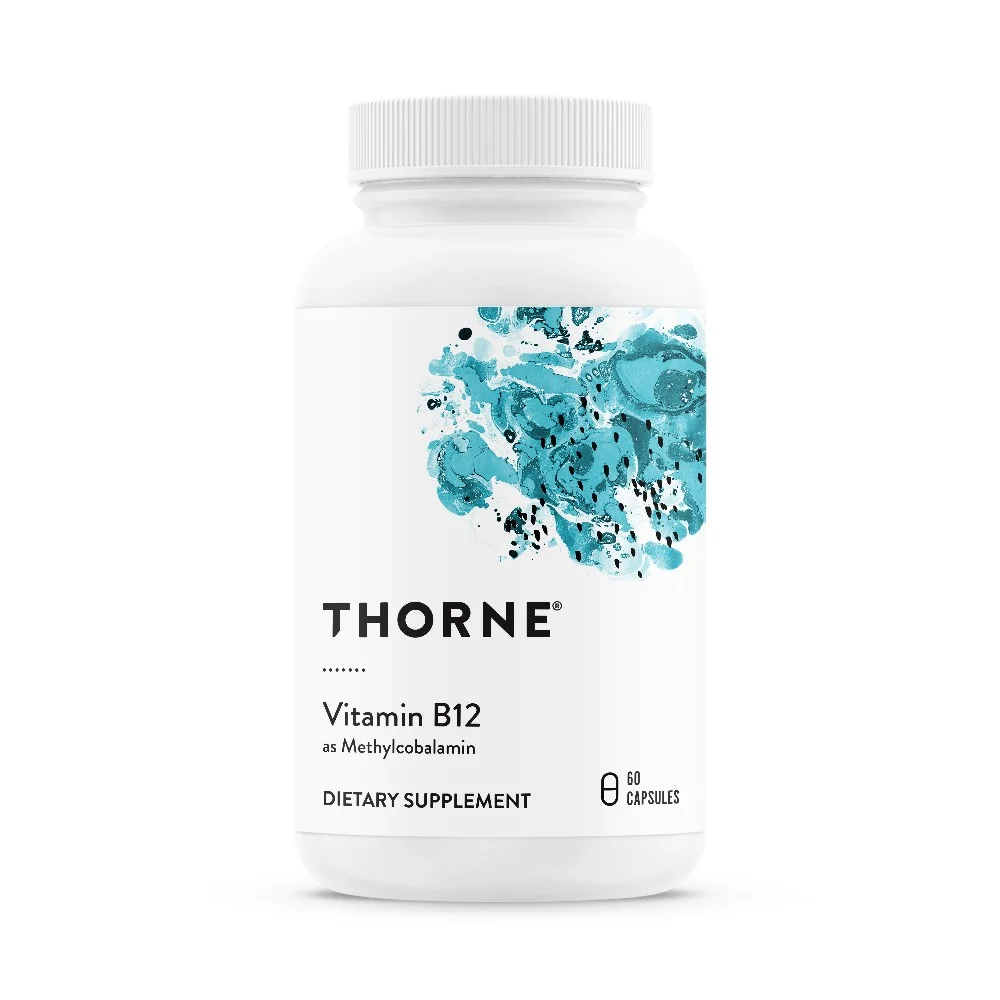
- Methylcobalamin — one of the two bioactive coenzyme forms your body actually uses. It serves as the methyl donor for methionine synthase (the enzyme that converts homocysteine to methionine). It’s retained in tissues better than cyanocobalamin and doesn’t require conversion. This is the preferred form for most people.
- Cyanocobalamin — a synthetic form that does not occur in nature. Your body must remove the cyanide molecule and convert it to methylcobalamin or adenosylcobalamin before it can be used. This form is cheaper to manufacture, more shelf-stable, and has the most clinical research behind it.
- Adenosylcobalamin — the other bioactive form, used by methylmalonyl-CoA mutase. Less commonly available as a standalone supplement.
- Hydroxocobalamin — the form used in intramuscular B12 injections. It has longer tissue retention than cyanocobalamin and is the preferred form for clinical correction of severe deficiency. Not commonly found in oral supplements.
Our take: methylcobalamin is the better choice for daily supplementation. It’s the form your body actually uses, skips the conversion step, and is widely available at reasonable prices. Cyanocobalamin isn’t dangerous — decades of clinical use prove that — but given that methylcobalamin is now equally accessible, there’s no compelling reason to choose the form that requires extra processing by your body.
For people with MTHFR polymorphisms (which affect methylation pathways), methylcobalamin is particularly important, as they may have reduced ability to convert cyanocobalamin to its active forms. If you’re curious about what else to look for beyond the B12 form, our supplement label guide walks through every panel on the bottle.
Dosing: More Than You’d Expect
B12 dosing looks strange if you’re used to other vitamins. The RDA is just 2.4mcg/day for adults, but supplement doses commonly run 500–5,000mcg. What’s going on?
The explanation is absorption. Oral B12 absorption happens through two mechanisms: intrinsic factor-mediated active transport (which saturates at about 1.5mcg per meal) and passive diffusion across the intestinal wall (which absorbs roughly 1–2% of the oral dose). So from a 1,000mcg tablet, you might absorb 1.5mcg via intrinsic factor plus about 10–20mcg via passive diffusion — totaling roughly 12–22mcg. That’s why effective doses need to be much higher than the RDA.
- Active deficiency correction: 1,000–2,000mcg/day sublingual methylcobalamin for 4–8 weeks. A 2003 study in Blood (Kuzminski et al.) demonstrated that high-dose oral B12 was as effective as intramuscular injections for correcting deficiency in most patients. Strong evidence
- Ongoing maintenance (at-risk groups): 250–500mcg/day sublingual or oral methylcobalamin. This comfortably maintains serum levels in vegans, older adults, and metformin users.
- General population with adequate dietary intake: A standard B-complex or multivitamin containing 25–100mcg is typically sufficient. Check your multivitamin first — most already include B12.
Why sublingual?
Sublingual (under the tongue) delivery is popular for B12 because the vitamin absorbs through the oral mucosa, bypassing the GI tract entirely. This is particularly valuable for people with impaired gut absorption — older adults with atrophic gastritis, post-bariatric surgery patients, or anyone with Crohn’s affecting the ileum. A 2006 study in the British Journal of Clinical Pharmacology (Sharabi et al.) found sublingual B12 to be clinically effective for correcting deficiency in patients with gastrointestinal malabsorption. Moderate evidence
The “you can’t overdose” reality: B12 is water-soluble. Any excess beyond what your body can use is excreted in urine. There is no established tolerable upper intake level because toxicity has not been demonstrated even at very high doses. The Institute of Medicine specifically declined to set an upper limit for this reason. That said, mega-dosing without deficiency doesn’t provide extra benefits — it just makes expensive urine.
The Energy Drink Myth
Walk into any convenience store and you’ll see energy drinks plastered with “B12! B6! ENERGY BLEND!” The implied promise is that B12 equals energy. This is a half-truth that has been marketed into a whole lie.
Here’s the reality: B12 is indeed essential for energy metabolism — it helps convert food into usable cellular fuel (ATP). If you’re B12-deficient, correcting that deficiency will absolutely restore your energy levels, often dramatically. Patients who receive B12 injections after months of undiagnosed deficiency frequently describe it as “night and day.”
But if your B12 levels are already normal, adding more B12 does nothing for energy. A 2020 systematic review in Nutrients (Tardy et al.) confirmed that B vitamin supplementation improved self-reported energy only in individuals with baseline deficiency or insufficiency. In replete individuals, there was no measurable effect. The energy you feel from that energy drink? That’s the caffeine and sugar. The B12 is along for the ride.
Testing: Serum B12 Is Not the Whole Story
If you suspect deficiency, getting tested is straightforward — but interpreting the results requires some nuance.
Serum B12 is the standard first-line test. Most labs flag anything below 200 pg/mL as deficient. But here’s the problem: serum B12 measures total B12 in the blood, including inactive analogues that your body can’t use. You can have a “normal” serum B12 of 300 pg/mL and still be functionally deficient at the tissue level.
Methylmalonic acid (MMA) is the more sensitive marker. When B12 is insufficient for the methylmalonyl-CoA mutase enzyme, MMA accumulates. Elevated MMA (>0.4 µmol/L) in the presence of low-normal serum B12 is a strong indicator of functional deficiency. A 2009 review in Clinical Chemistry and Laboratory Medicine (Herrmann & Obeid) established MMA as the gold standard for detecting subclinical B12 deficiency. Strong evidence
Homocysteine can also be elevated in B12 deficiency, but it’s less specific — folate deficiency, vitamin B6 deficiency, kidney disease, and genetic factors all raise homocysteine too. It’s a useful supporting marker, not a standalone diagnostic.
Practical recommendation: if you’re in a high-risk group, ask for both serum B12 and MMA. If your serum B12 is in the gray zone (200–400 pg/mL), the MMA result will tell you whether you actually need to supplement aggressively or just maintain.
B12 in a Broader Stack
B12 doesn’t work in isolation. It partners closely with folate (vitamin B9) in the methylation cycle — supplementing one without the other can mask deficiency symptoms and create problems. Specifically, high folate intake can correct the anemia caused by B12 deficiency while allowing the neurological damage to progress silently. This is why folic acid fortification of grain products (mandated in the U.S. since 1998) has been both a public health win for preventing neural tube defects and a potential concern for B12-deficient individuals whose anemia gets masked.
If you’re building a foundational supplement protocol, B12 fits naturally alongside:
- A quality B-complex — ensures you get adequate B6, folate, and other B vitamins that work synergistically
- Vitamin D — another commonly deficient nutrient, especially if you’re also in the “lives indoors and eats no animal products” demographic
- Omega-3s — for cardiovascular and neurological support alongside B12’s nerve-protective role
For a complete framework on combining these intelligently, see our beginner longevity supplement stack guide.
Pernicious Anemia: When Supplementing Alone Isn't Enough
Pernicious anemia is an autoimmune condition where your body produces antibodies that destroy intrinsic factor — the gastric protein you need to absorb B12 from food. Without intrinsic factor, the active transport mechanism in your ileum is effectively shut down, leaving only passive diffusion (that ~1–2% absorption rate) to do all the work. Standard oral doses of 25–100mcg won't even come close to correcting this.
It's the most common cause of severe B12 deficiency in adults over 50, and it's frequently missed. A 2012 review in Blood Reviews (Toh et al.) estimated prevalence at roughly 1–2% of the general population, rising significantly with age. Because its symptoms — fatigue, cognitive decline, neuropathy — overlap with "normal aging," many cases go undiagnosed for years.
Diagnosis Requires Specific Antibody Testing
A low serum B12 and elevated MMA tell you that you're deficient, but not why. Pernicious anemia diagnosis relies on two antibody tests: anti-intrinsic factor antibodies (highly specific, ~70% sensitive) and anti-parietal cell antibodies (more sensitive but less specific, as they also appear in atrophic gastritis without autoimmunity). If anti-IF antibodies come back positive, the diagnosis is essentially confirmed. Moderate evidence
Why Standard Oral Supplementation Falls Short
With intrinsic factor knocked out, you're relying entirely on passive diffusion. The standard treatment is intramuscular hydroxocobalamin injections — typically 1,000mcg every other day for 2–3 weeks, then monthly for life. A 2005 Cochrane review (Vidal-Alaball et al.) confirmed that very high-dose oral B12 (1,000–2,000mcg daily) can maintain adequate levels through passive diffusion alone, but this requires consistent daily compliance and isn't appropriate for initial correction of severe deficiency with neurological involvement.
If you've been diagnosed with pernicious anemia, this isn't a "take a supplement and forget it" situation. You need a treatment protocol supervised by your provider, regular monitoring, and awareness that this is a lifelong condition. Because pernicious anemia is autoimmune, it also clusters with other autoimmune diseases — thyroid disorders, type 1 diabetes, vitiligo — so a broader autoimmune workup may be warranted. For context on how B12 fits alongside other foundational nutrients, see our beginner longevity supplement stack guide.
How Long Until B12 Supplements Actually Work (Timeline)
"How long until B12 supplements work" is the first question most people ask after starting a regimen — and the honest answer is that it depends entirely on which symptoms you're trying to resolve. B12 recovery isn't a single event. It's a staggered process where different body systems respond on different timelines.
Energy and Fatigue: 2–6 Weeks
Fatigue is usually the first symptom to improve. Most people supplementing 1,000–2,000mcg/day of sublingual methylcobalamin report noticeable energy improvements within 2–6 weeks. A 2003 study (Kuzminski et al., Blood) showed measurable hematological response beginning within the first month of high-dose oral supplementation. If your fatigue was genuinely B12-driven, you'll likely know relatively quickly. Moderate evidence
Blood Cell Normalization: 6–8 Weeks
If you had macrocytic anemia — those abnormally large red blood cells flagged as elevated MCV on your CBC — expect normalization within 6–8 weeks. Reticulocyte counts (a marker of new red blood cell production) typically spike within 7–10 days, which is actually a good early sign that supplementation is working before you feel dramatically different.
Neurological Symptoms: Months to Potentially Never
This is the sobering category. Peripheral neuropathy, balance problems, and cognitive symptoms improve much more slowly — typically over 3–12 months — and the degree of recovery depends heavily on how long the deficiency persisted before treatment. Healton et al. (1991, Medicine) found that neurological symptoms present for less than 6 months had the best recovery outcomes, while damage sustained over years was frequently permanent. Moderate evidence
Mood-related symptoms — depression, irritability, brain fog — tend to fall somewhere in between, often improving within 4–8 weeks if B12 deficiency was a contributing factor. But as Hvas et al. (2004) demonstrated, B12 only helps mood when deficiency is actually present. If your levels were adequate all along, supplementation won't move the needle on how you feel.
B12 During Pregnancy and Breastfeeding
B12 during pregnancy isn't optional — it's critical for fetal brain and spinal cord development. The RDA increases to 2.6mcg/day during pregnancy and 2.8mcg/day during lactation, but these numbers assume adequate absorption and baseline stores. If you're entering pregnancy already depleted — common among vegans, vegetarians, and women with undiagnosed subclinical deficiency — these minimums won't be enough to catch up.
The Folate-B12 Interaction Gets Dangerous Here
This guide already covers how high folate can mask B12 deficiency by correcting anemia while neurological damage continues silently. During pregnancy, the stakes multiply. A 2009 study (Molloy et al., Pediatrics) found that low maternal B12 combined with high folate status was associated with a significantly increased risk of neural tube defects — the very outcome folic acid supplementation is designed to prevent. Moderate evidence Taking your prenatal folate without ensuring adequate B12 may be undermining the protection you think you have.
Vegan and Vegetarian Mothers: Non-Negotiable Supplementation
If you eat no animal products, your breast milk will reflect your B12 status. Case reports document serious neurological consequences in exclusively breastfed infants of B12-deficient mothers — including developmental regression, hypotonia, and brain atrophy. A 2005 case series (Dror & Allen, Advances in Nutrition, later reviewed 2008) found that infant symptoms could appear as early as 4–6 months of age and were not always fully reversible even after treatment. Moderate evidence
The bottom line: every pregnant and breastfeeding woman should know her B12 status, not just her folate status. If you're in a high-risk group — vegan, vegetarian, history of GI issues, or on medications that impair absorption — get serum B12 and MMA tested early in pregnancy. Your baby's developing nervous system doesn't have years of liver stores to fall back on. It depends entirely on yours.
MMA Testing Caveat: Why Kidney Function Matters
If you follow this guide's recommendation to get an MMA test to confirm functional B12 deficiency, you need to know about a significant confound: impaired kidney function independently elevates MMA levels, regardless of your actual B12 status. This is directly relevant if you're an older adult or a metformin user — the two groups most likely reading this guide — because both populations have substantially higher rates of chronic kidney disease (CKD).
The fix is straightforward: ask your provider to check creatinine and eGFR alongside MMA. If your eGFR is below 60, your MMA result needs to be interpreted with that context — a mildly elevated MMA in the setting of reduced kidney function may mean nothing about your B12 status. Strong evidence
If kidney function is compromised and you still need to assess B12 status, holotranscobalamin (holoTC) is a more reliable alternative functional marker. HoloTC measures only the biologically active fraction of B12 bound to transcobalamin II — the portion actually available to your cells — and is not significantly affected by renal function. A 2012 review by Nexo and Hoffmann-Lücke in Journal of Internal Medicine supported holoTC as the earliest marker of B12 depletion, particularly useful when MMA is unreliable. Not every lab offers it routinely, so you may need to specifically request it.
Bottom line: MMA remains an excellent test for most people, but it's not infallible. If you're over 50, on metformin, or have any reason to suspect reduced kidney function, don't interpret MMA results in isolation. Pair them with a kidney function panel, or ask about holotranscobalamin testing as an alternative.
Who Should Talk to a Doctor First
B12 supplementation has an excellent safety profile in healthy adults, and this guide covers the major at-risk groups in detail. But several populations face unique considerations that go beyond general recommendations — and deserve a conversation with a clinician before starting or adjusting a regimen.
None of the above is medical advice. Bring your full supplement list — including what you're considering — to your next provider visit.
Frequently Asked Questions
Can I get enough B12 from fortified foods alone?
Technically yes, but it requires careful planning. Fortified plant milks, cereals, and nutritional yeast typically provide 1–3mcg per serving. You’d need multiple servings spread throughout the day (since active absorption saturates at ~1.5mcg per meal) to meet the 2.4mcg RDA. Most registered dietitians who work with vegan clients recommend supplementation as a more reliable strategy. The cost of a B12 supplement is trivial compared to the consequences of deficiency, so there’s no practical reason to rely solely on fortified foods unless you have a strong personal preference.
Are B12 injections better than oral supplements?
For severe, symptomatic deficiency — especially with neurological involvement — injections (typically hydroxocobalamin, 1,000mcg intramuscularly) provide the fastest correction and bypass all absorption issues. For maintenance and mild-to-moderate deficiency, high-dose oral or sublingual methylcobalamin is equally effective in most people. The 2003 Kuzminski study in Blood is often cited as the landmark trial establishing oral equivalence to injections. Injections are more expensive, require clinical visits, and aren’t necessary for the majority of people who simply need to maintain adequate levels. Strong evidence
I take metformin for longevity. Should I worry about B12?
Yes. Even if you’re taking metformin at lower “longevity doses” (500–1,000mg/day) rather than full diabetic doses (1,500–2,000mg/day), the B12 absorption impairment is dose-dependent but present. The ADA (American Diabetes Association) recommends periodic B12 monitoring for all metformin users. A reasonable protocol: 500–1,000mcg/day sublingual methylcobalamin alongside your metformin, with annual serum B12 and MMA testing. Don’t wait for symptoms — by the time neurological signs appear, some damage may already be irreversible.
Does B12 interact with any medications?
B12 supplementation has very few drug interactions, which is one of its advantages. However, certain medications reduce B12 absorption and may necessitate higher supplement doses: PPIs (omeprazole, pantoprazole), H2 blockers (famotidine, ranitidine), metformin, and colchicine. Chloramphenicol (an antibiotic) can interfere with B12’s role in red blood cell production. If you’re on any of these long-term, inform your doctor and consider monitoring. There are no known cases of B12 supplementation reducing the effectiveness of other medications.
What is pernicious anemia and do I need injections if I have it?
The guide doesn't cover pernicious anemia directly. Pernicious anemia is an autoimmune condition where the body destroys the parietal cells that produce intrinsic factor, eliminating the primary absorption pathway for dietary B12. Because standard oral absorption is largely blocked, most patients require either intramuscular injections or very high-dose sublingual B12 to rely on passive diffusion. Diagnosis typically involves testing for anti-intrinsic factor and anti-parietal cell antibodies. If you've been diagnosed with pernicious anemia, consult a physician — self-supplementing with standard oral doses is unlikely to be sufficient.
Can B12 deficiency cause permanent nerve damage — and how do I know if mine is reversible?
Yes, prolonged B12 deficiency can cause permanent neurological damage. The guide cites a 2003 NEJM case series documenting irreversible nerve damage from undiagnosed deficiency, and explicitly warns that neurological symptoms can precede anemia by months or years. However, the guide does not provide a practical framework for assessing reversibility — such as duration thresholds, symptom severity markers, or when to seek urgent care vs. supplement independently. If you have active neurological symptoms (numbness, balance problems, gait instability), see a physician promptly rather than self-supplementing and waiting.
How long does it take for B12 supplements to work — when will I feel better?
The guide doesn't address recovery timelines directly. It recommends 1,000–2,000mcg/day for 4–8 weeks to correct active deficiency, but doesn't specify when symptoms resolve. Generally, energy and mood often improve within weeks of correction; neurological symptoms (tingling, numbness) take longer — sometimes months — and some residual damage may be permanent if deficiency was prolonged. If you're supplementing appropriately and symptoms aren't improving after several weeks, that warrants follow-up testing and medical evaluation rather than assuming more time is needed.
Does B12 deficiency cause hair loss?
The guide doesn't list hair loss among B12 deficiency symptoms. Its documented symptom list includes fatigue, brain fog, mood changes, peripheral neuropathy, glossitis, macrocytic anemia, and balance problems. While hair loss is widely searched in relation to B12, the guide doesn't address this association. If hair loss is your primary concern, consult a healthcare provider — other causes (thyroid dysfunction, iron deficiency, androgenic alopecia) are more commonly established drivers and should be evaluated alongside B12 status.
Does B12 deficiency present differently in women than in men?
The guide doesn't address sex-specific differences in B12 deficiency symptoms or risk. It does note that folate and B12 interact — high folate can mask B12 deficiency anemia while neurological damage progresses — which has particular relevance for women of childbearing age taking prenatal supplements. Women on metformin for PCOS are also flagged as a high-risk group via the metformin section. For pregnancy-specific B12 guidance, consult a healthcare provider; the guide does not cover prenatal protocols or hormonal influences on B12 metabolism.
Are supplement label doses for B12 actually accurate — how are supplements regulated?
The guide recommends specific doses (250–500mcg for maintenance, 1,000–2,000mcg for correction) but doesn't address label accuracy or regulatory oversight. U.S. supplements are not FDA-approved before sale, meaning label claims aren't independently verified by default. Third-party certifications — USP, NSF International, or Informed Sport — indicate that a product has been independently tested for potency and purity. The guide references its own supplement label guide for further detail. When choosing a B12 supplement, prioritizing third-party verified products is the most direct way to validate that label doses reflect actual content.
What's the difference between serum B12, active B12 (holotranscobalamin), and MMA — which test should I get?
The guide covers serum B12 and MMA but doesn't mention holotranscobalamin (holo-TC). Serum B12 measures total circulating B12, including inactive analogues — it can appear normal while functional deficiency exists. MMA is the guide's recommended confirmatory test: elevated MMA above 0.4 µmol/L alongside low-normal serum B12 indicates functional deficiency. Holo-TC (active B12) measures only the fraction bound to transcobalamin and available to tissues, and is considered more sensitive than serum B12 — but the guide doesn't address it. Ask your provider or private lab about holo-TC availability if you want the most sensitive early marker.
The Bottom Line
B12 deficiency is common, underdiagnosed, and entirely preventable. If you’re vegan, over 50, taking metformin, or on long-term PPIs, don’t wait for symptoms — supplement proactively. If you’re experiencing unexplained fatigue, brain fog, or mood changes, get tested before assuming it’s just stress.
The protocol is simple: 250–500mcg/day of sublingual methylcobalamin for maintenance, 1,000–2,000mcg/day for active deficiency correction. Skip the cyanocobalamin unless cost is a major barrier. Don’t expect energy boosts if you’re already replete. And if your serum B12 comes back in the gray zone, insist on an MMA test before your doctor tells you everything is “fine.”
It’s one of the cheapest, safest, and most impactful supplements you can take — if you’re someone who actually needs it.
Supplements that support this
Turn this into your stack
Answer two questions and we'll build an evidence-graded starter stack — every ingredient with its dose, timing, and interaction checks.
Free · no account needed to start
Interactions to know
How these pair with other supplements and medications
- Warningvitamin b12+antacids
Long-term antacid use depletes B12
- Warningppi+vitamin b12
Long-term PPI use reduces B12 absorption
- Cautionvitamin c+vitamin b12
High-dose vitamin C may reduce B12 absorption
- Synergyvitamin b12+folate
B12 and folate work together in methylation
Check your full stack in the free interaction checker.
Read next
Methylfolate vs Folic Acid: Which Form Should You Take?
Methylfolate bypasses the MTHFR step that ~40% of people have a reduced-activity variant of. When to pick each form, MTHFR testing decisions, and the unmetabolized folic acid concern.
Iron Supplements Guide 2026: Evidence-Based & Ranked
Learn who needs iron supplements, what bloodwork to get, and which forms won’t wreck your stomach. Covers dosing science most doctors skip.
8 Signs of Magnesium Deficiency – 2026 Guide
Muscle cramps, twitching eyelids, and poor sleep may signal low magnesium. Learn all 8 signs, why standard blood tests miss it, and how to fix it.
The real science of food and health — macro- and micronutrients, and how diet shapes aging.
Evidence-based supplement guides, no spam
We send a short digest when new guides drop — nothing else. No affiliate pushes, no sponsored content, unsubscribe anytime.