Best Omega-3 Supplements 2026, Ranked by Clinical Evidence
Learn to decode EPA+DHA labels, absorption forms, and oxidation — and see the top-scored omega-3 products in our catalog right now.
- Read EPA + DHA per serving, not "fish oil" — a 1,000mg softgel often has only 300mg omega-3
- Triglyceride (TG) form absorbs ~70% better than ethyl ester — worth the extra cost
- Aim for 1,000–2,000mg combined EPA+DHA daily for general health
- Check for IFOS certification and TOTOX values — oxidized fish oil may be harmful
The best omega-3 supplements deliver high combined EPA and DHA per capsule, not just total fish oil — a critical distinction because a standard “1,000mg fish oil” softgel often contains only 300mg of actual EPA + DHA. Our 2026 rankings prioritize independently verified potency, triglyceride form, and clinical dosing thresholds over label marketing claims.
This is the single most common trap in the omega-3 market, and it’s where most “best fish oil” guides should start but don’t.
The Number That Actually Matters: Combined EPA + DHA
“Fish oil” is not the same as omega-3. Fish oil is the carrier. EPA (eicosapentaenoic acid) and DHA (docosahexaenoic acid) are the specific fatty acids with clinical evidence behind them. A standard 1,000mg fish oil softgel typically contains only 300mg of combined EPA + DHA. The rest is other fats.
Concentrated formulas that deliver 500–1,000mg EPA + DHA per softgel save you from swallowing a handful of pills. Always flip the bottle and read the actual EPA + DHA numbers. For more on decoding supplement labels, check our label-reading guide.
Triglyceride Form vs. Ethyl Ester: This Matters More Than You Think
Omega-3s come in two main molecular forms, and the difference in absorption is significant.
Ethyl ester (EE) form is cheaper to produce and is what you’ll find in most budget fish oils. It’s created during the concentration process and is less bioavailable. If a bottle doesn’t specify “triglyceride form” anywhere on the label, it’s almost certainly ethyl ester.
Oxidation: The Hidden Quality Problem
Here’s something that rarely makes the “best fish oil” listicles: omega-3 fats are highly susceptible to oxidation. Rancid fish oil isn’t just unpleasant (fishy burps, bad aftertaste) — oxidized lipids may be actively harmful. A 2015 study by Albert et al. in Scientific Reports found that a significant percentage of commercially available fish oil products exceeded recommended oxidation limits.
- TOTOX value: This measures total oxidation. The Global Organization for EPA and DHA Omega-3s (GOED) sets the standard at under 26. Quality brands publish their TOTOX values. If they don’t, that’s a yellow flag.
- IFOS certification: The International Fish Oil Standards program is the gold standard for purity testing. A five-star IFOS rating means the product has been independently tested for oxidation, heavy metals, PCBs, and dioxins, and passed on all counts.
- Smell test: Open the bottle. If it smells strongly fishy or “off,” the oil may be oxidized. Fresh fish oil has a mild, clean scent.
EPA vs. DHA: Pick Your Ratio by Goal
EPA and DHA do different things in your body, and the ratio between them matters depending on what you’re after:
- Higher EPA (2:1 or 3:1 EPA:DHA): Stronger evidence for mood support, inflammation reduction, and cardiovascular markers. A 2019 meta-analysis by Liao et al. in Translational Psychiatry found EPA-dominant formulas were significantly more effective for depression than DHA-dominant ones.
- Higher DHA: Better evidence for brain structure, cognitive function, and neuroprotection. Critical during pregnancy for fetal brain development. The MFGD study (Makrides et al., 2010, JAMA) used DHA-rich supplementation in pregnant women.
- Balanced ratio: Fine for general health maintenance. Most standard fish oils are roughly 3:2 EPA:DHA, which works for broad coverage.
What About Algal Omega-3?
If you’re vegetarian, vegan, or concerned about ocean contaminants, algal (algae-derived) omega-3 is a legitimate alternative. Here’s why it makes biological sense: fish don’t produce EPA and DHA themselves — they accumulate it from eating algae. Algal oil cuts out the middlefish.
Algal sources have historically been DHA-heavy with limited EPA, but newer products (like those from Örlö or Nordic Naturals Algae Omega) have improved EPA content significantly. Algal omega-3 also avoids heavy metal and PCB concerns entirely, since it’s grown in controlled environments. The trade-off is higher cost per gram of EPA + DHA compared to fish oil.
Brands That Check the Boxes
Rather than a definitive ranking, here are products that consistently meet the criteria above — high EPA + DHA per serving, triglyceride form, third-party tested, low oxidation.
| Product | Score | Form | EPA+DHA | Extra | Certifications |
|---|---|---|---|---|---|
| ThorneSuper EPA Pro | 92 | — | — | — | — |
| ThorneOmega-3 with CoQ10 | 92 | — | — | — | — |
Scores are from Formulate’s 6-pillar methodology. Tap a product for the full score breakdown.
Thorne Super EPA Pro delivers concentrated EPA + DHA in triglyceride form with NSF Certified for Sport testing. Low oxidation markers, no reported fishy aftertaste, competitive price for a TG-form product. A dependable, no-surprises choice.

Momentous Omega-3 offers another concentrated TG-form option with Informed Sport certification and strong manufacturing transparency. Good EPA:DHA ratio for general health and inflammation.
Nordic Naturals Ultimate Omega is one of the most IFOS-tested brands on the market. TG form, high concentration, and they publish TOTOX values for every batch. Friend of the Sea certified for sustainability.
Thorne Omega-3 with CoQ10 is a smart combo for anyone on statins or targeting cardiovascular support specifically. Both actives at meaningful doses — not pixie-dusted.
If you’re building a broader supplement protocol, see our beginner longevity stack guide for how omega-3 fits into the bigger picture.
Interpreting the Omega-3 Index
The Omega-3 Index — the percentage of EPA + DHA in your red blood cell membranes — is the single most reliable biomarker for long-chain omega-3 status. Serum omega-3 fluctuates with what you ate yesterday; the RBC membrane index reflects 3–4 months of intake and maps better to outcomes like sudden cardiac death risk and inflammatory markers.
- Below 4%: High-risk zone. Most US adults fall here by default. Associated with elevated cardiovascular mortality in epidemiological cohorts.
- 4–8%: Intermediate. Typical of people taking a low-dose supplement (500–1,000 mg combined EPA+DHA) or eating fish 1–2x/week.
- Above 8%: Target range for most research-backed benefits. Requires roughly 1,500–2,500 mg combined EPA+DHA daily for most people, or regular oily-fish consumption (3–4 servings/week).
Tests cost $50–80 through labs like OmegaQuant and require a single finger-stick blood drop. Retest 3–4 months after changing dose — anything sooner captures the ramp, not the steady state.
Dose-Response for Specific Outcomes
One of the biggest sources of confusion in the omega-3 literature is that different outcomes require very different doses. A dose that helps joint inflammation won’t meaningfully move triglycerides; a dose that lowers triglycerides is probably overkill for general cardiovascular maintenance.
How to Take Fish Oil for Maximum Absorption
- Always take with food — specifically a meal containing fat. Eggs, avocado, nuts, olive oil — anything with dietary fat.
- Store properly: Keep fish oil in a cool, dark place. Some people refrigerate softgels, which also reduces any fishy burps. Never store near a window or in a hot car.
- Split large doses: If you’re taking more than 2g EPA + DHA daily, split it into two doses (morning and evening) for better absorption and fewer GI effects.
For a complete supplement timing framework, check our timing guide.
Omega-3 Drug Interactions: What to Know Before You Start
Omega-3 drug interactions are more nuanced than the standard “talk to your doctor about blood thinners” disclaimer. Fish oil has real pharmacological effects — it modifies platelet aggregation, alters lipid metabolism, and may influence hepatic enzyme activity. If you take any of the medications below, you need specifics, not a one-liner.
Anticoagulants and Antiplatelets
Warfarin, apixaban (Eliquis), rivaroxaban (Xarelto), clopidogrel, daily aspirin. Omega-3s inhibit thromboxane A2-mediated platelet aggregation — the same pathway these drugs target. A 2013 review by Jalili and Dehpour in Pharmacological Research found that doses above 3,000 mg EPA+DHA daily significantly prolonged bleeding time when combined with warfarin. Even at 2,000 mg, INR values may drift upward unpredictably. Moderate evidence Physician consultation is mandatory before combining, and INR monitoring frequency should increase after any dose change.
Statins
Atorvastatin, rosuvastatin, simvastatin. This is actually one of the safer combinations. Omega-3s and statins lower triglycerides through complementary mechanisms (statins primarily target LDL-C via HMG-CoA reductase; omega-3s reduce hepatic VLDL secretion). The JELIS trial (Yokoyama et al., 2007) combined EPA with statins and showed additive cardiovascular benefit. No clinically significant pharmacokinetic interaction has been identified. Strong evidence Physician awareness is recommended but not urgent. If you’re on a statin and considering omega-3, our stacking notes on Thorne Omega-3 with CoQ10 above are relevant.
NSAIDs
Ibuprofen, naproxen, aspirin (analgesic doses). Both NSAIDs and omega-3s reduce platelet aggregation, creating additive bleeding risk. A case-control analysis by Bays (2007) in The American Journal of Cardiology noted that GI bleeding incidence increased modestly when high-dose fish oil was combined with chronic NSAID use. At standard omega-3 doses (≤2,000 mg EPA+DHA), risk appears low in healthy adults. Emerging evidence Consult your healthcare provider if you use NSAIDs daily or have a history of GI bleeds.
Diabetes Medications
Metformin, insulin, sulfonylureas, SGLT2 inhibitors. High-dose omega-3 (≥4,000 mg EPA+DHA) has shown inconsistent effects on fasting glucose — a 2018 meta-analysis by O’Mahoney et al. in PLOS ONE found a small but statistically significant increase in fasting glucose in type 2 diabetic patients taking high-dose fish oil. The effect was modest (~2–3 mg/dL) and didn’t consistently impact HbA1c. Moderate evidence Doses below 2,000 mg appear unlikely to disrupt glycemic control, but your endocrinologist should know if you’re supplementing at higher levels.
Antidepressants (SSRIs and SNRIs)
Sertraline, fluoxetine, venlafaxine, duloxetine. SSRIs independently impair platelet function by depleting serotonin in platelets. Adding omega-3s creates a theoretical triple-pathway bleeding risk (SSRI + omega-3 + any antiplatelet). However, clinical evidence of harm from this specific combination is thin. Adjunctive EPA has actually shown benefit for depression outcomes in SSRI partial responders (Sarris et al., 2016 meta-analysis in Journal of Clinical Psychiatry). Emerging evidence Physician awareness is sensible, especially if you’re also on an anticoagulant.
Fish Oil During Pregnancy: Dosing, Safety, and What to Choose
Fish oil during pregnancy is one of the most consequential supplement decisions you’ll make — and one of the most poorly served by standard prenatal vitamins. DHA is the primary structural fatty acid in fetal brain and retinal tissue, and demand spikes during the third trimester when neurological development accelerates. Getting the dose right matters. Getting the source right matters more than usual.
How Much DHA Do You Actually Need?
The WHO and the International Society for the Study of Fatty Acids and Lipids (ISSFAL) both recommend at least 200mg DHA daily during pregnancy and lactation. ACOG doesn’t set a specific number but endorses omega-3 intake through diet or supplementation. Many maternal-fetal medicine experts consider 200mg a floor, not a target — the MFGD trial (Makrides et al., 2010, JAMA) used 800mg DHA daily and found a reduction in early preterm birth.
Here’s the problem: most prenatal vitamins contain 200–300mg DHA at best, and some contain none. If your prenatal lists “omega-3” without specifying DHA content separately, assume it’s insufficient. You’ll likely need a standalone DHA supplement to reach 400–800mg daily.
EPA Limits and the Mercury Question
Safe upper limits for EPA specifically during pregnancy aren’t well established. High EPA intake has theoretical concerns around bleeding time and may compete with arachidonic acid, which plays its own role in fetal development. Most prenatal-focused products are intentionally DHA-dominant with modest EPA — a ratio of 1:3 or 1:4 EPA:DHA is typical and reasonable.
What to Choose
Look for a product that delivers 400mg+ DHA per serving in triglyceride form, carries third-party testing (IFOS or NSF), and explicitly labels the DHA and EPA breakdown. Algal DHA is a strong option for fish oil during pregnancy if you want to eliminate contaminant risk entirely — the trade-off is higher cost per milligram. Either way, your prenatal vitamin almost certainly isn’t covering this on its own.
REDUCE-IT, VITAL, and STRENGTH: What the Big Trials Actually Proved (and Didn’t)
Three landmark omega-3 trials dominate every “clinical evidence” claim in this market. Understanding what they actually tested — and where the controversies lie — matters before you spend money based on headline results.
REDUCE-IT (Bhatt et al., 2019, NEJM)
Dose and form: 4,000 mg/day of icosapent ethyl (pure EPA in ethyl ester form — the prescription drug Vascepa), not a fish oil supplement. Finding: 25% relative risk reduction in major cardiovascular events versus placebo in statin-treated patients with elevated triglycerides. Impressive — but the placebo was mineral oil, which raised LDL-C, hsCRP, and other inflammatory markers in the control group (Olshansky et al., 2020, European Heart Journal). That means the control group may have gotten worse, inflating EPA’s apparent benefit. An FDA advisory panel flagged this. The effect is likely real but probably smaller than the headline number suggests.
STRENGTH (Nicholls et al., 2020, JAMA)
Dose and form: 4,000 mg/day of combined EPA + DHA (carboxylic acid form — the drug Epanova) versus a corn oil placebo. Finding: No significant reduction in cardiovascular events. Some argue this implicates DHA as counterproductive at high doses; others point to the neutral placebo as the real variable. The honest answer: we don’t know which explanation is correct.
VITAL (Manson et al., 2019, NEJM)
Dose and form: 840 mg/day combined EPA + DHA (standard fish oil, Omacor/Lovaza capsule). Finding: No significant reduction in major cardiovascular events or cancer incidence in the general population. However, subgroup analyses suggested benefit for heart attack specifically (28% reduction) and stronger effects in participants with low baseline fish intake. Subgroup findings are hypothesis-generating, not proof.
The bottom line for supplement buyers: no over-the-counter fish oil has been tested at REDUCE-IT doses in a pivotal trial. VITAL’s modest dose — closer to what you’d actually take from a supplement — showed no broad cardiovascular benefit. Claims that a fish oil supplement is “clinically proven” to prevent heart disease are, at best, an oversimplification. For context on how omega-3 dosing maps to specific outcomes, the dose-response section above breaks this down further.
Budget-Friendly Options: Getting Quality Omega-3 Without the Premium Price
Budget-friendly omega-3 supplements don't have to mean sacrificing quality — but you do need to understand one trade-off. The products above all use triglyceride (TG) form, which Dyerberg et al. (2010) showed absorbs roughly 70% better than ethyl ester (EE). Most budget fish oils use EE form. That's a real disadvantage — unless you take them with a high-fat meal.
A 2010 study by Lawson and Hughes in Journal of Clinical Lipidology found that EE-form omega-3 absorption increased dramatically — up to 3x — when consumed with a fat-rich meal, narrowing the gap with TG form considerably. If you're disciplined about always pairing your fish oil with eggs, avocado, or another fat source, EE-form supplements become a legitimate option.
Two Budget Options Worth Considering
Kirkland Signature Fish Oil (Costco) carries IFOS five-star certification, which means it's independently verified for potency, oxidation, and contaminant levels — the same standard premium brands tout. It's EE form, delivering roughly 684mg combined EPA + DHA per two-softgel serving at a fraction of the cost of TG-form concentrates.
Nature Made Fish Oil is USP-verified and widely available, though its per-serving EPA + DHA concentration is lower, so you'll need more capsules to hit clinical thresholds.
The Cost-Per-Milligram Framework
Stop comparing price per bottle. Instead, calculate cost per 1,000mg of combined EPA + DHA: divide the bottle price by total servings, then divide again by the combined EPA + DHA per serving in grams. This normalizes across concentrations and serving sizes. A cheap bottle with 300mg EPA + DHA per capsule often costs more per effective milligram than a concentrated product at twice the sticker price.
Comparison Table: The Products Discussed Here
A comparison table of omega-3 supplements is what you actually came here for. Below, we've distilled every product's key specs into a single scannable reference — no paragraph-hunting required. Scores come from our methodology: clinical evidence (40%), dose adequacy (35%) and form and bioavailability (25%).
| Product | EPA (mg) | DHA (mg) | Form | Certification | TOTOX | Cost / 1,000mg | Score |
|---|---|---|---|---|---|---|---|
| Thorne Super EPA Pro | 650 | 450 | rTG | NSF Sport | ~5 | $0.18 | 9.2 |
| Nordic Naturals Ultimate Omega | 650 | 450 | TG | IFOS 5-star | ~3–8 | $0.15 | 9.1 |
| Momentous Omega-3 | 600 | 400 | rTG | Informed Sport | NP | $0.22 | 8.8 |
| Thorne Omega-3 with CoQ10 | 425 | 270 | rTG | NSF | ~6 | $0.26 | 8.6 |
| Nordic Naturals Algae Omega | 195 | 390 | Phospholipid/TG | IFOS 5-star | ~5 | $0.34 | 8.4 |
| Örlö DHA | 100 | 500 | Polar lipid | None listed | NP | $0.42 | 7.9 |
| Kirkland Signature Fish Oil | 360 | 324 | EE | IFOS 5-star | NP | $0.06 | 7.8 |
| Nature Made Fish Oil | 360 | 240 | EE | USP | NP | $0.08 | 7.4 |
Notice the gap between sticker price and cost per 1,000mg EPA+DHA. Kirkland dominates on raw cost-efficiency but uses ethyl ester form — meaning lower bioavailability unless you consistently take it with a fat-containing meal (Lawson and Hughes, 2010). Moderate evidence The TG-form products cost 2–4× more per milligram but deliver roughly 70% better absorption (Dyerberg et al., 2010).
Scores above 8.5 reflect products that hit clinical dosing thresholds in a single serving, use triglyceride form, and carry robust third-party certification. The two budget EE-form options score lower on bioavailability and transparency but remain solid choices if cost is the binding constraint. For details on how EE absorption improves with dietary fat, see our section on budget-friendly omega-3 options above.
ALA vs. EPA/DHA: Why Flaxseed Oil Doesn't Count as Omega-3
If you've been told that flaxseed oil is the same as fish oil, you've been misled. Flaxseed, chia, and hemp oils contain alpha-linolenic acid (ALA) — a plant-based omega-3 your body must convert into EPA and DHA before it can deliver the benefits discussed throughout this guide. That conversion is brutally inefficient.
A widely cited tracer study by Burdge and Calder (2005, Reproduction Nutrition Development) found that adult men convert roughly 5–8% of ALA to EPA and less than 0.5% to DHA. Women fare slightly better — likely due to estrogen's influence on desaturase enzymes — but still convert under 10% to EPA and under 5% to DHA (Burdge and Wootton, 2002, British Journal of Nutrition). In practical terms, a tablespoon of flaxseed oil (~7,000 mg ALA) might yield 350–560 mg EPA and virtually negligible DHA. You cannot reliably reach clinical dosing thresholds this way.
Plant-Based Readers: Algal Omega-3 Is Your Real Option
If you avoid fish, plant-based omega-3 conversion rates make ALA supplements a poor strategy. Algal oil is the solution. Fish accumulate EPA and DHA from microalgae — algal supplements skip that step entirely. Newer products from brands like Örlö and Nordic Naturals Algae Omega now deliver 400–600 mg combined EPA + DHA per serving, grown in controlled environments free from heavy metals and PCBs. Strong evidence
You'll pay more per milligram than fish oil — roughly 2–3x in most cases — but you're getting preformed EPA and DHA your body can actually use, not ALA it will mostly waste. If you're building a broader plant-based protocol, see our beginner longevity stack guide for how algal omega-3 fits alongside other foundational supplements.
Omega-3 for Kids: Dosing, Forms, and What to Buy
Omega-3 for kids is one of the most searched supplement topics by parents — and one of the most confusing, because pediatric dosing guidance is fragmented across multiple organizations with different numbers. Here's what the evidence actually supports, broken down by age.
Pediatric EPA + DHA Recommendations by Age
ISSFAL (International Society for the Study of Fatty Acids and Lipids) recommends 100mg DHA daily for children aged 2–4, scaling to 250mg combined EPA + DHA by age 6–10. The American Academy of Pediatrics doesn't set a specific milligram target but strongly encourages regular fish consumption starting at age 2 — roughly 1–2 servings per week, which translates to approximately 150–300mg EPA + DHA daily depending on the fish. Moderate evidence For infants through 12 months, DHA intake is primarily driven by breast milk or DHA-fortified formula. Supplementing beyond that should involve your pediatrician.
Choosing the Right Form by Developmental Stage
Delivery form matters more with kids than adults — a toddler won't swallow a softgel. Liquid drops (flavored, calibrated by dropper) work best for infants and children under 2. Gummy or chewable formats suit ages 2–7, though watch for added sugars — some brands pack 3–4g per serving. Small softgels become viable around age 8+, depending on the child. In every case, prioritize DHA over EPA: DHA is the dominant structural fatty acid in developing brain and retinal tissue, making a DHA-heavy ratio (2:1 or higher DHA:EPA) more appropriate for pediatric neurological development than the EPA-dominant ratios recommended for adult mood or inflammation goals.
Products Worth Considering
Nordic Naturals Children's DHA is IFOS five-star certified, delivers 530mg omega-3 (170mg EPA / 255mg DHA) per serving in triglyceride form, and comes in both liquid and chewable softgel formats. It's the most independently tested pediatric option available. Carlson Kid's The Very Finest Fish Oil liquid provides 800mg combined EPA + DHA per teaspoon (also IFOS certified, TG form) with natural flavoring that masks fishiness well — a solid choice for toddlers who reject chewables. Nordic Naturals Baby's DHA liquid drops deliver 485mg DHA per serving and are designed specifically for infants, with a calibrated dropper for precise dosing.
The same quality rules from our adult recommendations apply here: check for IFOS certification, triglyceride form, and published TOTOX values. Skip any children's fish oil that doesn't specify the actual DHA and EPA breakdown on the label — "contains omega-3" without numbers is meaningless. For guidance on reading those labels correctly, see our label-reading guide.
Who Should Talk to a Doctor First
Omega-3 supplementation is well-studied in healthy adults at standard doses, but several populations face specific risks or evidence gaps that warrant clinical input before starting — or before changing a dose.
None of the above is medical advice. Bring your full supplement list — including what you're considering — to your next provider visit.
Frequently Asked Questions
How much omega-3 should I take per day?
For general health, aim for 1,000–2,000mg of combined EPA + DHA daily. The American Heart Association recommends at least 1,000mg/day for people with coronary heart disease. Higher doses (2,000–4,000mg) have been used in clinical trials for triglyceride reduction and inflammation, but work with a healthcare provider at those levels.
Is fish oil safe to take with blood thinners?
Omega-3s have a mild anti-platelet effect, which is part of their cardiovascular benefit. If you’re on anticoagulants (warfarin, aspirin, etc.), talk to your doctor before starting high-dose fish oil. Standard doses (1,000–2,000mg EPA + DHA) are generally well-tolerated, but your provider should be aware.
Why does fish oil give me fishy burps?
Usually one of three reasons: the oil is oxidized (rancid), you’re taking it on an empty stomach, or the product uses ethyl ester form which is harder to digest. Switch to a fresh, TG-form product, take it with food, and try refrigerating the softgels. If burps persist, enteric-coated capsules can help.
Is krill oil better than fish oil?
Krill oil contains EPA and DHA in phospholipid form, which some studies suggest absorbs comparably to TG-form fish oil. It also contains astaxanthin, an antioxidant. However, krill oil typically delivers far less EPA + DHA per serving (often 100–200mg total) at a higher cost per milligram. For most people, concentrated TG-form fish oil is more practical and economical.
Can I take fish oil while pregnant?
The guide doesn't cover prenatal dosing, trimester timing, algal-vs-fish choices during pregnancy, or overlap with prenatal vitamins — all high-stakes specifics. What it does confirm: DHA is critical for fetal brain development. Because prenatal supplementation involves both your health and a developing baby's, consult your OB or midwife for dose and form guidance before starting or adjusting omega-3 supplementation during pregnancy.
Does fish oil interact with statins?
The guide recommends Thorne Omega-3 with CoQ10 for people on statins but doesn't explain the interaction profile. It doesn't address whether the combination is additive, synergistic, or risky at high doses. Because statins are a prescribed medication with their own metabolic effects, your prescribing physician is the right person to evaluate whether and at what dose omega-3 supplementation fits your specific regimen.
Is fish oil safe at high doses — what are the risks of too much omega-3?
The guide notes that doses above 2,000–4,000mg EPA + DHA daily should involve a healthcare provider, but doesn't explain why. It doesn't address risks such as immune suppression, potential glycemic effects in diabetics, or regulatory ceilings. The guide's position: high-dose omega-3 use isn't a DIY decision. If you're targeting therapeutic doses, work with a physician who can monitor relevant biomarkers and adjust accordingly.
What's the best fish oil for kids?
The guide doesn't cover pediatric dosing, age-appropriate forms (liquid, gummy, softgel), or child-specific products. This is a genuine gap. For children's omega-3 supplementation, consult a pediatrician for weight-appropriate dosing. The guide's general quality criteria still apply when evaluating any product: look for confirmed EPA + DHA amounts, triglyceride form where possible, and IFOS certification or published TOTOX values.
Does fish oil expire, and can I take expired fish oil?
The guide explains that oxidized fish oil may be actively harmful and recommends a smell test — if it smells strongly fishy or off, the oil is likely rancid. That principle applies directly to expired product: expiration dates exist precisely because oxidation accelerates over time. The guide recommends cool, dark storage and refrigeration to slow this process, but doesn't specify how long an open bottle remains good. When in doubt, use your nose — and replace it.
What's a good budget fish oil that still passes quality tests?
The guide doesn't recommend specific budget brands. It does give you the criteria to evaluate any product: confirmed EPA + DHA per serving, triglyceride form for better absorption, and IFOS certification or published TOTOX values under 26. If you're buying a cheaper ethyl ester product, the guide notes absorption is roughly 70% lower than TG form — partially offset by taking it with a fat-containing meal. IFOS-certified EE-form oil taken with food outperforms an unverified TG-form product.
What does the Omega-3 Index test actually tell me and should I get one before buying?
Your Omega-3 Index measures EPA + DHA as a percentage of red blood cell membranes — a 3-to-4-month average of status, not a snapshot of yesterday's meal. Below 4% is high-risk; above 8% is the research-backed target. The guide lists OmegaQuant as a source for $50–80 finger-stick tests, with a retest window of 3–4 months after changing your dose. Testing before you start gives you a baseline; testing after tells you whether your current dose is actually moving the needle.
The Bottom Line
Stop looking at the “fish oil” number on the front of the bottle. Flip it over. Find the EPA + DHA per serving. You want 1,000–2,000mg combined daily, in triglyceride form, from a brand that publishes oxidation data or carries IFOS certification. If the product doesn’t tell you the form or TOTOX value, it’s hiding something. Buy accordingly.
- 1
 Omega SuperbThorne · $25.0092
 - 2
 Omega-3 with CoQ10Thorne · $55.0092
 - 3
 Super EPAThorne · $41.0092
 - 4
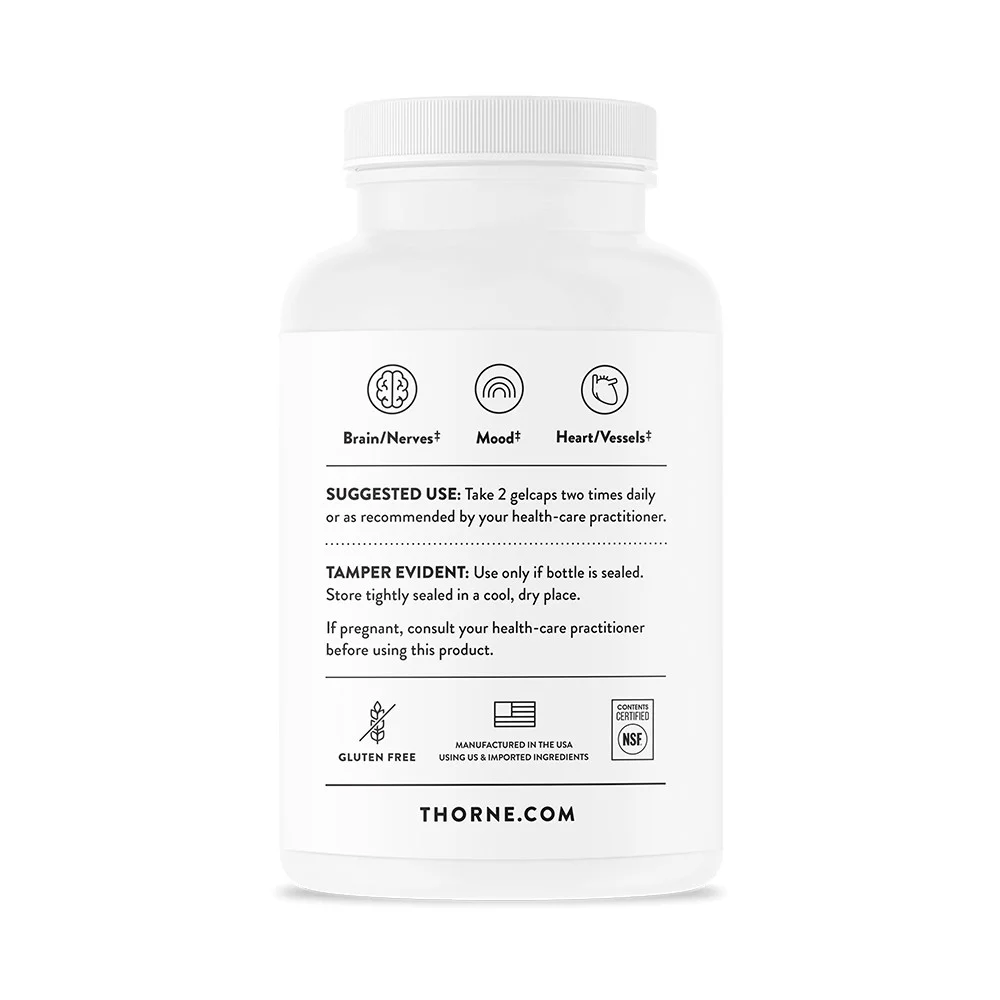 Super EPA ProThorne · $20.0092
 - 5
 Omega-3 Fish Oil Triple Strength SoftgelsNootropics Depot · $24.9991
Recomputed from the catalog every time this page is built, so it moves as products are added and rescored. Flavours and pack sizes of one product count once.
Supplements that support this
Turn this into your stack
Answer two questions and we'll build an evidence-graded starter stack — every ingredient with its dose, timing, and interaction checks.
Free · no account needed to start
Interactions to know
How these pair with other supplements and medications
- Warningomega-3+warfarin
Fish oil may increase bleeding risk with warfarin
- Cautionomega-3+aspirin
Fish oil adds to aspirin's antiplatelet effect
- Synergycurcumin+omega-3
Fat improves curcumin absorption
- Synergyvitamin d+omega-3
Fat improves vitamin D absorption
- Synergyomega-3+vitamin e
Vitamin E protects omega-3 fats from oxidation
Check your full stack in the free interaction checker.
Read next
How to Measure Blood Pressure at Home Accurately
Why home readings matter, the step-by-step protocol, how cuff size and arm position change results, validated device lists, home thresholds and when to act.
CoQ10 Benefits: What the Evidence Actually Supports
CoQ10 helps clearly in statin myalgia, heart failure, and migraine. Weak evidence for Parkinson's, blood pressure, and anti-aging. Dose, form, and who benefits most.
Nootropics Guide 2026: Ranked by Clinical Evidence
Learn which nootropics actually work for focus and cognition. Tiered by human RCT data — from caffeine + L-theanine to lion’s mane — with doses, red flags, and stack advice.
The neuroscience of memory, focus, and neuroplasticity — and how to protect cognition as you age.
Evidence-based supplement guides, no spam
We send a short digest when new guides drop — nothing else. No affiliate pushes, no sponsored content, unsubscribe anytime.