Methylcobalamin vs Cyanocobalamin: Which B12 Form Actually Works
Most B12 supplements use cyanocobalamin — but methylcobalamin is the bioactive form. Here's when the difference matters and when it doesn't.
- Methylcobalamin is the bioactive form your cells use directly; cyanocobalamin must be converted first.
- Cyanocobalamin releases ~10 mcg of cyanide per 1,000 mcg dose — trivial for healthy people, potentially problematic for smokers or those with kidney disease.
- If you carry MTHFR gene variants (C677T or A1298C), your body may struggle to convert cyanocobalamin — methylcobalamin is the safer bet.
- For most healthy adults, cyanocobalamin works fine and costs 2–3x less than methylcobalamin.
- Typical maintenance dose: 500–1,000 mcg methylcobalamin daily; 1,000–5,000 mcg for correcting deficiency.
Methylcobalamin vs cyanocobalamin is the most common B12 supplement decision you’ll face. Cyanocobalamin is synthetic, stable, and cheap. Methylcobalamin is the bioactive form your cells actually use. For most healthy people the difference is marginal — but for certain populations, choosing the wrong form means your B12 supplement may not be doing much at all.
The Four Forms of B12 Explained
Vitamin B12 isn’t a single molecule. It exists in four supplemental forms, each with a different molecular structure and a different path through your metabolism. Understanding these forms is the first step toward choosing a vitamin B12 guide-worthy supplement.
- Cyanocobalamin — Synthetic. Contains a cyanide group. Must be converted to an active form before your body can use it.
- Methylcobalamin — Bioactive. Used directly in the cytoplasm for homocysteine metabolism and methylation reactions.
- Adenosylcobalamin (dibencozide) — Bioactive. Used inside mitochondria for energy production.
- Hydroxocobalamin — Naturally occurring. Commonly used in injections. Converts readily to both active forms.
Most oral supplements contain either cyanocobalamin or methylcobalamin. The other two forms show up in specialty products and clinical settings. When you check a supplement label, the specific B12 form should be listed in parentheses after “Vitamin B12.”
Methylcobalamin: The Bioactive Form
Methylcobalamin is one of two coenzyme forms of B12 — the forms your cells actually put to work. It acts as a cofactor for methionine synthase, the enzyme that converts homocysteine back into methionine. This reaction is critical for DNA methylation, neurotransmitter synthesis, and keeping homocysteine levels in check.
Because methylcobalamin skips the conversion step required by cyanocobalamin, it’s available for immediate use after absorption. A randomized crossover trial by Okuda et al. (1973) found that methylcobalamin produced higher serum B12 retention at 48 hours compared to cyanocobalamin at equivalent doses. More recent work by Paul & Brady (2017) confirmed that methylcobalamin raises intracellular B12 markers without relying on the body’s conversion enzymes.
The trade-off: methylcobalamin is less stable than cyanocobalamin. It degrades faster when exposed to light and heat, which means storage conditions matter more and manufacturing costs run higher — typically 2–3x the price of cyanocobalamin.
Cyanocobalamin: Why It’s Cheap and Common
Cyanocobalamin dominates the supplement market for straightforward reasons: it’s the most chemically stable B12 form, it’s inexpensive to synthesize through bacterial fermentation, and it has decades of safety data behind it. Most clinical trials establishing B12’s benefits used cyanocobalamin.
After absorption, your body strips off the cyanide group and attaches either a methyl group (creating methylcobalamin) or an adenosyl group (creating adenosylcobalamin). For healthy individuals with intact enzymatic pathways, this conversion happens efficiently in the liver and other tissues.
A systematic review by Butler et al. (2006) found that oral cyanocobalamin at doses of 1,000–2,000 mcg daily was effective at correcting B12 deficiency in most populations, including elderly adults. Strong evidence Its long shelf life and thermal stability also make it the preferred form for food fortification programs worldwide.
The Cyanide Question
Yes, cyanocobalamin releases cyanide during metabolism. No, this is not as alarming as it sounds — for most people.
A standard 1,000 mcg dose of cyanocobalamin releases approximately 10 mcg of cyanide. For context, a single almond contains about 1,000 mcg of cyanide compounds. Your liver detoxifies small cyanide amounts routinely using the enzyme rhodanese, which converts cyanide to thiocyanate for excretion through urine.
If you’re a healthy nonsmoker with normal kidney function taking standard B12 doses, the cyanide from cyanocobalamin is toxicologically irrelevant. If you fall into a risk group, methylcobalamin eliminates the concern entirely.
MTHFR Gene Variants and B12 Form
This is where the methylcobalamin vs cyanocobalamin debate gets genuinely consequential. The MTHFR gene encodes methylenetetrahydrofolate reductase, an enzyme critical for producing the active form of folate (5-MTHF) and supporting the methylation cycle.
Common variants — C677T and A1298C — reduce MTHFR enzyme activity by 30–70%, depending on whether you carry one or two copies. An estimated 10–15% of the population is homozygous for C677T (two copies), with even higher prevalence in certain ethnic groups (Wilcken et al., 2003). Strong evidence
When MTHFR function is impaired, the entire methylation cycle slows down. Converting cyanocobalamin to methylcobalamin requires adequate methylation capacity — the very thing that’s compromised. This creates a paradox: the people who most need active B12 are the least equipped to make it from the synthetic form.
Even without genetic testing, signs of impaired methylation — elevated homocysteine, chronic fatigue unresponsive to cyanocobalamin, or a history of neural tube defect pregnancies — may warrant switching to the methylated form.
Adenosylcobalamin and Hydroxocobalamin
Adenosylcobalamin (also called dibencozide) is the other bioactive form. It works inside mitochondria as a cofactor for methylmalonyl-CoA mutase, an enzyme essential for fatty acid and amino acid metabolism. If your B12 deficiency shows up as elevated methylmalonic acid (MMA) on blood work, adenosylcobalamin is the form directly addressing that marker.
Hydroxocobalamin is a naturally occurring form found in food. It binds tightly to transport proteins, giving it a longer half-life than other forms. Clinically, it’s the standard injection form for severe deficiency and is also used as an antidote for cyanide poisoning (Cyanokit) at massive doses. It converts readily to both methylcobalamin and adenosylcobalamin in the body.
Some premium supplements now combine methylcobalamin and adenosylcobalamin to cover both enzymatic pathways. This is theoretically sound, though direct head-to-head trials comparing combination products against single-form supplements are still lacking. Emerging evidence
Who Should Choose Methylcobalamin
Methylcobalamin is the better investment if you fall into any of these categories:
- MTHFR variant carriers (C677T, A1298C) — impaired conversion of synthetic B12
- Adults over 50 — declining stomach acid and intrinsic factor reduce absorption and conversion efficiency. A quality multivitamin for adults over 50 should include the methylated form.
- People with kidney disease — reduced cyanide clearance makes cyanocobalamin less ideal
- Chronic smokers — already elevated cyanide burden
- Vegans and vegetarians on long-term supplementation — the higher bioavailability of the active form reduces reliance on conversion pathways
- Anyone with neurological symptoms (numbness, tingling, cognitive fog) linked to B12 deficiency — methylcobalamin crosses the blood-brain barrier more readily (Izumi & Kaji, 2007) Moderate evidence
Who Can Save Money on Cyanocobalamin
Cyanocobalamin is perfectly adequate if you’re a healthy adult under 50 with normal kidney function, no smoking history, and no known MTHFR variants. Most clinical evidence for B12 supplementation — including deficiency correction — was generated using cyanocobalamin.
It’s also the standard form in most multivitamin products. If your primary goal is preventing overt deficiency rather than optimizing methylation, cyanocobalamin at 500–1,000 mcg daily will accomplish that for about a third of the cost.
Dose Recommendations by Form
B12 dosing depends on your starting status and the supplement form. Because B12 is water-soluble with an extremely low toxicity profile, there’s no established tolerable upper intake level (UL). That said, more isn’t always better — absorption efficiency drops sharply above ~1,000 mcg per oral dose.
- General maintenance (methylcobalamin): 500–1,000 mcg daily
- Deficiency correction (methylcobalamin): 1,000–5,000 mcg daily for 8–12 weeks, then reassess
- General maintenance (cyanocobalamin): 500–1,000 mcg daily
- Deficiency correction (cyanocobalamin): 1,000–2,000 mcg daily (higher end to compensate for conversion losses)
Frequently Asked Questions
Is cyanocobalamin dangerous?
No. For healthy individuals with normal kidney function, the trace cyanide released by cyanocobalamin (roughly 10 mcg per 1,000 mcg dose) is easily detoxified by the liver. It’s been used safely in supplements and food fortification for over 50 years. The concern is limited to specific populations: people with kidney disease, chronic smokers, and those on extremely high doses long-term.
Can I take methylcobalamin and adenosylcobalamin together?
Yes. These are the two bioactive forms, and they serve different enzymatic roles — methylcobalamin in cytoplasmic methylation and adenosylcobalamin in mitochondrial energy metabolism. Some practitioners recommend combining both, especially for patients with persistently elevated homocysteine and methylmalonic acid. No adverse interactions between the two forms have been reported.
How do I know if I have an MTHFR variant?
MTHFR variants are detected through genetic testing, available via clinical lab orders or consumer genomics services like 23andMe. If you’ve done consumer testing, look for rs1801133 (C677T) and rs1801131 (A1298C) in your raw data. Alternatively, elevated homocysteine levels on a standard blood panel can suggest impaired methylation, though they don’t confirm the specific cause.
Does B12 form matter if I’m getting injections?
Injections bypass the gastrointestinal tract entirely, so absorption is not a variable. Hydroxocobalamin is the standard injection form because of its long half-life and strong protein binding. Cyanocobalamin injections are also used, though hydroxocobalamin is generally preferred for fewer required injections. Methylcobalamin injections exist but are less stable and less commonly prescribed.
Will switching to methylcobalamin fix my fatigue?
It depends on why you’re fatigued. If your fatigue stems from B12 deficiency and you have impaired conversion of cyanocobalamin (due to MTHFR variants, aging, or other factors), switching to methylcobalamin may help. But fatigue is multifactorial. If your serum B12 and MMA levels are already normal, the form of B12 likely isn’t the bottleneck. Rule out iron deficiency, thyroid dysfunction, and sleep disorders first.
Do high-dose B12 supplements cause acne?
Possibly. A study by Kang et al. (2015) found that B12 supplementation altered the gene expression of skin bacteria (Cutibacterium acnes), promoting inflammatory compound production. Emerging evidence This effect was observed at high doses and appeared form-independent. If you notice breakouts after starting B12, try lowering the dose before switching forms.
what is a normal B12 blood level and how do I know if I’m actually deficient
The guide doesn’t define specific serum B12 ranges or explain functional markers like methylmalonic acid (MMA). Generally, serum B12 alone can miss functional deficiency — MMA rises when cells are actually B12-depleted, even when serum levels appear borderline normal. For precise cutoffs and interpretation, consult your healthcare provider or a clinical lab reference. The guide does recommend retesting serum B12 and MMA after 8–12 weeks of supplementation to confirm your supplement is working.
does methylcobalamin cause any side effects or can you take too much
Methylcobalamin has no established tolerable upper intake level and a low toxicity profile. The guide notes high-dose B12 may contribute to acne via bacterial skin changes. Other reported side effects at high doses — including sleep disturbance, anxiety, and skin flushing — are not addressed in the guide. The guide does flag that absorption efficiency drops sharply above 1,000 mcg per oral dose, so higher isn’t always better. If you experience unusual symptoms at doses of 1,000–5,000 mcg, reduce the dose and consult a provider.
methylcobalamin vs cyanocobalamin for nerve damage or neuropathy
The guide identifies methylcobalamin as the better choice for neurological symptoms, citing its superior blood-brain barrier penetration (Izumi Kaji, 2007). It doesn’t, however, review clinical trial evidence specifically for peripheral neuropathy treatment. The guide’s reasoning still applies: methylcobalamin’s direct bioavailability and nervous system access make it the more logical form when B12 deficiency is linked to numbness, tingling, or cognitive fog. For therapeutic use in diagnosed neuropathy, dose and duration should be directed by a physician.
how long does it take for B12 supplements to work
The guide recommends retesting serum B12 and methylmalonic acid after 8–12 weeks but doesn’t specify a symptom improvement timeline. In general, energy and cognitive symptoms tied to B12 deficiency may begin improving within weeks, while neurological symptoms can take months and may not fully resolve. Results depend on deficiency severity, the form used, and individual absorption. If you notice no improvement after 8–12 weeks of consistent supplementation, retest before adjusting dose or switching forms.
best B12 supplement for pernicious anemia
The guide doesn’t cover pernicious anemia. This is a critical gap: pernicious anemia involves autoimmune destruction of intrinsic factor, which is required for standard oral B12 absorption. Standard oral doses are unlikely to correct deficiency in these patients regardless of form. Treatment typically requires injections or very high-dose oral supplementation relying on passive diffusion — neither of which is detailed in this guide. If you have or suspect pernicious anemia, work with your physician to determine the appropriate form, route, and dose.
can I get enough B12 from food instead of supplements
The guide focuses on supplementation and doesn’t address when dietary sources alone are sufficient. B12 is found almost exclusively in animal products — meat, fish, dairy, and eggs. Healthy omnivores under 50 with normal digestion may meet needs through diet alone. Vegans, vegetarians, adults over 50 with declining stomach acid, and anyone with absorption issues are unlikely to get adequate B12 from food. If you’re borderline insufficient rather than deficient, dietary changes plus a retest in 8–12 weeks may be a reasonable first step — discuss with your provider.
methylcobalamin storage — does it really go bad faster
The guide confirms methylcobalamin degrades faster than cyanocobalamin when exposed to light and heat, which is why it costs 2–3x more to manufacture. It doesn’t provide specific storage instructions. Practically: store methylcobalamin in a cool, dark location away from humidity; avoid leaving it on a sunny counter or in a hot car. When evaluating brands, look for opaque or dark bottles and third-party quality testing as signals that the manufacturer takes stability seriously — the guide prioritizes verified quality over form alone.
Who Should Talk to a Doctor First
B12 is generally safe, but certain situations warrant professional guidance before supplementing — especially at high doses or when choosing between forms.
None of the above is medical advice. Bring your full supplement list to your next provider visit.
- 1
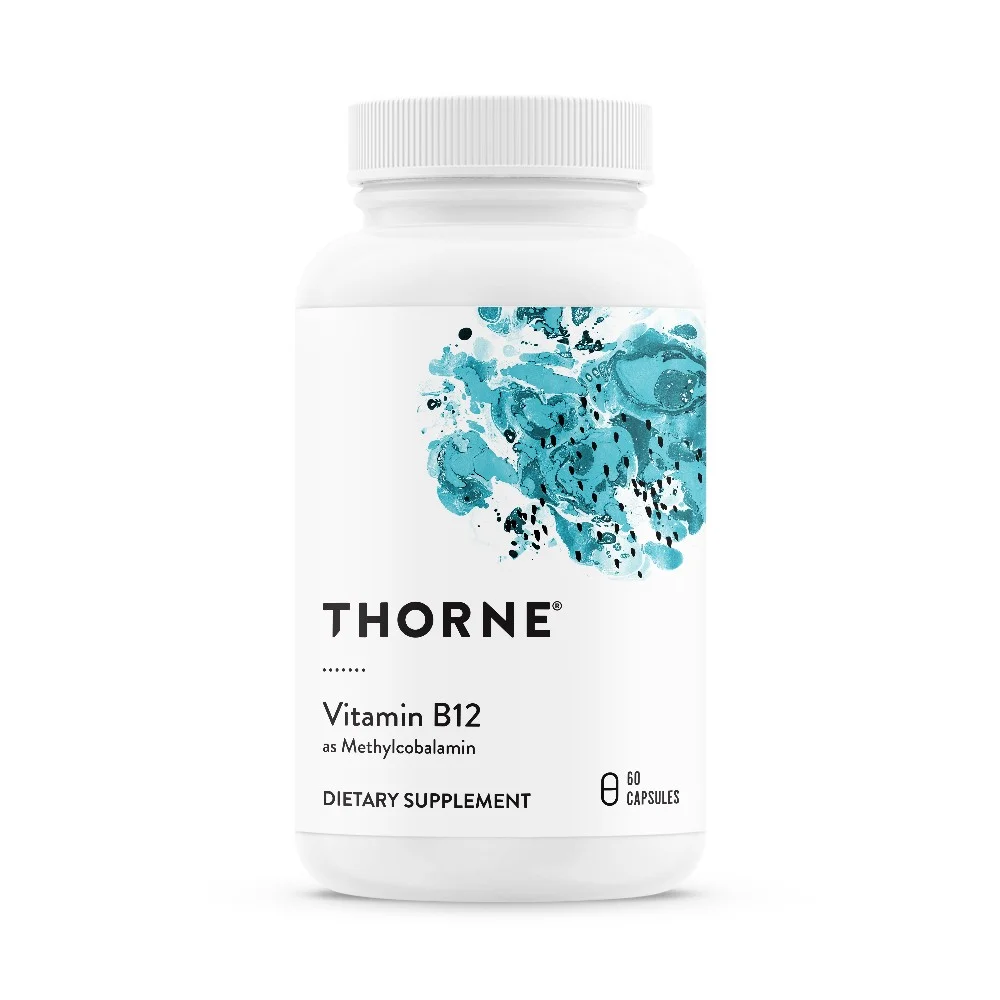
 Vitamin B12Thorne · $24.0096
 - 2
 Vitamin B12 CapsulesNutricost · $15.9790
 - 3
 Vitamin B12 Maximum Strength 5000 mcg SoftgelsNature Made · $21.9990
 - 4
 Adenosyl/Hydroxy B12Pure Encapsulations · $31.0089
 - 5
 B12 liquidPure Encapsulations · $22.0089
Recomputed from the catalog every time this page is built, so it moves as products are added and rescored. Flavours and pack sizes of one product count once.
The Bottom Line
The methylcobalamin vs cyanocobalamin debate has a straightforward resolution for most people: both forms work, but they don’t work equally well for everyone.
Cyanocobalamin is the workhorse of B12 supplementation. It’s backed by decades of clinical research, it’s dirt cheap, and it’s shelf-stable. If you’re a healthy adult under 50 looking to cover your nutritional bases — especially if B12 is just one line item in a broader multivitamin — cyanocobalamin will get the job done without any meaningful drawback.
Methylcobalamin earns its premium in specific, well-defined scenarios. If you carry MTHFR gene variants, your enzymatic machinery for converting cyanocobalamin to its active form may be sluggish or partially broken. If you have kidney disease, even trace cyanide becomes a legitimate concern. If you’re over 50 and dealing with declining intrinsic factor and stomach acid, giving your body the pre-activated form removes unnecessary metabolic hurdles. And if you have neurological symptoms from B12 deficiency, methylcobalamin’s superior nervous system penetration makes it the more logical therapeutic choice.
The worst choice isn’t picking the “wrong” form — it’s picking a low-quality product regardless of form. A third-party tested cyanocobalamin from a reputable manufacturer beats an untested methylcobalamin product every time. Start with the form that matches your biology, then vet the brand.
For most people, 500–1,000 mcg daily of either form maintains adequate B12 status. If you’re correcting a documented deficiency, work with your provider on dose and duration. Retest your serum B12 and methylmalonic acid levels after 8–12 weeks to confirm your supplement is actually moving the needle.
Supplements that support this
Turn this into your stack
Answer two questions and we'll build an evidence-graded starter stack — every ingredient with its dose, timing, and interaction checks.
Free · no account needed to start
Interactions to know
How these pair with other supplements and medications
- Warningvitamin b12+antacids
Long-term antacid use depletes B12
- Warningppi+vitamin b12
Long-term PPI use reduces B12 absorption
- Cautionvitamin c+vitamin b12
High-dose vitamin C may reduce B12 absorption
- Synergyvitamin b12+folate
B12 and folate work together in methylation
Check your full stack in the free interaction checker.
Read next
Alpha-GPC vs Citicoline: Which Choline Source Actually Works?
Two of the most effective nootropics, both precursors to acetylcholine. We break down the evidence, dosing, bioavailability, and which one fits which goal.
Vitamin D3 vs D2: The Science Behind the 87% Gap
D3 raises blood levels 87% more effectively than D2 — and your prescription vitamin D might be the inferior form. Here's what to know.
Berberine vs Metformin: The Evidence Behind 'Nature's Metformin'
Berberine is marketed as natural metformin, but the comparison is more nuanced. Here's how the mechanisms, evidence, and safety profiles actually stack up.
The real science of food and health — macro- and micronutrients, and how diet shapes aging.
Evidence-based supplement guides, no spam
We send a short digest when new guides drop — nothing else. No affiliate pushes, no sponsored content, unsubscribe anytime.