Heart Health
Omega-3 Fatty Acids
Also known as: Fish oil (heart), Omega-3s, EPA, Fish oil for mood
A concentrated source of omega-3 polyunsaturated fatty acids (EPA and DHA) derived from oily fish tissues, widely used as a dietary supplement for cardiovascular and cognitive support. Standardized fish oil supplements typically provide defined amounts of EPA and DHA per dose.
Last reviewed June 2026 · Evidence graded from peer-reviewed research, not editorial opinion. Educational only — not medical advice.
Every Omega-3 Fatty Acids product we have scored
| # | Product | Score | Per serving |
|---|---|---|---|
| 1 | Thorne Omega Superb | 92 A | $0.63 |
| 2 | Thorne Omega-3 with CoQ10 | 92 A | $0.61 |
| 3 | Thorne Super EPA | 92 A | $0.23 |
| 4 | Thorne Super EPA Pro | 92 A | $0.33 |
| 5 | Nootropics Depot Omega-3 Fish Oil Triple Strength Softgels | 91 A | $0.42 |
| 6 | Thorne Prenatal DHA | 89 A | $1.00 |
| 7 | Nootropics Depot AvailOM DHA Algae Capsules | 88 A | $0.75 |
| 8 | Ritual Essential Prenatal | 88 A | $0.65 |
| 9 | Thorne Advanced DHA | 87 A | $1.00 |
| 10 | Nordic Naturals Vision Support Omega Blend | 87 A | $1.47 |
| 11 | Complement Essential | 86 A- | $1.48 |
| 12 | Garden of Life Dr. Formulated Advanced Omega - Citrus | 86 A- | $0.58 |
Scored on dose accuracy, form, label transparency and third-party testing. Per-serving cost is list price divided by servings per container. No brand pays to be listed or ranked.
Common questions
How much Omega-3 Fatty Acids should I take?
The typical range is 2-4g EPA+DHA for heart. Ongoing
When should I take Omega-3 Fatty Acids?
With meals. Yes.
Which form of Omega-3 Fatty Acids is best?
High-EPA fish oil — EPA:DHA 2:1 or higher. Other forms in the catalog: Algal EPA, Fish oil capsules, Triglyceride form, Ethyl ester, Prescription (Vascepa), Fish oil, Algae oil, softgels, liquid, enteric-coated softgels, ethyl ester form.
Is Omega-3 Fatty Acids safe?
Commonly reported: Fishy burps, GI upset, Bruising. Serious warnings: Increased bleeding risk at high doses. Safe
Which Omega-3 Fatty Acids supplement scores highest?
Thorne Omega Superb, at 92/100. Scored on dose accuracy, form, label transparency and third-party testing — no brand pays to be listed or ranked.
Daily target & upper limit
500 mg / dayOmega-3 Fatty Acids has an established daily reference intake. See best forms, label synonyms, upper-limit warnings, and top-scoring supplements:
Omega-3 Fatty Acids dosage reference →Primary uses
- Depression support
- Mood
- Inflammation
- Brain health
- Cortisol reduction
- Stress resilience
- Triglycerides
- Heart rhythm
- Blood pressure
- Insulin sensitivity
- Hormone balance
- Lipid profile
What systematic reviews concluded
Outcomes that systematic reviews of Omega-3 Fatty Acids reached a verdict on: 40 with a benefit, 20 with no effect, 7 with harm reported, 14 unclear. Each is quoted from a review and linked to it on PubMed. How these were read.
Reviews found a benefit (40)
“Meta-analysis of 12 randomized controlled trials (474 participants) showed that omega-3 supplementation significantly reduced triglycerides (mean difference [MD] = -0.27 mmol/L, 95% CI: -0.35 to -0.20, p < 0.00001), systolic blood pressure (MD = -4.50 mmHg, 95% CI: -7.57 to -1.42, p = 0.004), and kidney injury molecule-1 (MD = -1.74 pg/mL, 95% CI: -2.58 to -0.89, p < 0.0001), while increasing high-density lipoprotein cholesterol (MD = 0.14 mmol/L, 95% CI: 0.04-0.23, p = 0.004).” PMID 42517346
“systolic blood pressure (MD = -4.50 mmHg, 95% CI: -7.57 to -1.42, p = 0.004)” PMID 42517346
“kidney injury molecule-1 (MD = -1.74 pg/mL, 95% CI: -2.58 to -0.89, p < 0.0001)” PMID 42517346
“increasing high-density lipoprotein cholesterol (MD = 0.14 mmol/L, 95% CI: 0.04-0.23, p = 0.004)” PMID 42517346
“there was a significant effect on the reduction of fasting blood glucose [SMD: -0.48; CI95%: -0.76, -0.19; p = 0.01; I2 = 88%]” PMID 33480268
“insulin resistance [SMD: -0.61; CI95%: -0.98, -0.24; p = 0.01; I2 = 90%]” PMID 33480268
and 34 more.
Reviews found no effect (20)
“No significant improvements in albumin-to-creatinine ratio or estimated glomerular filtration rate were observed.” PMID 42517346
“The meta-analysis showed that prenatal DHA supplementation had no significant benefits on any neurodevelopmental outcome.” PMID 42494300
“ω-3 fatty acids alone did not improve postoperative morbidity.” PMID 42331289
“For glycated hemoglobin, there was no significant effect in the meta-analysis.” PMID 33480268
“There may be little to no difference in feeding intolerance or time to achieve full enteral feeds.” PMID 41609005
“Short-term administration of FO-ILEs at the currently recommended dose (0.1-0.2 g/kg, corresponding to an average daily EPA/DHA intake of 4-6 g) can be considered safe from a critical care perspective in the setting of AF, especially when the duration of total parenteral nutrition is limited (<4 weeks).” PMID 41314109
and 14 more.
Harm reported (7)
“balanced against dose-dependent AF increases at high doses (> 1.5 g/day).” PMID 42144851
“dietary EPA/DHA supplementation improved the TG and HDL status but increased LDL levels in comparison with ALA” PMID 32175534 · 2 reviews
“total cholesterol (TC) (WMD 0.179 mmol l-1; 95% CI 0.006, 0.352)” PMID 32175534
“studies of both the EPA/DHA combination and EPA alone showed a significant increase in risk of new-onset atrial fibrillation” PMID 37031750
“studies of both the EPA/DHA combination and EPA alone showed a significant increase in risk of new-onset atrial fibrillation.” PMID 37031750
“low-density lipoprotein (LDL) (WMD 0.130 mmol l-1; 95% CI 0.006, 0.253)” PMID 32175534 · 2 reviews
and 1 more.
Not enough to say: arterial stiffness; dry eye disease; endothelial function (flow mediated dilation); skeletal muscle function; pnald prevention; cardiovascular events; cognitive function; neurodegeneration; dry eye symptoms; knee pain; lipid profile; metabolic syndrome risk factors; glycaemic control; hdl cholesterol.
31 findings from reviews in specific patient groups (such as cancer, pregnancy or surgery) are not shown here.
How it works
- Reduces triglycerides
- Anti-inflammatory
- Membrane fluidity
- Heart rhythm support
Dosage
- Typical range
- 2-4g EPA+DHA for heart
- Timing
- With meals
- With food
- Yes
- Duration
- Ongoing
- Special populations
- High triglycerides, heart disease, post-MI
Forms
- High-EPA fish oil
- Algal EPA
- Fish oil capsules
- Triglyceride form
- Ethyl ester
- Prescription (Vascepa)
- Fish oil
- Algae oil
- softgels· 70/100
- liquid· 70/100
- ethyl ester form· 70/100
Safety
Common side effects
- Fishy burps
- GI upset
- Bruising
Contraindications
- Fish allergy
- Bleeding disorders
Products containing Omega-3 Fatty Acids
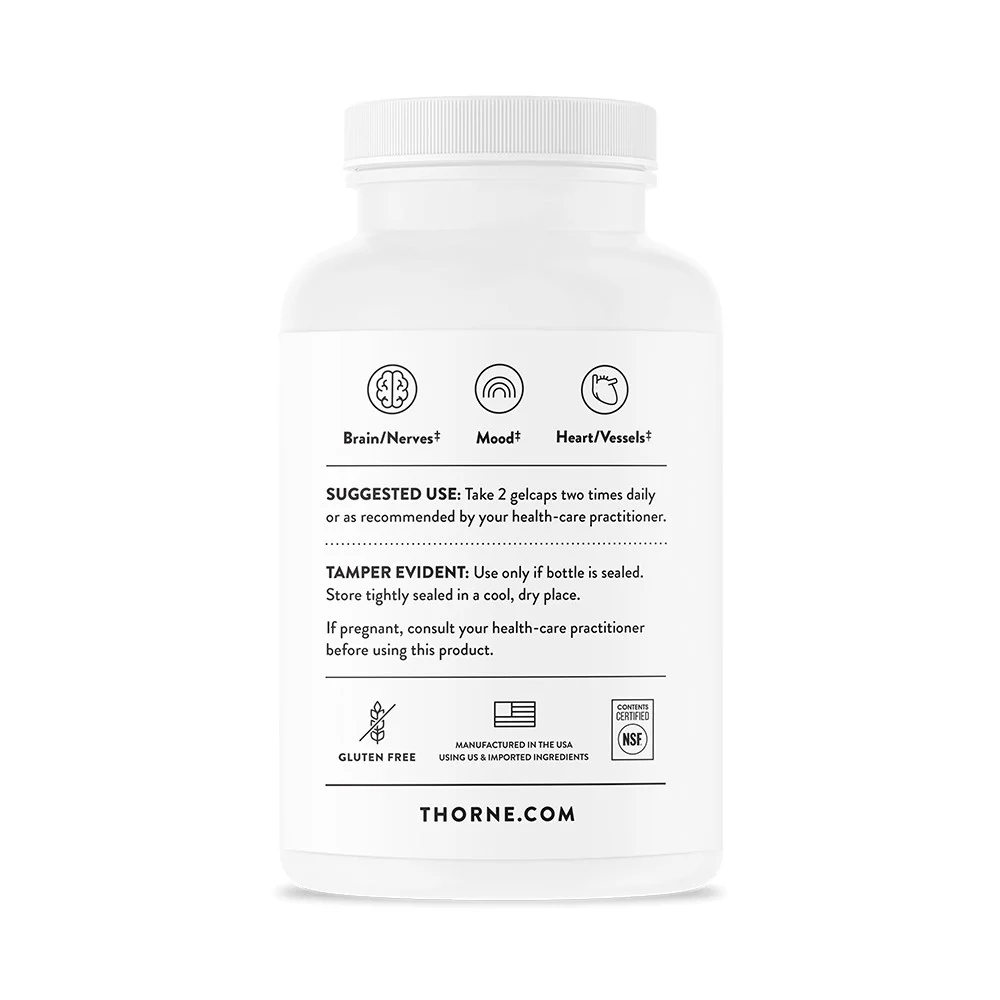
Top-scoring supplements in our catalog that list Omega-3 Fatty Acids on the label. Each product is graded on Formulate's ingredient-level rubric — dose accuracy, form, transparency, and third-party testing.


Known interactions
- Synergywith curcumin
Fat improves curcumin absorption
- Warningwith omega-3
Fish oil may increase bleeding risk with warfarin
- Cautionwith omega-3
Fish oil adds to aspirin's antiplatelet effect
- Synergywith vitamin d
Fat improves vitamin D absorption
- Synergywith omega-3
Vitamin E protects omega-3 fats from oxidation
Evidence notes
Strong evidence for heart health
Grade A: Multiple well-designed human trials support the main claims.
Cited research for Omega-3 Fatty Acids
Clinical studies referenced across Formulate guides that mention omega-3 fatty acids. Each links to the full study page with PubMed source + the guides that cite it.
- Nicholls et al. (2020)JAMA
Effect of High-Dose Omega-3 Fatty Acids vs Corn Oil on Major Adverse Cardiovascular Events (STRENGTH)
- Skulas-Ray et al. (2019)Circulation
Omega-3 Fatty Acids for the Management of Hypertriglyceridemia: A Science Advisory From the American Heart Association
- Bhatt DL, Steg PG, Miller M, et al. (2019)New England Journal of Medicine
Cardiovascular Risk Reduction with Icosapent Ethyl for Hypertriglyceridemia (REDUCE-IT)
- Liao et al. (2019)Translational Psychiatry
Efficacy of omega-3 PUFAs in depression: a meta-analysis
- Aung et al. (2018)JAMA Cardiology
Associations of omega-3 fatty acid supplement use with cardiovascular disease risks: meta-analysis of 10 trials involving 77,917 individuals
- Albert et al. (2015)Scientific Reports
Fish oil supplements in New Zealand are highly oxidised and do not meet label content of n-3 PUFA
- Mori (2014)Fitoterapia
Omega-3 fatty acids and hypertension in humans
- Dyerberg et al. (2010)Prostaglandins, Leukotrienes and Essential Fatty Acids
Bioavailability of marine n-3 fatty acid formulations
Related in Heart Health
Check a full stack
Formulate's free interaction checker lets you paste in any combination of supplements and medications at once — every pairing flags severity, timing, and cited evidence.
Open the checkerWhere does Omega-3 Fatty Acids fit in your stack?
Answer two questions and get a stack graded on research — every ingredient scored on the evidence behind it, not the marketing.
Build my stack2 questions · free · no account needed to start
Also on iPhone — get the free app
Evidence-based supplement guides, no spam
We send a short digest when new guides drop — nothing else. No affiliate pushes, no sponsored content, unsubscribe anytime.
Medical disclaimer. This page is educational and does not replace advice from a qualified healthcare provider. Individual needs and risks vary — consult a professional before starting, stopping, or combining supplements, especially if you are pregnant or nursing, taking medication, or managing a health condition.