Creatine for Endurance Athletes: The Overlooked Performance Tool
Creatine is labeled a 'strength supplement' but endurance athletes from cyclists to triathletes benefit in surprising ways. Here's what the evidence actually shows.
- Creatine for endurance athletes is not the contradiction most people assume — the ISSN position stand supports benefits for high-intensity intermittent exercise, which includes intervals, surges, and sprint finishes.
- Water-retention weight gain is typically 1–2 lbs of intracellular fluid, negligible for most runners and cyclists.
- Chronic creatine use may enhance glycogen replenishment, recovery between sessions, and repeated-sprint ability.
- Standard dosing applies: 3–5 g of creatine monohydrate daily, no cycling required.
- Benefits accumulate over weeks of saturation — creatine is not a race-day magic bullet.
- Combining creatine with beta-alanine may offer synergistic effects for high-intensity endurance efforts.
Creatine for endurance athletes is far more useful than most people think. While it’s been stereotyped as a bodybuilder’s supplement, the evidence shows meaningful benefits for runners, cyclists, triathletes, and anyone whose training includes repeated high-intensity efforts—which, in practice, describes almost every endurance sport. For the complete runner-specific supplement picture, including iron, caffeine, beetroot, and what to skip, see our best supplements for runners guide.
The Endurance Athlete’s Creatine Myth
Walk into any running club and mention creatine. You’ll hear some version of: “That’s for gym bros. It makes you heavy and puffy.” This perception is deeply embedded in endurance culture, and it’s mostly wrong.
The myth rests on two assumptions. First, that creatine causes significant weight gain that hurts power-to-weight ratio. Second, that the phosphocreatine system only matters for short, explosive efforts—irrelevant to a 5K or century ride. Both assumptions crumble under scrutiny.
What Creatine Actually Does (And Doesn’t)
Creatine is a naturally occurring compound stored primarily in skeletal muscle as phosphocreatine. Its main job is recycling ATP—your cells’ universal energy currency—during high-demand efforts. When you surge up a hill, sprint for a town-line sign, or hammer through an interval, phosphocreatine is the first energy system that fires.
Supplementing with creatine monohydrate increases intramuscular creatine stores by roughly 20–40%, depending on your baseline diet and genetics. This doesn’t turn you into a sprinter. But it does mean your muscles can regenerate ATP faster during intense bouts within a longer effort—and recover more effectively between those bouts.
What creatine does not do: it won’t improve your VO₂max, raise your lactate threshold directly, or replace proper aerobic training. Think of it as a supporting tool, not a foundation.
Evidence Base: Beyond the Weightlifting Lens
The International Society of Sports Nutrition (ISSN) published its comprehensive position stand on creatine in 2017, reviewing over 500 studies. Their conclusion was unambiguous: creatine benefits span strength, power, and high-intensity intermittent exercise (Kreider et al., 2017).
That last category—high-intensity intermittent exercise—is the key for endurance athletes. Interval workouts, tempo runs with surges, criterium racing, cyclocross, and even the tactical accelerations in a marathon all involve repeated high-intensity efforts layered on top of an aerobic base.
Robinson et al. (1999) demonstrated that creatine supplementation increased post-exercise glycogen storage by roughly 9% compared to carbohydrate alone when combined with a carbohydrate load. Moderate evidence For endurance athletes doing multi-session training days or competing in stage races, enhanced glycogen replenishment is a meaningful advantage.
A meta-analysis by Branch (2003) found that while creatine’s effect on single-bout endurance performance (like a steady-state time trial) is minimal, its effects on repeated-sprint performance—the ability to go hard, recover, and go hard again—are consistent and significant. Strong evidence
Glycogen, Sprints, and Recovery
Three mechanisms make creatine specifically relevant for endurance training:
1. Glycogen replenishment. The Robinson (1999) study showed creatine-loaded muscles supercompensated glycogen stores more effectively. During heavy training blocks where you’re depleting glycogen daily, this can mean starting each session with fuller tanks.
2. Repeated-sprint capacity. Whether you’re a cyclist responding to attacks, a soccer player making 50-meter dashes, or a runner doing 400m repeats, the ability to maintain power output across multiple efforts is phosphocreatine-dependent. Higher creatine stores mean less decay in power from sprint 1 to sprint 10.
3. Between-session recovery. Some evidence suggests creatine reduces markers of muscle damage (creatine kinase, or CK) and delayed-onset muscle soreness (DOMS) after intense training. Emerging evidence Santos et al. (2004) reported reduced CK levels in marathon runners supplementing with creatine. This is still an emerging area, and individual responses vary, but the signal is there.
When Endurance Athletes Should Consider Creatine
Creatine isn’t equally useful at every phase of training. Here’s when the payoff is likely highest:
- Heavy training blocks – high volume + high intensity = high glycogen demand and more muscle damage. Creatine supports both recovery and replenishment.
- Interval-focused phases – if your mesocycle emphasizes VO₂max intervals, hill repeats, or tempo work with surges, creatine directly supports the energy system you’re taxing.
- Multi-event weekends or stage races – back-to-back races demand rapid recovery. Creatine’s glycogen and CK benefits matter most here.
- Concurrent training – if you lift and run (as most modern coaches recommend), creatine supports the strength work without compromising endurance sessions.
If you’re exclusively doing low-intensity zone 2 work for a recovery phase, creatine is less impactful. It won’t hurt you, but the benefits are minimal when your energy demands are entirely aerobic.
The Weight Gain Question
Let’s address this directly. Creatine causes water retention. That’s a fact. But the context matters enormously.
The typical weight gain from creatine saturation is 1–2 lbs (0.5–1 kg). This water is stored inside muscle cells, not under the skin. It’s intracellular hydration, not bloat. For a 150 lb runner, we’re talking about a 0.7–1.3% increase in body mass.
Is that enough to meaningfully hurt performance? For virtually all endurance athletes: no. The performance benefits of improved recovery, glycogen loading, and repeated-sprint capacity far outweigh the cost of carrying an extra pound of intracellular water. If you’re an elite mountain climber where every gram counts at altitude, the calculation changes. For everyone else, this concern is overblown.
Protocol: Dose, Timing, and Cycling
The protocol for endurance athletes is identical to what works for strength athletes. There’s no special “endurance dose.”
- Form: Creatine monohydrate. It’s the most studied, most effective, and cheapest form. See our best creatine supplements guide for vetted options.
- Dose: 3–5 g daily. Larger athletes (>200 lbs) may benefit from the higher end.
- Timing: Doesn’t matter much. Post-workout with food may slightly enhance uptake (Antonio & Ciccone, 2013), but consistency matters more than timing.
- Cycling: Not necessary. The ISSN position stand found no evidence that cycling on and off creatine provides any advantage. Daily use is safe long-term.
- Duration to see effects: Plan on 3–4 weeks of daily dosing before stores are saturated (without a loading phase).
One important note: creatine is not a race-day supplement. You don’t pop creatine 30 minutes before a race and expect a benefit. The effects come from chronic saturation of intramuscular stores. If you haven’t been loading for weeks, taking it on race morning does nothing.
Creatine + Other Endurance Supplements
Creatine plays well with most evidence-based supplements. A few combinations worth noting:
Creatine + Beta-Alanine. Beta-alanine buffers hydrogen ions during high-intensity work; creatine recycles ATP. They target different bottlenecks in the same energy pathway. Hoffman et al. (2006) found the combination improved high-intensity endurance performance more than either supplement alone. This pairing is especially relevant for athletes doing threshold and VO₂max work.
Creatine + Carbohydrates. Taking creatine alongside carbohydrate increases creatine uptake into muscle (Green et al., 1996). This is easy to implement: mix your creatine into a post-workout recovery shake or take it with a meal.
Creatine + Caffeine. The interaction here is controversial. Some early research (Vandenberghe et al., 1996) suggested caffeine might blunt creatine’s ergogenic effects, but more recent evidence is mixed, and most practitioners use both without issue. If you follow a pre-workout protocol that includes caffeine, take your creatine at a different time of day if you’re concerned.
Frequently Asked Questions
Will creatine make me slower because of weight gain?
Almost certainly not. The 1–2 lbs of intracellular water weight is a negligible fraction of body mass for most athletes. The recovery, glycogen, and sprint-capacity benefits consistently outweigh this minor increase. Elite-level ultralight climbers might run a different calculus, but for the vast majority of endurance athletes, this fear is unfounded.
Does creatine help with long, steady-state efforts like a marathon?
The direct performance boost for pure steady-state work is minimal. Creatine primarily supports the phosphocreatine system, which dominates during short, intense efforts. However, the indirect benefits—better training recovery, improved glycogen replenishment between sessions, and stronger interval workouts that build your aerobic engine—can absolutely improve marathon performance over a training cycle.
Should I stop taking creatine during a taper?
No. Creatine stores take 4–6 weeks to deplete after you stop supplementing. Discontinuing during a 1–2 week taper won’t reduce your stores, but it also won’t provide any benefit to stop. Keep your daily 3–5 g dose consistent through your taper and race.
Is creatine safe for my kidneys?
In healthy individuals, creatine supplementation at recommended doses (3–5 g/day) has shown no adverse effects on kidney function across hundreds of studies and the ISSN position stand. Creatine does raise serum creatinine (a kidney marker), which can confuse lab work. Tell your doctor you supplement before bloodwork so they can interpret results correctly.
Can I take creatine if I’m a female endurance athlete?
Yes. Creatine works identically in female athletes. Women may actually see relatively greater benefits because they tend to have lower baseline creatine stores (due to lower average dietary meat intake and smaller muscle mass). The dose is the same: 3–5 g/day. Emerging research also suggests potential benefits for bone health and mood, though these are still being investigated. Emerging evidence
does creatine affect VO2max or lactate threshold at all
Creatine does not directly improve VO₂max or lactate threshold. VO₂max is governed by oxygen delivery mechanisms—cardiac output, hemoglobin mass, mitochondrial density—that creatine doesn’t influence. Graef et al. (2009) confirmed no VO₂max differences after four weeks of creatine supplementation. Lactate threshold depends on MCT density and buffering capacity; Nelson et al. (2000) found no effect on ventilatory threshold or blood lactate. The indirect benefit: creatine lets you sustain target power through more interval repeats, compounding training quality that drives aerobic adaptation over a full mesocycle.
creatine and GI issues during running or triathlon
GI distress from creatine is almost entirely dose- and timing-dependent. Loading doses (20 g/day) are the primary culprit—Ostojic and Ahmetovic (2008) found significantly higher GI side effects at loading doses versus the 3–5 g maintenance dose. Skip the loading phase entirely to avoid this. Never take creatine mid-run or mixed into on-course fueling; your gut is already stressed during sustained efforts. If you train early with minimal food, take creatine post-workout with a meal. Switching to micronized monohydrate, which dissolves more completely, reduces complaints for athletes with sensitive stomachs.
best creatine for vegans or vegetarians endurance athlete
Standard creatine monohydrate is both vegan-compatible and the highest-value option for plant-based athletes. It’s synthesized from sarcosine and cyanamide—no animal-derived ingredients. More importantly, vegan and vegetarian athletes have the lowest baseline intramuscular creatine stores of any dietary group. Burke et al. (2003) found vegetarians had roughly 50% lower resting creatine concentrations than omnivores and experienced greater gains in creatine stores and work capacity when supplementing. You don’t need a specialty product—just look for third-party testing certification. Protocol is unchanged: 3–5 g daily with food.
creatine and altitude training or hypoxic adaptation
The guide doesn’t cover creatine and altitude training directly, and the evidence base here remains early-stage. What the guide does establish is that creatine may support thermoregulation via intracellular water retention and that its benefits concentrate in high-intensity, high-demand training blocks—conditions that describe altitude camps. For decisions about supplementation during a structured altitude block, consult a sports medicine physician or exercise physiologist familiar with hypoxic training protocols.
creatine timing around long rides or runs vs short intervals
The guide recommends post-workout with food as a slight edge for uptake, but emphasizes consistency over precision timing. That principle holds across training day types. On long ride or run days, take creatine with your post-session recovery meal alongside carbohydrate—which the guide notes enhances creatine uptake (Green et al., 1996). On short interval days, the same applies. What the guide explicitly warns against is taking creatine mid-workout or on a near-empty stomach. The specific mechanism of benefit is chronic muscle saturation, not acute dosing around any single session.
does creatine interact with sodium bicarbonate or beta alanine buffering for triathlon
The guide covers the creatine-plus-beta-alanine combination: they target different bottlenecks (ATP recycling vs. hydrogen ion buffering), and Hoffman et al. (2006) found the pairing improved high-intensity endurance performance more than either alone. Sodium bicarbonate isn’t addressed in the guide. For questions about a three-way creatine, beta-alanine, and sodium bicarbonate stack—including timing interactions and GI load, which is already substantial with bicarb—consult a sports dietitian. Stacking multiple buffering agents involves practical GI considerations the guide doesn’t cover.
creatine monohydrate vs creatine HCl for runners who hate water weight
The guide recommends creatine monohydrate exclusively as the most studied and effective form. Creatine HCl is marketed as causing less water retention, but this claim lacks the research backing that monohydrate has. The intracellular water weight from monohydrate—1–2 lbs—is stored inside muscle cells, not subcutaneously. If the gradual fluid shift still bothers you, the guide’s answer isn’t a different form: it’s skipping the loading phase and taking 3–5 g daily from the start, which produces a slower, less noticeable shift. No exotic form is necessary or supported by the evidence reviewed here.
Creatine for Endurance Athletes: What the Evidence Actually Shows About VO₂max and Lactate Threshold
Creatine for endurance athletes generates the most skepticism around two specific markers: VO₂max and lactate threshold. If creatine doesn't move these numbers directly, why bother? It's a fair question—and the honest answer is that creatine doesn't directly improve either one. But the indirect pathway is where things get interesting.
Why Creatine Doesn't Budge VO₂max
VO₂max is fundamentally an oxygen-delivery metric. It's governed by cardiac output, hemoglobin mass, capillary density, and mitochondrial oxidative capacity. Creatine operates in a completely different lane—it recycles ATP via the phosphocreatine shuttle, a system that peaks in the first 10–15 seconds of maximal effort. Graef et al. (2009) tested creatine supplementation against placebo over four weeks of aerobic training and found no significant difference in VO₂max between groups. This isn't surprising. Creatine doesn't increase mitochondrial density, stimulate erythropoietin, or expand blood volume.
Why Lactate Threshold Doesn't Shift Either
Lactate threshold depends on your muscles' ability to clear and buffer lactate—driven by monocarboxylate transporter (MCT) density, intracellular buffering capacity, and oxidative enzyme activity. Creatine doesn't meaningfully interact with any of these mechanisms. Nelson et al. (2000) found that creatine supplementation had no effect on ventilatory threshold or blood lactate accumulation during incremental cycling. Moderate evidence If you want a supplement that directly targets buffering, that's beta-alanine's territory, not creatine's.
The Indirect Pathway: Better Intervals → Better Aerobic Adaptations
Here's the pivot most coaches miss. Creatine doesn't improve your aerobic ceiling directly, but it lets you train closer to it more often. If your VO₂max intervals call for six repeats at 95% max heart rate, and creatine lets you sustain target power through all six instead of fading on repeats five and six, you accumulate a greater total training stimulus at the intensity that actually drives aerobic adaptation.
Rico-Sanz and Mendez Marco (2000) showed creatine-supplemented subjects maintained higher power output across repeated high-intensity cycling bouts. Over a full mesocycle of interval-focused training, that compounding effect on session quality is how creatine indirectly supports VO₂max and threshold improvements—not by altering the physiology of oxygen transport, but by enabling the training that does. Emerging evidence
GI Tolerance: How to Avoid Stomach Issues With Creatine During Training
Stomach issues with creatine are the number-one reason endurance athletes quit the supplement before it ever has a chance to work. The good news: GI distress is almost entirely dose- and timing-dependent, not an inherent property of creatine itself. A few adjustments to how you take it can eliminate the problem for most people.
Why Loading Doses Wreck Your Gut
Most GI complaints—nausea, cramping, diarrhea—cluster during loading phases (20 g/day). Ostojic and Ahmetovic (2008) reported significantly higher GI side effects at loading doses compared to maintenance doses of 3–5 g. The mechanism is straightforward: dump a large bolus of osmotically active powder into your stomach and your gut pulls in water to dilute it. During training, when blood is already diverted away from your digestive tract, the result is predictable misery.
The simplest fix is to skip the loading phase entirely. As covered in the protocol section above, 3–5 g daily reaches full saturation in 3–4 weeks. If you insist on loading, split the 20 g into four 5 g doses spread across the day with meals. Never take a full loading dose on an empty stomach before a workout.
Training-Specific Timing
If you train early morning with minimal food, take your creatine with your post-workout meal instead—not pre-workout on a nearly empty stomach. For mid-long-run fueling, do not mix creatine into gels or on-the-run hydration. Your gut is already under stress during sustained efforts; adding creatine mid-run is asking for trouble. Keep supplementation separate from training sessions entirely.
Micronized vs. Standard Monohydrate
Micronized creatine monohydrate has smaller particle sizes, which improves solubility in water. It's chemically identical to standard monohydrate—same molecule, same efficacy—but the finer grind means less undissolved powder sitting in your stomach. Emerging evidence Anecdotally and in practitioner reports, micronized forms produce fewer GI complaints, particularly in athletes with sensitive stomachs. If standard monohydrate gives you grief despite proper dosing and timing, switching to a micronized version is a low-cost experiment worth running. Check our best creatine supplements guide for micronized options.
Creatine for Vegan and Vegetarian Endurance Athletes
Creatine for vegan runners and plant-based endurance athletes may be the single highest-value supplement decision you can make. Here's why: your body synthesizes some creatine endogenously, but the rest comes from dietary meat and fish. If you eat neither, your baseline intramuscular creatine stores are substantially lower than those of omnivores—and that gap translates directly into a larger response when you supplement.
Burke et al. (2003) found that vegetarians had roughly 50% lower resting muscle creatine concentrations compared to meat-eaters. Moderate evidence When these vegetarians supplemented with creatine monohydrate, they experienced greater increases in total creatine stores, lean tissue, and work capacity than their omnivore counterparts. In practical terms, the athletes starting furthest behind got the biggest boost.
For plant-based endurance athletes already managing repeated-sprint capacity, glycogen replenishment, and recovery, this means creatine supplementation closes a genuine nutritional gap rather than simply topping off already-adequate stores. The performance ceiling is higher because the floor is lower.
The protocol doesn't change: 3–5 g daily, with food, consistently. But if you're a vegan or vegetarian endurance athlete who hasn't tried creatine for vegan runners yet, the expected magnitude of benefit is meaningfully greater than what your omnivore training partners will experience. Few supplements offer that combination of strong safety data, low cost, and outsized returns for a specific population.
Phase-Specific Protocol: When to Start, Pause, or Adjust During Your Season
A phase-specific creatine protocol makes more sense than "just take it every day" when you think in training cycles. The daily dose doesn't change—3–5 g of creatine monohydrate regardless of phase—but when you start, whether you continue through taper, and whether off-season breaks are worth it all deserve clear answers.
Build Phase: Start Here
Begin creatine at the start of your build phase, ideally 3–4 weeks before your highest-intensity mesocycle kicks in. That's the saturation window if you skip loading. For a fall marathon, that might mean starting in mid-July when your interval work ramps up. For a spring triathlon, begin in January when structured intensity returns. The goal is full intramuscular saturation by the time your hardest sessions arrive—when creatine's benefits for repeated-sprint capacity and glycogen replenishment matter most.
Peak and Taper: Keep Going
Don't stop during taper. Creatine stores take 4–6 weeks to fully deplete after cessation (Hultman et al., 1996), so a 10–14 day taper won't meaningfully reduce levels. But there's also no reason to introduce uncertainty. Continue your 3–5 g daily through taper and race day. You won't notice any weight change at this point—saturation is already established.
Off-Season: Your Call
Here's where a phase-specific creatine protocol gets genuinely optional. If you have a true off-season between your fall marathon and spring triathlon—say, 6–8 weeks of reduced or unstructured training—you can stop supplementing without consequence. You'll lose the intracellular water weight (1–2 lbs) and your stores will gradually return to baseline. Some athletes appreciate the psychological "reset." Others find it simpler to keep the daily habit year-round, which the ISSN confirms is safe long-term (Kreider et al., 2017).
If you do pause, restart 3–4 weeks before your next build phase begins. The math is simple: count backward from your first hard training block, not your race.
Who Should Talk to a Doctor First
Creatine has an excellent safety profile for most people, but certain populations should check in with a healthcare provider before starting:
None of the above is medical advice. Bring your full supplement list to your next provider visit.
- 1
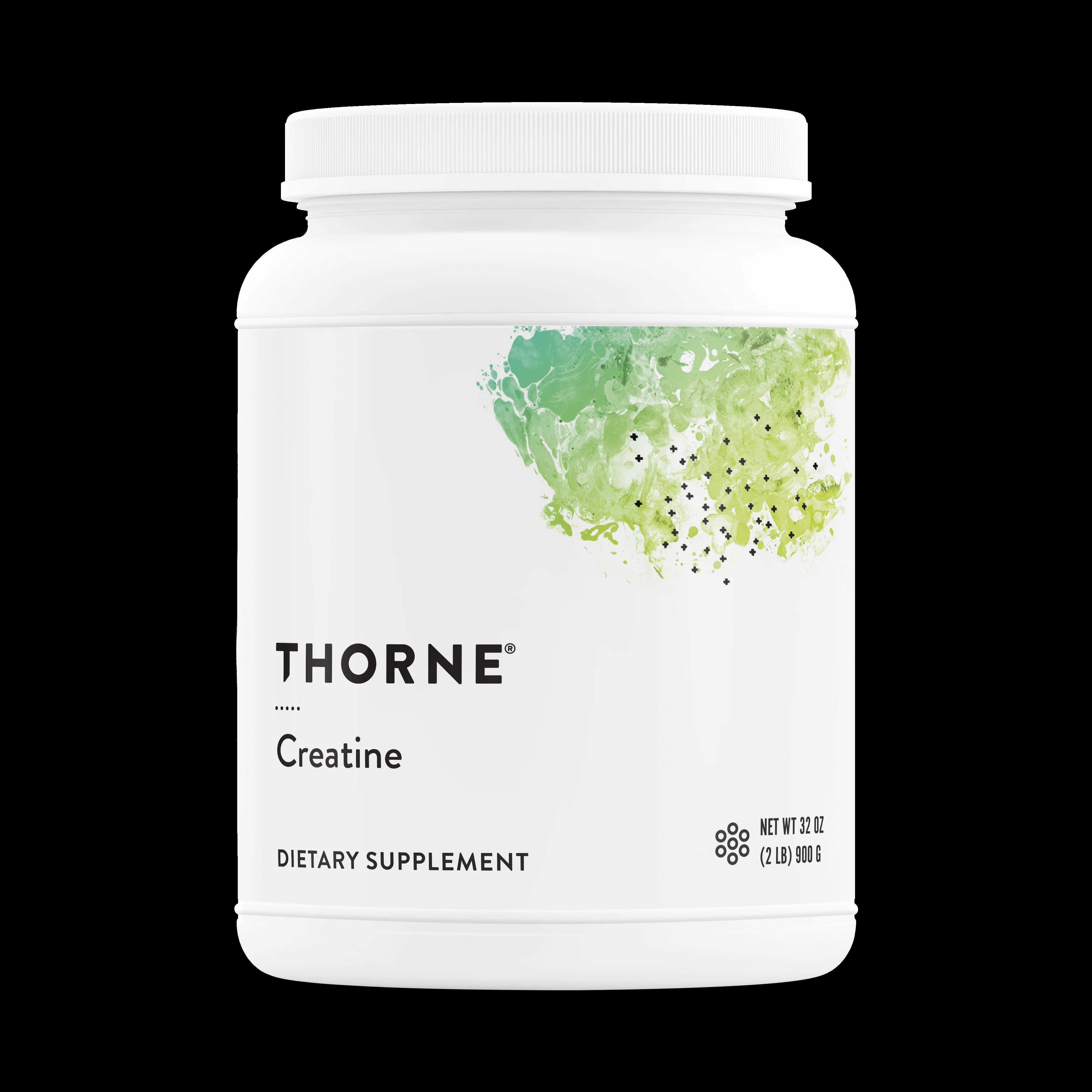 CreatineThorne · $44.0098
 - 2
 Creatine - 90 ServingsMomentous · $42.9998
 - 3
 Creatine Monohydrate CapsulesNutricost · $36.9798
 - 4
 Micronized Creatine Capsules, 1,250 mgOptimum Nutrition · $56.1998
 - 5
 Creatine MonohydrateNOW Foods · $12.5997
Recomputed from the catalog every time this page is built, so it moves as products are added and rescored. Flavours and pack sizes of one product count once.
The Bottom Line
The endurance world has been sleeping on creatine for two decades, and the reasons are mostly cultural rather than scientific. The ISSN’s 2017 position stand—the most comprehensive creatine review ever published—explicitly includes high-intensity intermittent exercise among its supported use cases. That description fits the training reality of virtually every endurance athlete who does intervals, tempo work, surges, or sprint finishes.
The practical benefits are threefold. First, creatine enhances your ability to perform repeated high-intensity efforts within and across workouts, meaning your interval sessions are higher quality and your training stimulus improves. Second, evidence suggests creatine boosts glycogen replenishment when combined with carbohydrate, giving you fuller energy stores heading into your next session during demanding training blocks. Third, emerging data points to reduced muscle damage markers and potentially faster recovery between sessions.
The weight gain concern—the primary reason endurance athletes avoid creatine—amounts to 1–2 lbs of intracellular water. For the overwhelming majority of athletes, this is a trivial tradeoff against the performance and recovery benefits. You’re not gaining fat. You’re not retaining subcutaneous water. You’re hydrating your muscle cells.
The protocol is simple: 3–5 g of creatine monohydrate daily, with food, consistently. No cycling. No exotic forms. No race-day heroics. Give it 3–4 weeks to saturate, ideally at the start of a training block where you’re pushing volume and intensity. Pair it with adequate carbohydrate and a solid electrolyte strategy, and you have a low-cost, low-risk tool that meaningfully supports your training.
Supplements that support this
Turn this into your stack
Answer two questions and we'll build an evidence-graded starter stack — every ingredient with its dose, timing, and interaction checks.
Free · no account needed to start
Interactions to know
How these pair with other supplements and medications
- Cautioncreatine+caffeine
Caffeine may blunt some creatine effects
- Synergycreatine+beta-alanine
Creatine and beta-alanine stack well for power + endurance
- Synergycreatine+hmb
HMB + creatine synergy for strength and lean mass
Check your full stack in the free interaction checker.
Read next
Best Supplements for Runners: What Actually Helps Endurance
Iron, electrolytes, beta-alanine — runner-specific supplements with real evidence. Plus the ones runners waste money on (looking at you, BCAAs).
Beta-Alanine: Who It Helps, Dose, and the Tingling Explained
Beta-Alanine boosts performance in 1-4 minute efforts by raising muscle carnosine. Dose, split-strategy to avoid paresthesia, when it helps and when Creatine beats it.
Creatine for Women: The Complete Evidence-Based Guide (2026)
Women's creatine research through menopause, training, body composition, and mood. No bloating myths, no men's-magazine claims — just the evidence.
How exercise works — energy systems, aerobic vs. strength adaptation, and recovery.
Evidence-based supplement guides, no spam
We send a short digest when new guides drop — nothing else. No affiliate pushes, no sponsored content, unsubscribe anytime.