Creatine Loading Phase: Evidence-Based Guide 2026
Find out if creatine loading is worth it. We break down the saturation science, compare both protocols, and tell you which fits your timeline.
- Loading (20g/day for 5-7 days) fills muscle creatine stores in ~1 week; 3-5g/day reaches the same level in ~28 days
- Both protocols achieve identical end-state muscle creatine concentrations — loading is a fast lane, not a different destination
- Don't cycle creatine — long-term daily use (studied up to 5 years) is safe with no kidney concerns in healthy individuals
- Vegetarians see the biggest response; 20-30% of people are low/non-responders based on baseline muscle creatine
A creatine loading phase is not necessary — taking 3–5 grams daily saturates muscle creatine stores within 3–4 weeks, reaching the same endpoint as a 20g/day loading protocol. Loading simply gets you there faster. With over 500 peer-reviewed papers on creatine, the evidence on this point is unambiguous.
What the Loading Phase Actually Does
Your muscles store creatine in a pool that has a maximum capacity — like filling a tank. For most people, that tank is about 60–80% full from diet alone (more if you eat a lot of red meat, less if you’re vegetarian).
The loading protocol — 20g per day, split into 4 doses of 5g, for 5–7 days — fills that tank to 100% capacity in about a week. After that, you drop to 3–5g per day to keep it full.
The Part Nobody Tells You: You Don’t Need It
Here’s what the same body of research shows: taking 3–5g per day from day one, with no loading phase, reaches the exact same muscle saturation level. It just takes about 28 days instead of 5–7.
Same tank. Same fuel level. Different fill speed. That’s it.
The Saturation Math
The numbers behind the loading debate are actually quite specific, and once you see them, the decision gets easier.
Baseline muscle creatine stores in an untrained omnivore run roughly 120–125 mmol/kg of dry muscle. Full saturation caps out around 150–160 mmol/kg — the physiological ceiling where additional intake stops raising muscle concentration because you’re just excreting the excess. Performance and hypertrophy gains correlate with how saturatedyour muscles are, not how much you took today.
The two protocols reach that same ceiling on different timelines:
- Loading protocol: 20–25g/day (split into 4–5 doses) for 5–7 days, then 3–5g/day maintenance. Full saturation at day 5–7. Originally demonstrated in the classic Harris et al. 1992 study in Clinical Science.
- Steady-state protocol: 3–5g/day from day one. Full saturation at day 28–30. Confirmed in a 1996 follow-up by Hultman et al. showing the same endpoint with no loading phase.
From day 30 onward, the two protocols are identical in every measurable way — same muscle creatine, same performance effect, same body composition adjustment. The choice is purely about the first month.
One more number worth knowing: daily creatine losses through urinary creatinine run roughly 2g for a 70 kg person. That’s why 3–5g/day maintenance works — it replaces daily losses and accounts for a small amount of ongoing gut/kidney inefficiency. Higher maintenance doses (10g, 20g) after saturation produce no additional benefit; the excess is excreted.
Loading: The Pros
- Faster performance benefits. If you want the strength, power, and work capacity improvements within the first week rather than waiting a month, loading gets you there. For someone starting creatine two weeks before a competition, this matters.
- Psychologically motivating. Some people like feeling the effects quickly. The initial water weight gain (2–4 lbs of intracellular water, which makes muscles look fuller) and strength uptick can be reinforcing early on.
- Matches the research protocols. If you’re the type who wants to replicate exactly what was studied, most clinical trials used the loading protocol. You’re following the literal playbook.
Loading: The Cons
- GI distress is common. 20g of creatine per day causes bloating, stomach cramps, or diarrhea in a meaningful percentage of users. This is the #1 reason people quit creatine in the first week — they load, feel terrible, and conclude creatine “doesn’t work for them.” In reality, the loading dose was the problem, not the creatine.
- Water retention anxiety. Loading causes a more dramatic initial water weight gain. If you step on a scale and see +4 lbs after 5 days, it can feel alarming if you’re not expecting it. This is intracellular water inside muscle cells — not bloating, not fat — but the number on the scale doesn’t care about the distinction.
- 4x the cost for no long-term advantage. You’re burning through your supply 4 times faster for a week to reach the same endpoint you’d reach by just being patient. Not a huge deal financially, but it’s worth noting.
- Same destination either way. For the vast majority of recreational lifters and health-focused users, the 3-week difference in saturation time is irrelevant. You’re going to be taking creatine for months or years. Whether you hit full saturation on day 7 or day 28 doesn’t change your trajectory.
What About Cycling? (Spoiler: Don’t)
Cycling creatine — 8 weeks on, 4 weeks off, repeat — is one of those gym myths that refuses to die. The rationale is usually some version of “your body will stop producing its own creatine” or “you need to give your kidneys a break.”
Neither is true.
When you stop taking creatine, muscle stores gradually return to baseline over 4–6 weeks. You lose the performance benefits you built up. Then you start over. Cycling is self-sabotage with no upside.
Timing: The Least Important Variable
The internet has vigorous opinions about creatine timing. Pre-workout. Post-workout. With carbs. Without carbs. First thing in the morning.
A 2013 study in the Journal of the International Society of Sports Nutrition compared pre-workout vs. post-workout creatine in resistance-trained men. The post-workout group showed a slight edge in lean mass and strength gains, but the study was small (n=19) and the effect was modest.
The practical answer: take creatine whenever you’ll actually remember. Mixed into morning water. In your protein shake. With dinner. Creatine monohydrate is tasteless, dissolves in any liquid, and doesn’t care what time it is. The only timing variable that matters is daily consistency.
Responders vs. Non-Responders
Not everyone responds equally, and this is worth understanding before you conclude creatine “doesn’t work.”
Research suggests 20–30% of people are low or non-responders. The primary factor is your baseline muscle creatine levels:
- Vegetarians and vegans typically have the lowest baseline muscle creatine (since dietary creatine comes almost exclusively from meat and fish). They tend to see the most dramatic response to supplementation — both for strength and for cognitive function.
- Heavy meat eaters already have relatively high muscle creatine levels. Their tank is already 70–80% full, so supplementation fills a smaller gap and produces a smaller effect.
- People with more fast-twitch muscle fibers store more creatine and tend to respond better. This is genetic and not something you can change.
If you’ve been consistently taking 3–5g daily for 4+ weeks with no noticeable performance difference, you may be a non-responder. It’s not harmful to continue (there are potential cognitive benefits regardless), but the strength/power effects may not materialize for you.
Creatine and Your Brain
This is the angle that most people miss. Your brain uses 20% of your body’s energy despite being 2% of your body weight. That energy comes from ATP, which requires creatine to recycle.
This is why creatine appears in our longevity stack guide — it’s not just a gym supplement anymore.
Hydration: The One Thing to Actually Pay Attention To
Creatine increases water retention inside muscle cells. This means your muscles are pulling more water from your circulation, and you need to drink enough to keep up.
You don’t need to force-drink gallons. Just ensure you’re hitting reasonable hydration — roughly 0.5–1 oz per pound of body weight daily. If your urine is pale yellow, you’re fine.
The “creatine causes dehydration and cramps” myth has been debunked in multiple studies. A 2003 study in the Journal of Athletic Training found that creatine users actually experienced fewer muscle cramps than non-users during preseason football training. Moderate evidence But staying hydrated is still good practice.
- 1
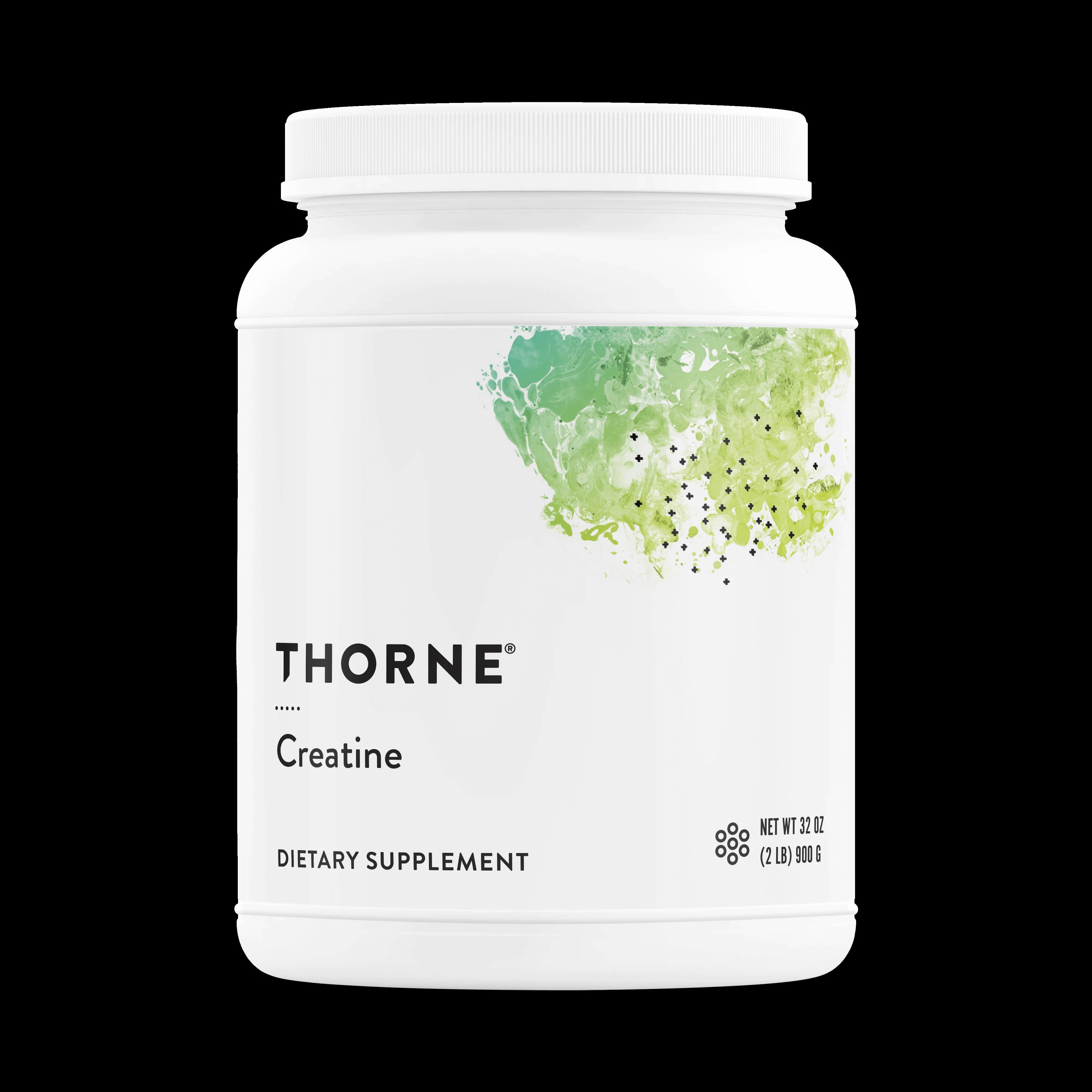
 CreatineThorne · $44.0098
 - 2
 Creatine Monohydrate PowderNootropics Depot · $34.9996
 - 3
 Liposomal Creatine CapsulesCodeage · $39.9990
Recomputed from the catalog every time this page is built, so it moves as products are added and rescored. Flavours and pack sizes of one product count once.
Creatine Forms Explained: Why Monohydrate Wins
Creatine forms like HCl, Kre-Alkalyn, and ethyl ester are marketed as superior alternatives to plain monohydrate. They cost 3–10x more per serving. None of them have outperformed monohydrate in a single head-to-head trial. Strong evidence
The Contenders
Creatine HCl is bonded to hydrochloric acid, which does increase solubility in water — roughly 38x more soluble than monohydrate. Supplement companies extrapolate from this that you need a smaller dose and get better absorption. The problem: solubility in a glass of water has nothing to do with bioavailability in your gut. No published study has demonstrated that HCl produces greater muscle creatine saturation than monohydrate at equivalent doses.
Kre-Alkalyn is buffered creatine, supposedly pH-stable so it doesn't convert to creatinine in your stomach. Jagim et al. (2012) in the Journal of the International Society of Sports Nutrition tested this directly: 28 days of Kre-Alkalyn vs. monohydrate. Result — no difference in muscle creatine content, body composition, or strength. The "stomach conversion" problem it claims to solve doesn't meaningfully exist. Strong evidence
Creatine ethyl ester fared even worse. Spillane et al. (2009) found it actually resulted in lower muscle creatine levels than monohydrate and higher serum creatinine — meaning more of it degraded before reaching muscle tissue. Moderate evidence
Why This Matters for Loading and Daily Dosing
Every protocol in this guide — loading, steady-state, maintenance — is based on monohydrate. That's what the 500+ papers used. If you're taking an alternative creatine form, the dosing math may not apply, and you have far less evidence backing your results. Monohydrate costs roughly $0.03–0.05 per 5g serving. There is no evidence-based reason to pay more.
Creatine for Women: What's Different
Creatine for women works through the same biochemistry as it does for men — same phosphocreatine system, same ATP recycling, same 3–5g daily dose to reach full muscle saturation. The mechanism doesn't change based on sex. What does change is the context: how much water weight you'll actually gain, how hormonal fluctuations interact with creatine uptake, and why the emerging research on bone and muscle health makes creatine particularly interesting for women approaching midlife.
Water Retention: Smaller Than You Think
The scale-weight anxiety is real, and dismissing it doesn't help. So here are actual numbers: women using 3–5g/day without a loading phase typically see 1–2 lbs of water retention, compared to 2–4 lbs in men. The difference tracks with total muscle mass — women carry less skeletal muscle on average, so there's less tissue pulling in intracellular water. This is water inside muscle cells, not subcutaneous bloating. If you skip the loading phase (which this guide already recommends), the gain is gradual enough that most women don't notice it at all. Moderate evidence
Hormonal Cycles and Uptake
Estrogen and progesterone fluctuations across the menstrual cycle influence fluid balance, but current evidence hasn't demonstrated clinically meaningful differences in creatine uptake between cycle phases. A 2021 narrative review by Smith-Ryan et al. in Nutrients highlighted how understudied women remain in creatine research — most landmark trials used exclusively male participants. The honest answer: we don't yet know whether cycle phase matters for saturation timing. Take your 3–5g daily regardless.
Perimenopause, Bone Density, and Muscle Preservation
This is where creatine for women gets genuinely compelling. Declining estrogen during perimenopause accelerates muscle and bone loss. A 2023 review by Forbes et al. in Nutrients found that creatine combined with resistance training improved lean mass and upper-body strength in postmenopausal women more than training alone. Separate work by Chilibeck et al. (2015) showed that creatine plus resistance training over 12 months reduced the rate of bone mineral density loss at the femoral neck in postmenopausal women. Moderate evidence These aren't massive effect sizes, but for a supplement with creatine's safety profile and cost, the risk-reward ratio is hard to beat. If you're exploring creatine as part of a broader longevity strategy, our longevity stack guide covers how it fits alongside other interventions.
Creatine and Kidney Health: Who Needs to Be Careful
Creatine and kidney health is the single biggest concern that stops people — especially older adults and non-athletes — from trying this supplement. Most of that fear traces back to a blood test number that doesn't mean what you think it means.
The Creatinine Artifact on Blood Work
Your body breaks creatine down into creatinine, which is then filtered by the kidneys and measured on standard blood panels as a proxy for kidney function. More creatine in → more creatinine out. When you supplement, serum creatinine rises — not because your kidneys are failing, but because you've increased the substrate. It's a measurement artifact, not organ damage.
This distinction matters. Poortmans and Francaux (2000) examined renal function in creatine users over five years and found no evidence of impaired glomerular filtration rate (GFR) in healthy individuals, despite elevated serum creatinine readings. If your doctor flags a high creatinine number, tell them you're supplementing. A cystatin C test or a direct GFR measurement can give a more accurate picture of actual kidney function.
The ISSN Safety Data Has Limits
The ISSN position stand (Kreider et al., 2017) concluding that long-term creatine use is safe applies specifically to healthy kidneys. That's an important qualifier. The studies reviewed excluded participants with pre-existing renal disease. for healthy populations — but the evidence simply doesn't extend to compromised kidneys.
For everyone else — healthy adults with normal kidney function — the data across hundreds of studies and durations up to five years is reassuring. Strong evidence Creatine and kidney health coexist just fine when the kidneys are working as designed. The key is knowing which category you fall into before you start.
What to Do If You're Having GI Issues on Creatine
GI issues on creatine are the single most common reason people quit — and almost always fixable. The mechanism is straightforward: creatine is osmotically active. When a large dose sits in your gut, it pulls water into the intestinal lumen by osmosis. The result is bloating, cramping, and diarrhea. This isn't your body rejecting creatine. It's your gut objecting to the concentration of creatine in one place at one time.
Here's your troubleshooting protocol, in order of escalation:
Drop to 3g per day. If you're loading at 20g/day and feeling terrible, stop loading. As this guide explains above, 3–5g daily reaches the same saturation endpoint — it just takes 28 days. A single 3g dose is far less osmotically disruptive than four 5g doses.
Never exceed 5g in a single dose. Even on a standard protocol, taking your full daily amount at once concentrates creatine in the small intestine. Split it if needed — 1.5g twice daily works fine. Ostojic and Ahmetovic (2008) found that divided dosing significantly reduced GI complaints compared to bolus dosing. Moderate evidence
Take it with food. A meal — especially one containing carbohydrates and protein — slows gastric emptying, which means creatine enters the small intestine more gradually and at lower local concentrations. This reduces the osmotic water pull that causes distress.
Switch to micronized creatine monohydrate. Micronized versions have a smaller particle size (roughly 10–20x finer), which improves solubility and dispersion in liquid. Less undissolved creatine sitting in your gut means less localized osmotic effect. It's the same molecule — just physically processed for better dissolution.
Who Should Talk to a Doctor First
Creatine monohydrate has a strong safety profile in healthy adults — the ISSN position stand covers studies lasting up to five years. But "healthy adults" is doing a lot of work in that sentence, and several populations need clinical input before starting.
None of the above is medical advice. Bring your full supplement list — including what you're considering — to your next provider visit.
Frequently Asked Questions
Is creatine safe for teenagers?
The ISSN states there is no evidence that creatine is harmful for adolescents. However, most sports medicine organizations recommend it primarily for athletes 18+, largely out of an abundance of caution rather than specific safety concerns. For teenagers, the priority should be nutrition, training, and sleep before any supplementation.
Does creatine cause hair loss?
This comes from a single 2009 study that found creatine increased DHT (dihydrotestosterone) levels by 56% in rugby players. DHT is linked to male pattern baldness. However, no follow-up study has replicated this finding, and no study has directly measured hair loss from creatine supplementation. The concern is theoretically plausible but currently unsupported by evidence. Emerging evidence
Should I take creatine on rest days?
Yes. Creatine works by maintaining muscle saturation over time. It’s not a pre-workout stimulant — it’s a daily supplement. Taking it only on training days means your stores never fully saturate.
Does the brand of creatine monohydrate matter?
Not much. Creatine monohydrate is creatine monohydrate. Creapure® (manufactured in Germany) is considered the highest-purity source, but independent testing of major brands consistently shows that most monohydrate products contain what they claim. Don’t overpay for fancy branding on what is essentially a commodity ingredient. (More on evaluating supplements in our label reading guide.)
What happens if I miss a day of creatine?
Missing one or two days has negligible impact on muscle creatine saturation. The guide notes that once saturated, stores return to baseline over 4–6 weeks — meaning a single skipped dose barely moves the needle. Don't double up; just resume your normal 3–5g the following day. Daily consistency matters over weeks and months, not whether every single dose lands perfectly.
Can I take creatine with coffee or caffeine?
The guide doesn't address this directly. The widely circulated claim that caffeine blunts creatine uptake originates from a single 1996 study and has not been consistently replicated in more recent research. Current evidence does not strongly support avoiding caffeine with creatine. Since the guide's timing section concludes that consistency matters more than precise conditions, this interaction is unlikely to meaningfully affect your results — but consult a healthcare provider if you have specific concerns.
Does creatine affect women differently?
The guide doesn't cover sex-based differences in creatine response. The underlying research is heavily male-dominated, and women's baseline creatine stores and hormonal factors may influence uptake. The guide's general protocol — 3–5g daily of creatine monohydrate — applies as written, but women seeking guidance specific to their physiology or hormonal context should consult a healthcare provider or sports medicine specialist.
Can I take creatine while cutting or in a caloric deficit?
The guide doesn't directly address creatine use during a caloric deficit. It does flag that loading causes a 2–4 lb intracellular water gain that can alarm people tracking scale weight — and that this is water inside muscle cells, not fat. Skipping the loading phase (3–5g daily from day one) minimizes that initial jump. The guide makes no recommendation against creatine during a cut, and nothing in the guide's evidence base suggests a deficit changes creatine's mechanism.
What form of creatine is best — monohydrate vs. HCl vs. buffered?
Creatine monohydrate is the only form with 30+ years of research behind it. The guide's entire protocol — the Harris 1992 and Hultman studies, the ISSN position stand, all saturation data — is based on monohydrate. Alternatives like creatine HCl, Kre-Alkalyn, and ethyl ester are marketed as superior but lack equivalent evidence. The guide recommends monohydrate explicitly and notes that even brand differences within monohydrate are minor. Don't pay a premium for less-studied forms.
Should I take creatine with food or on an empty stomach?
The guide's practical answer is to take creatine whenever you'll consistently remember — morning water, a protein shake, or with dinner. It doesn't specifically address food co-ingestion. Some evidence suggests carbohydrate-driven insulin release may enhance creatine uptake, but the guide's timing section concludes that daily consistency is the only variable that meaningfully matters. Taking it with a meal is a reasonable default and may reduce any GI sensitivity.
Is creatine safe with pre-existing kidney conditions?
The guide states that long-term creatine use is safe in healthy individuals per the ISSN, but it does not address people with pre-existing kidney conditions. This is an important gap: creatine supplementation raises serum creatinine — a standard kidney filtration marker — which can produce false-positive signals of kidney impairment on bloodwork. If you have reduced kidney function, a single kidney, or any kidney history, consult a physician before starting creatine. Do not rely on this guide's safety statement in that context.
The Bottom Line
Skip the loading phase unless you’re in a hurry. Take 3–5g of creatine monohydrate every day. Don’t cycle it. Don’t stress about timing. Stay hydrated. Give it 4 weeks to reach full saturation. That’s it — the entire creatine protocol, backed by three decades of research and 500+ papers.
Supplements that support this
Turn this into your stack
Answer two questions and we'll build an evidence-graded starter stack — every ingredient with its dose, timing, and interaction checks.
Free · no account needed to start
Interactions to know
How these pair with other supplements and medications
- Cautioncreatine+caffeine
Caffeine may blunt some creatine effects
- Synergycreatine+beta-alanine
Creatine and beta-alanine stack well for power + endurance
- Synergycreatine+hmb
HMB + creatine synergy for strength and lean mass
Check your full stack in the free interaction checker.
Read next
Creatine for Women: The Complete Evidence-Based Guide (2026)
Women's creatine research through menopause, training, body composition, and mood. No bloating myths, no men's-magazine claims — just the evidence.
Best Creatine Supplements 2026, Ranked by Evidence
What actually matters in a creatine supplement — dose, form, purity and testing — and the top-scored monohydrate products in our catalog right now.
Best Pre-Workout Protocol 2026: Clinical Evidence Stack
Build a pre-workout stack that actually works. Learn the 4 clinically validated ingredients — creatine, citrulline, beta-alanine, caffeine — at doses that deliver results.
How exercise works — energy systems, aerobic vs. strength adaptation, and recovery.
Evidence-based supplement guides, no spam
We send a short digest when new guides drop — nothing else. No affiliate pushes, no sponsored content, unsubscribe anytime.