Fatty Acid
Total Omega-3 Fatty Acids
Also known as: omega-3, n-3 polyunsaturated fatty acids, n-3 PUFA, total omega-3
The collective measurement of omega-3 polyunsaturated fatty acids, including EPA (eicosapentaenoic acid), DHA (docosahexaenoic acid), and ALA (alpha-linolenic acid), which are essential fatty acids critical for cardiovascular, neurological, and inflammatory health. Supplements typically list total omega-3 content alongside individual EPA/DHA amounts.
Last reviewed June 2026 · Evidence graded from peer-reviewed research, not editorial opinion. Educational only — not medical advice.
Every Total Omega-3 Fatty Acids product we have scored
| # | Product | Score | Per serving |
|---|---|---|---|
| 1 | Thorne Omega-3 with CoQ10 | 92 A | $0.61 |
| 2 | Thorne Super EPA | 92 A | $0.23 |
| 3 | Nootropics Depot Omega-3 Fish Oil Triple Strength Softgels | 91 A | $0.42 |
| 4 | Thorne Prenatal DHA | 89 A | $1.00 |
| 5 | Ritual Essential Prenatal | 88 A | $0.65 |
| 6 | Thorne Advanced DHA | 87 A | $1.00 |
| 7 | Nordic Naturals Vision Support Omega Blend | 87 A | $1.47 |
| 8 | Thorne Pro-Resolving Mediators | 85 A- | $0.42 |
| 9 | Nootropics Depot NKO™ Krill Oil Softgels | 85 A- | $0.50 |
| 10 | Nordic Naturals Algae Omega | 85 A- | $0.76 |
| 11 | Nordic Naturals DHA - Strawberry | 85 A- | $0.51 |
| 12 | Nutricost Omega-3 Softgels | 84 A- | $0.60 |
Scored on dose accuracy, form, label transparency and third-party testing. Per-serving cost is list price divided by servings per container. No brand pays to be listed or ranked.
Common questions
How much Total Omega-3 Fatty Acids should I take?
The typical range is 500-4000 mg daily total omega-3 (composition varies: typically 300-2000 mg EPA+DHA combined). minimum 4-12 weeks for measurable cardiovascular/triglyceride effects; long-term use (6-24 months) typically required for cognitive or anti-inflammatory outcomes
When should I take Total Omega-3 Fatty Acids?
with largest meal of the day. absorption substantially improved when taken with meals containing dietary fat.
Which form of Total Omega-3 Fatty Acids is best?
fish oil softgels. Other forms in the catalog: liquid concentrate, algae-based DHA, plant-based ALA sources, krill oil.
Is Total Omega-3 Fatty Acids safe?
Commonly reported: minor GI upset (nausea, loose stools), fishy aftertaste (fish oil source), mild headache (uncommon).
Which Total Omega-3 Fatty Acids supplement scores highest?
Thorne Omega-3 with CoQ10, at 92/100. Scored on dose accuracy, form, label transparency and third-party testing — no brand pays to be listed or ranked.
Daily target & upper limit
500 mg / dayTotal Omega-3 Fatty Acids has an established daily reference intake. See best forms, label synonyms, upper-limit warnings, and top-scoring supplements:
Total Omega-3 Fatty Acids dosage reference →Primary uses
- cardiovascular health
- triglyceride reduction
- brain and cognitive function
- inflammatory response modulation
- eye health support
- mood and mental health
How it works
- substrate for anti-inflammatory mediator production (resolvins, protectins)
- incorporation into phospholipids in cell membranes
- modulation of gene expression related to lipid metabolism
- improvement of endothelial function
- reduction of platelet aggregation
- NLRP3 inflammasome inhibition
Dosage
- Typical range
- 500-4000 mg daily total omega-3 (composition varies: typically 300-2000 mg EPA+DHA combined)
- Timing
- with largest meal of the day
- With food
- absorption substantially improved when taken with meals containing dietary fat
- Duration
- minimum 4-12 weeks for measurable cardiovascular/triglyceride effects; long-term use (6-24 months) typically required for cognitive or anti-inflammatory outcomes
- Special populations
- pregnant/nursing women: 200-300 mg DHA daily recommended; older adults: may derive greater cardiovascular benefit; individuals with familial hypertriglyceridemia: higher doses (2-4g daily) used under medical supervision
Forms
- fish oil softgels· 70/100
- liquid concentrate· 70/100
- algae-based DHA· 70/100
- plant-based ALA sources· 70/100
- krill oil· 70/100
Safety
Common side effects
- minor GI upset (nausea, loose stools)
- fishy aftertaste (fish oil source)
- mild headache (uncommon)
Contraindications
- active hemorrhage or severe bleeding disorder
- scheduled surgery within 1 week (may increase bleeding risk)
- allergy to fish or marine organisms (fish oil source)
Products containing Total Omega-3 Fatty Acids
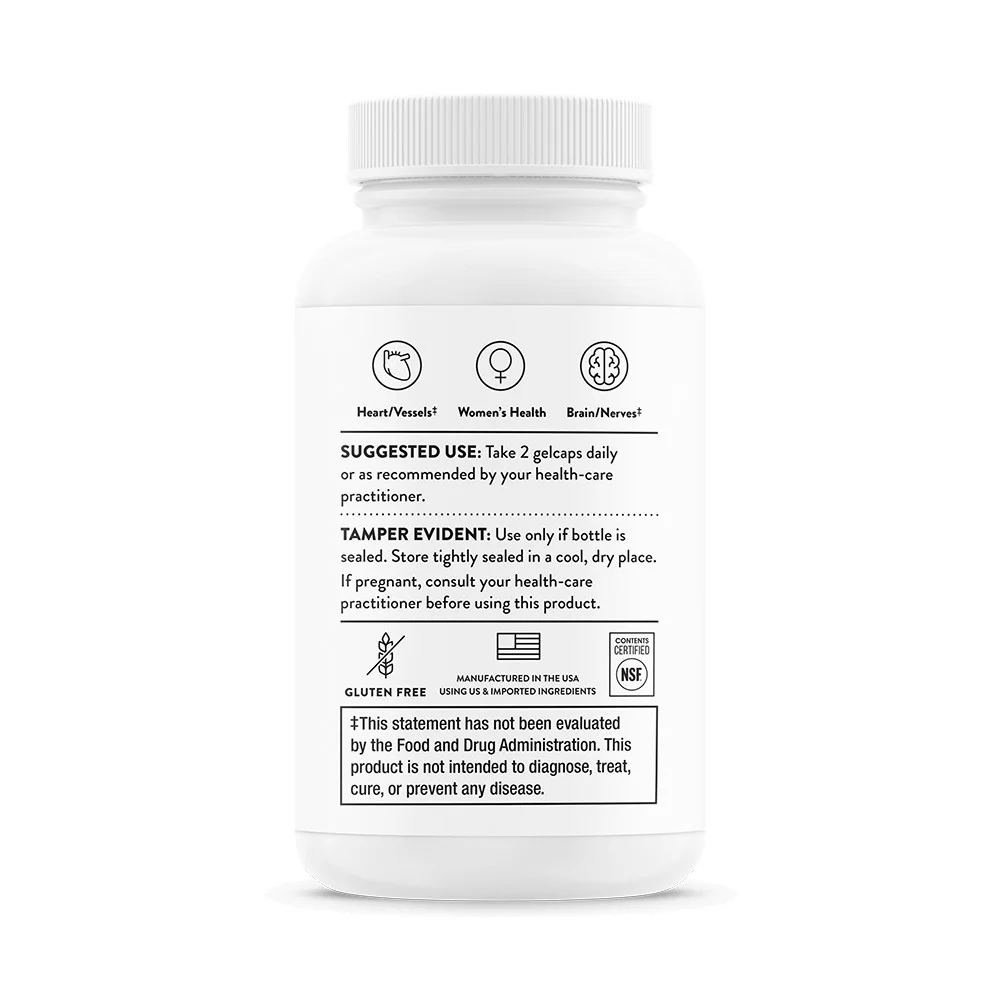
Top-scoring supplements in our catalog that list Total Omega-3 Fatty Acids on the label. Each product is graded on Formulate's ingredient-level rubric — dose accuracy, form, transparency, and third-party testing.


Evidence notes
Robust RCT evidence from major cardiovascular trials; consistent meta-analyses demonstrate benefits for triglycerides and cardiovascular outcomes. EPA+DHA efficacy best established at 2-4g daily; ALA evidence more modest.
Grade A: Multiple well-designed human trials support the main claims.
Cited research for Total Omega-3 Fatty Acids
Clinical studies referenced across Formulate guides that mention total omega-3 fatty acids. Each links to the full study page with PubMed source + the guides that cite it.
- Nicholls et al. (2020)JAMA
Effect of High-Dose Omega-3 Fatty Acids vs Corn Oil on Major Adverse Cardiovascular Events (STRENGTH)
- Skulas-Ray et al. (2019)Circulation
Omega-3 Fatty Acids for the Management of Hypertriglyceridemia: A Science Advisory From the American Heart Association
- Liao et al. (2019)Translational Psychiatry
Efficacy of omega-3 PUFAs in depression: a meta-analysis
- Aung et al. (2018)JAMA Cardiology
Associations of omega-3 fatty acid supplement use with cardiovascular disease risks: meta-analysis of 10 trials involving 77,917 individuals
- Albert et al. (2015)Scientific Reports
Fish oil supplements in New Zealand are highly oxidised and do not meet label content of n-3 PUFA
- Mori (2014)Fitoterapia
Omega-3 fatty acids and hypertension in humans
Related in Fatty Acid
Check a full stack
Formulate's free interaction checker lets you paste in any combination of supplements and medications at once — every pairing flags severity, timing, and cited evidence.
Open the checkerWhere does Total Omega-3 Fatty Acids fit in your stack?
Answer two questions and get a stack graded on research — every ingredient scored on the evidence behind it, not the marketing.
Build my stack2 questions · free · no account needed to start
Also on iPhone — get the free app
Evidence-based supplement guides, no spam
We send a short digest when new guides drop — nothing else. No affiliate pushes, no sponsored content, unsubscribe anytime.
Medical disclaimer. This page is educational and does not replace advice from a qualified healthcare provider. Individual needs and risks vary — consult a professional before starting, stopping, or combining supplements, especially if you are pregnant or nursing, taking medication, or managing a health condition.