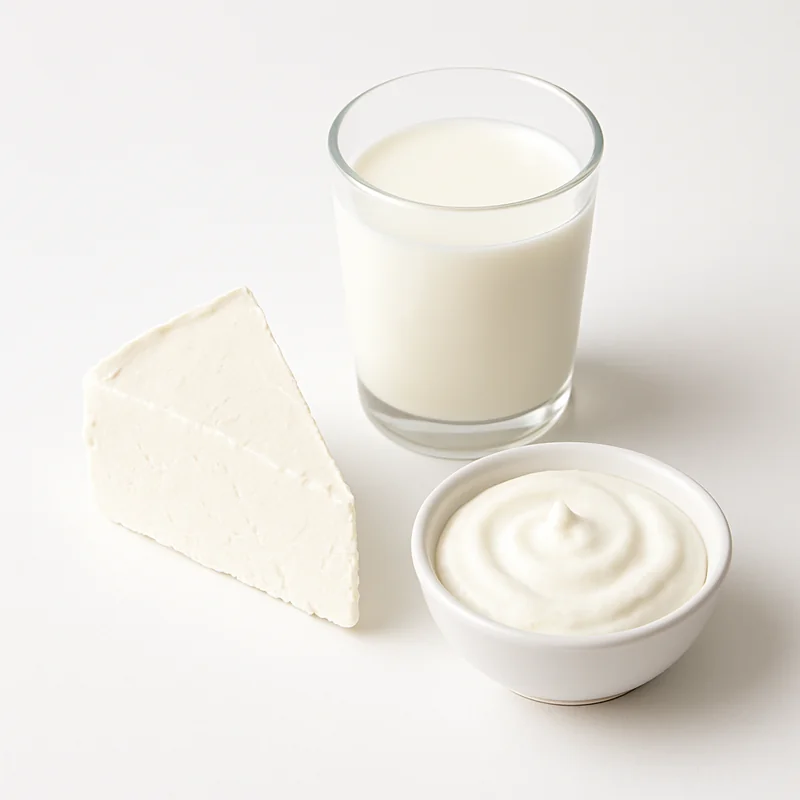
Cream Cheese
ScoreD
Cream cheese is a soft, spreadable dairy product rich in protein and fat, providing essential nutrients like calcium and phosphorus with minimal carbohydrates. While calorie-dense, it offers bioavailable dairy nutrients relevant to bone and metabolic health.
Why Cream Cheese scores 27
% Daily Value per 1 oz (30 g)
Nutrition
per 100 g
Health benefits
Supports bone mineral density and skeletal health
moderate evidenceBioavailable calcium and phosphorus in optimal 1:1 ratio promote hydroxyapatite formation in bone matrix; casein phosphopeptides enhance mineral absorption
Preserves lean muscle mass during aging
moderate evidenceComplete protein with high leucine content (2-3% of protein) stimulates mTOR pathway and muscle protein synthesis, critical for sarcopenia prevention
Promotes satiety and may support weight management
moderate evidenceHigh fat and protein content triggers CCK and GLP-1 release, reducing overall caloric intake when consumed in appropriate portions
Provides fat-soluble vitamin absorption support
strong evidenceDietary fat enhances bioavailability of vitamins A, D, E, and K from other foods consumed concurrently
May support cognitive function through choline content
emerging evidenceContains choline precursor that supports acetylcholine synthesis; emerging evidence links adequate dairy choline to memory and attention
Pairs well with
- ·Pair with berries (blueberries, raspberries) because anthocyanins and vitamin C enhance calcium absorption and provide antioxidant synergy for vascular health
- ·Combine with fatty fish (salmon, mackerel) because omega-3 fatty acids and vitamin D enhance mineral bioavailability and reduce inflammation markers
- ·Serve with leafy greens (spinach, kale) because vitamin K from greens works synergistically with calcium and phosphorus for bone carboxylation and activation
- ·Mix into whole-grain crackers or bread because fiber slows fat digestion, moderates blood sugar response, and reduces sodium impact
Practical tips
- ·Best timing: midday
- ·Store cream cheese in the coldest section of refrigerator (32-35°F) and consume within 10 days of opening to maintain food safety and nutritional integrity
- ·Portion control: limit to 1-2 tablespoons (15-30g) per serving to manage saturated fat and sodium while capturing nutrient benefits
- ·Choose full-fat versions over low-fat alternatives, as reduced-fat varieties contain more sodium and carbohydrates without proportional calorie reduction
- ·Blend cream cheese with herbs (dill, chives, oregano) and Greek yogurt to increase protein density while reducing saturated fat and sodium per serving
- ·Consume as part of mixed meals rather than alone to slow fat absorption, stabilize blood glucose, and enhance satiety without excessive caloric density
Related foods
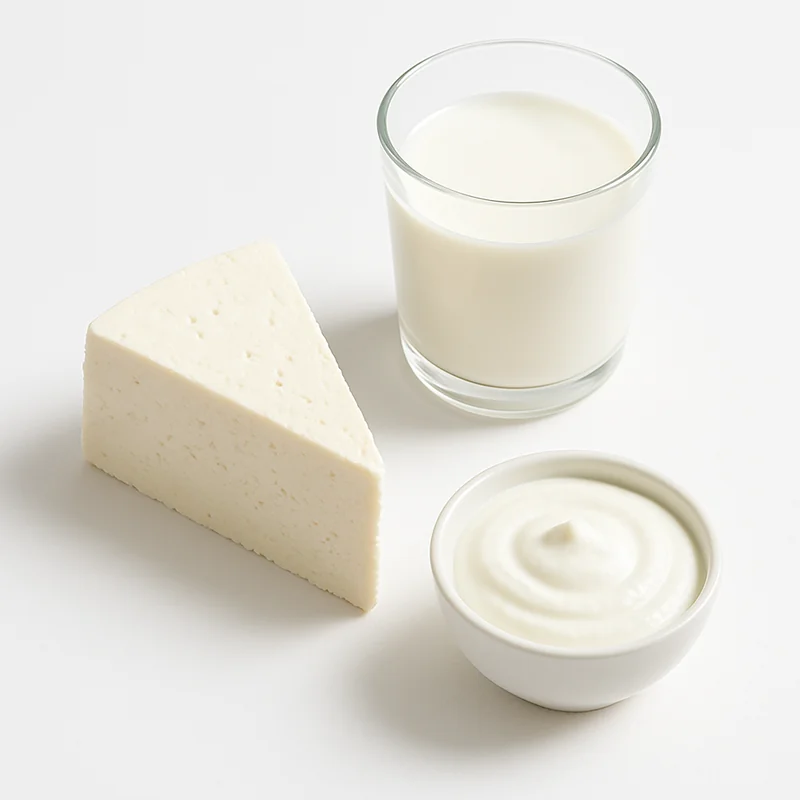
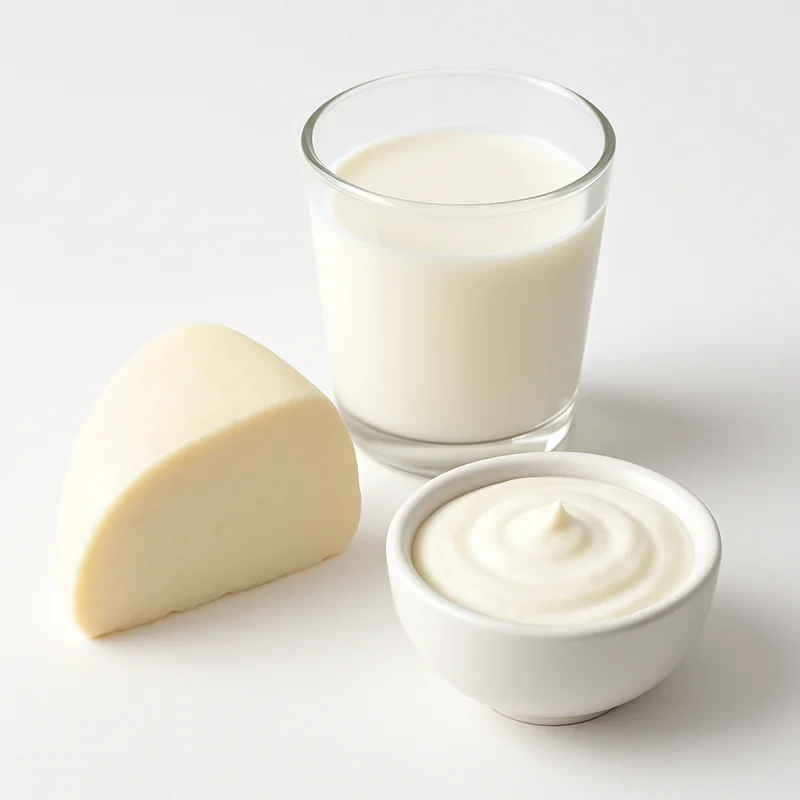
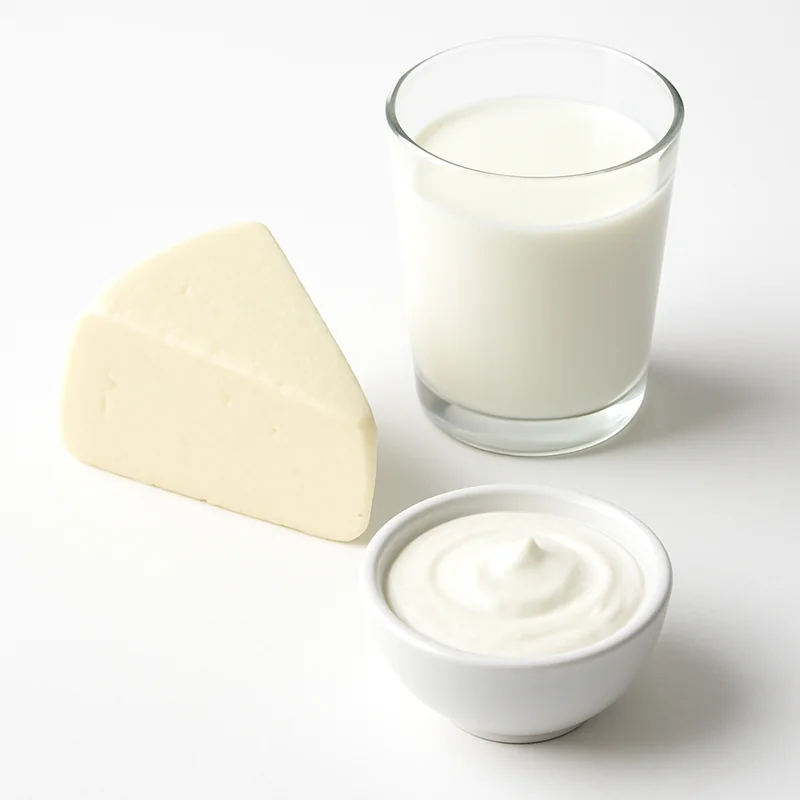
What is Cream Cheese actually covering?
See which nutrients your diet already delivers and which ones your supplements still need to — food and pills measured on the same scale.
Check my nutrients2 questions · free · no account needed to start
Also on iPhone — get the free app
Evidence-based supplement guides, no spam
We send a short digest when new guides drop — nothing else. No affiliate pushes, no sponsored content, unsubscribe anytime.