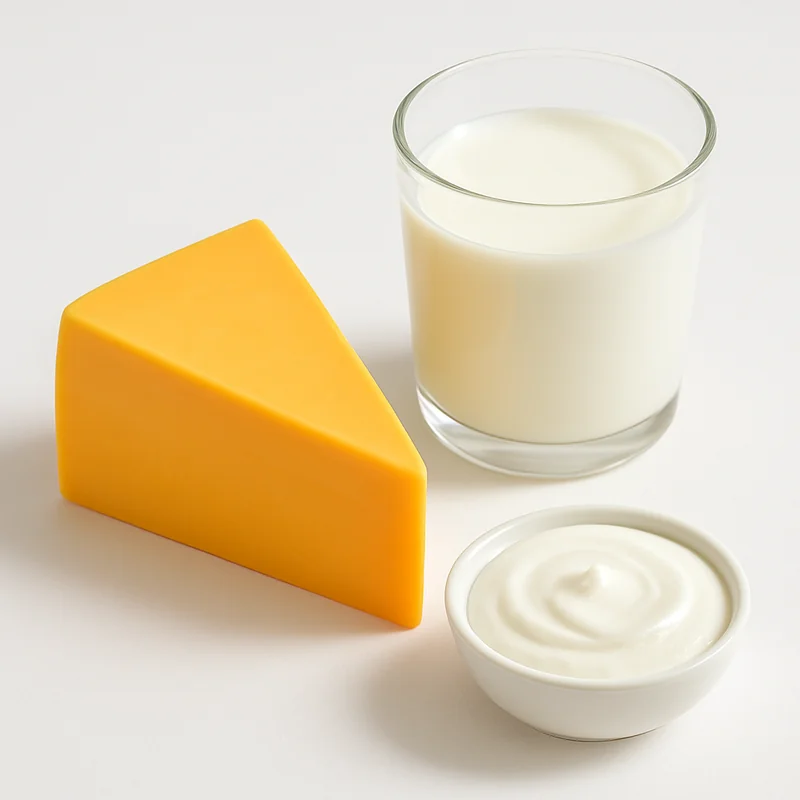
Cheese; American
ScoreC
American cheese is a processed cheese product made from milk, milk fats, and emulsifiers, known for its mild flavor and smooth melting properties. It provides protein and bioavailable calcium, though with higher sodium and fewer bioactive compounds than aged natural cheeses.
Why Cheese; American scores 50
% Daily Value per 1 oz (30 g)
Nutrition
per 100 g
Health benefits
Bone health support through bioavailable calcium and phosphorus
strong evidenceCalcium and phosphorus work synergistically to maintain bone mineral density; emulsifiers in American cheese may enhance calcium absorption compared to some natural cheeses
Complete protein source supporting muscle maintenance
strong evidenceAmerican cheese contains all nine essential amino acids needed for muscle protein synthesis and tissue repair, particularly important for aging adults
Casein-derived peptides with potential anti-inflammatory properties
moderate evidenceMilk protein peptides released during cheese processing may modulate immune response and reduce systemic inflammation
Increased mineral bioavailability in meals
moderate evidenceThe fat content and emulsifiers in American cheese enhance absorption of fat-soluble vitamins (A, D, E, K) when paired with vegetables
Pairs well with
- ·Pair with whole grain bread because the fiber slows digestion and helps regulate blood sugar response to the processed carbohydrate and saturated fat
- ·Combine with leafy greens like spinach or arugula because the cheese's fat content enhances absorption of fat-soluble vitamin K and lutein important for bone and eye health
- ·Pair with tomatoes or bell peppers because vitamin C in these foods enhances non-heme iron absorption and provides antioxidants to offset processing byproducts
- ·Combine with fermented foods like sauerkraut or kimchi because probiotics support gut health and may improve overall nutrient bioavailability
Practical tips
- ·Best timing: midday
- ·Choose single-ingredient American cheese slices or blocks over multi-additive versions; read labels to minimize phosphate emulsifiers and select products with shorter ingredient lists
- ·Store in the refrigerator in original packaging or airtight containers; American cheese's emulsifiers help prevent spoilage but oxidation still occurs—use within 2-3 weeks of opening
- ·Portion to 1-1.5 ounces (28-42g) per serving to manage sodium intake, as processed American cheese contains 300-400mg sodium per ounce compared to 150-200mg in natural aged cheeses
- ·Use as a vehicle for nutrient absorption by pairing with mineral and vitamin-rich foods rather than consuming alone; the fat content amplifies micronutrient bioavailability when combined with vegetables
- ·Consider American cheese as an occasional convenience food rather than a dietary staple; prioritize aged natural cheeses, cottage cheese, or Greek yogurt for superior micronutrient density and bioactive compounds
Related foods
What is Cheese; American actually covering?
See which nutrients your diet already delivers and which ones your supplements still need to — food and pills measured on the same scale.
Check my nutrients2 questions · free · no account needed to start
Also on iPhone — get the free app
Evidence-based supplement guides, no spam
We send a short digest when new guides drop — nothing else. No affiliate pushes, no sponsored content, unsubscribe anytime.