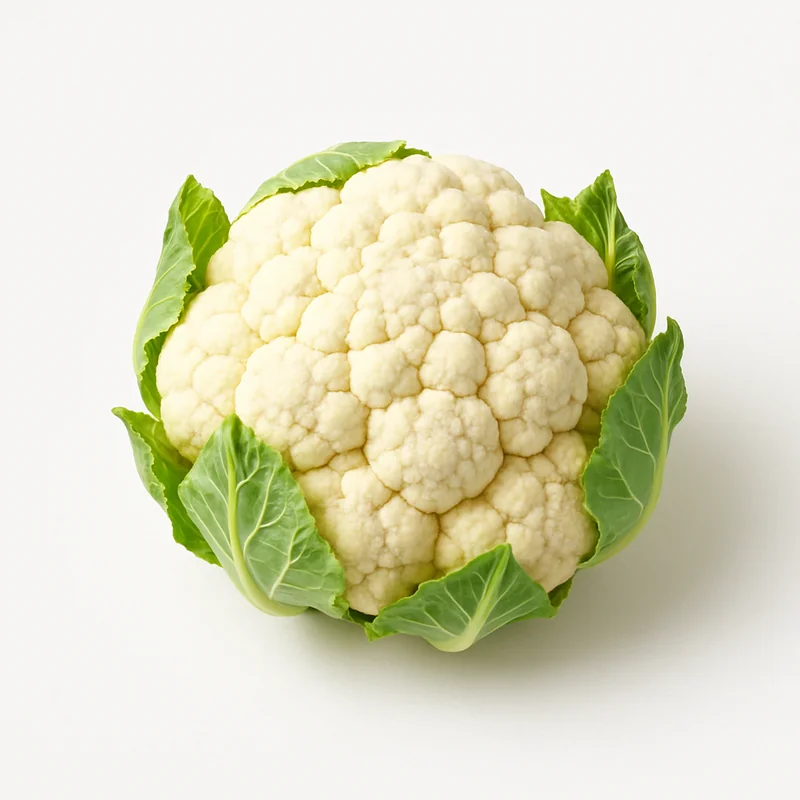
Cauliflower
ScoreA+
Cauliflower is a cruciferous vegetable rich in vitamin C, fiber, and bioactive sulfur compounds that support cellular health and longevity. Its low caloric density and high nutrient profile make it ideal for nutrient-dense eating patterns.
Why Cauliflower scores 96
% Daily Value per ½ cup (85 g)
Nutrition
per 100 g
Health benefits
Reduces chronic inflammation and supports cellular defense mechanisms
strong evidenceGlucosinolates convert to isothiocyanates (sulforaphane) which activate Nrf2 antioxidant pathways and suppress NF-κB inflammatory signaling
Supports cognitive function and neurological health
moderate evidenceCholine content (approximately 36mg per 100g) serves as precursor for acetylcholine neurotransmitter and phosphatidylcholine, critical for synaptic plasticity and myelin maintenance
Promotes gut microbiota diversity and short-chain fatty acid production
moderate evidencePrebiotic fiber and resistant starch (when cooled after cooking) feed beneficial bacteria, increasing butyrate production which strengthens intestinal barrier
Modulates estrogen metabolism and may support hormonal balance
moderate evidenceContains indole-3-carbinol (I3C) which promotes conversion of estrogen toward protective metabolites via Phase 1 detoxification
Provides concentrated micronutrient density with minimal caloric cost
strong evidenceHigh vitamin C and K support collagen synthesis, bone mineralization, and vascular function while maintaining low energy density for weight management
Pairs well with
- ·Pair with extra virgin olive oil because fat-soluble vitamins (K, C retention) and polyphenols are better absorbed with dietary fat, and oil aids isothiocyanate bioavailability
- ·Combine with sulfur-rich alliums (garlic, onions) because both contain complementary sulfur compounds that synergistically enhance Phase 2 detoxification enzyme expression
- ·Serve with turmeric because curcumin enhances isothiocyanate absorption and both compounds target overlapping inflammatory pathways for additive anti-inflammatory effect
- ·Pair with fermented foods (sauerkraut, kimchi) because living probiotics colonize the microbiota that ferment cauliflower's fiber, increasing short-chain fatty acid yield
Practical tips
- ·Best timing: Cauliflower's nutrient density and fiber content support satiety and stable blood glucose regardless of meal timing. Morning consumption leverages vitamin C for immune support; evening consumption provides prebiotic fiber to feed overnight bacterial fermentation cycles.
- ·Chew raw cauliflower thoroughly or cook lightly (steam 3-5 min) to activate myrosinase enzyme and maximize sulforaphane production; avoid boiling, which leaches glucosinolates
- ·Store in refrigerator crisper drawer in perforated bag for up to 7 days; buy whole heads over pre-cut florets to minimize surface oxidation of vitamin C
- ·Prepare cauliflower rice by pulsing in food processor and consume within 2 days to preserve enzyme activity and nutrient density for cognitive and anti-inflammatory benefits
- ·Cool cooked cauliflower to room temperature before consuming to encourage resistant starch formation, which feeds beneficial gut bacteria more effectively than hot preparation
Related foods
What is Cauliflower actually covering?
See which nutrients your diet already delivers and which ones your supplements still need to — food and pills measured on the same scale.
Check my nutrients2 questions · free · no account needed to start
Also on iPhone — get the free app
Evidence-based supplement guides, no spam
We send a short digest when new guides drop — nothing else. No affiliate pushes, no sponsored content, unsubscribe anytime.