Fatty Acid
Docosahexaenoic Acid (DHA)
Also known as: DHA, 22:6n-3, cervonic acid
DHA is a long-chain omega-3 polyunsaturated fatty acid critical for brain structure and function, particularly in the cerebral cortex and retina. It is one of the most abundant fatty acids in the brain and supports cognitive health, mood, and visual function.
Last reviewed June 2026 · Evidence graded from peer-reviewed research, not editorial opinion. Educational only — not medical advice.
Every Docosahexaenoic Acid (DHA) product we have scored
| # | Product | Score | Per serving |
|---|---|---|---|
| 1 | Thorne Omega Superb | 92 A | $0.63 |
| 2 | Thorne Omega-3 with CoQ10 | 92 A | $0.61 |
| 3 | Thorne Super EPA | 92 A | $0.23 |
| 4 | Thorne Super EPA Pro | 92 A | $0.33 |
| 5 | Nootropics Depot Omega-3 Fish Oil Triple Strength Softgels | 91 A | $0.42 |
| 6 | Thorne Prenatal DHA | 89 A | $1.00 |
| 7 | Nootropics Depot AvailOM DHA Algae Capsules | 88 A | $0.75 |
| 8 | Thorne SynaQuell +™ | 88 A | $1.47 |
| 9 | Ritual Essential Prenatal | 88 A | $0.65 |
| 10 | Nootropics Depot AvailOm DHA Algae Powder | 87 A | $0.27 |
| 11 | Thorne Advanced DHA | 87 A | $1.00 |
| 12 | Complement Essential | 86 A- | $1.48 |
Scored on dose accuracy, form, label transparency and third-party testing. Per-serving cost is list price divided by servings per container. No brand pays to be listed or ranked.
Common questions
How much Docosahexaenoic Acid (DHA) should I take?
The typical range is 250–2,000 mg daily. Benefits typically accumulate over 4–12 weeks of consistent use; chronic supplementation is common and safe
When should I take Docosahexaenoic Acid (DHA)?
With meals (fat-soluble; better absorption with food). Recommended with a meal containing dietary fat.
Which form of Docosahexaenoic Acid (DHA) is best?
Triglyceride. Other forms in the catalog: Ethyl ester, Phospholipid (krill oil), Algae-derived.
Is Docosahexaenoic Acid (DHA) safe?
Commonly reported: Fishy aftertaste (fish-oil sources), Mild gastrointestinal upset (nausea, bloating), Burping, Rare allergic reactions (seafood-allergic individuals).
Which Docosahexaenoic Acid (DHA) supplement scores highest?
Thorne Omega Superb, at 92/100. Scored on dose accuracy, form, label transparency and third-party testing — no brand pays to be listed or ranked.
Daily target & upper limit
500 mg / dayDocosahexaenoic Acid (DHA) has an established daily reference intake. See best forms, label synonyms, upper-limit warnings, and top-scoring supplements:
Docosahexaenoic Acid (DHA) dosage reference →Primary uses
- Cognitive function and brain health
- Mood support
- Visual health and eye function
- Cardiovascular health
- Fetal and infant neurological development
How it works
- Incorporates into neuronal membranes, supporting synaptic plasticity
- Reduces neuroinflammation and oxidative stress
- Modulates neurotransmitter function
- Supports cerebral blood flow
- Promotes neuroprotection through anti-apoptotic pathways
Dosage
- Typical range
- 250–2,000 mg daily
- Timing
- With meals (fat-soluble; better absorption with food)
- With food
- Recommended with a meal containing dietary fat
- Duration
- Benefits typically accumulate over 4–12 weeks of consistent use; chronic supplementation is common and safe
- Special populations
- Pregnant/nursing women: 200–300 mg/day beneficial for fetal brain development; elderly: higher doses (1,000+ mg) may benefit cognitive aging; vegetarians should use algae-derived forms
Forms
- Triglyceride· 70/100
- Ethyl ester· 70/100
- Phospholipid (krill oil)· 70/100
- Algae-derived· 70/100
Safety
Common side effects
- Fishy aftertaste (fish-oil sources)
- Mild gastrointestinal upset (nausea, bloating)
- Burping
- Rare allergic reactions (seafood-allergic individuals)
Contraindications
- Bleeding disorders or concurrent anticoagulant therapy (high doses may increase bleeding risk)
- Seafood/fish allergy (for fish-oil sourced DHA; algae-derived is safe alternative)
Products containing Docosahexaenoic Acid (DHA)
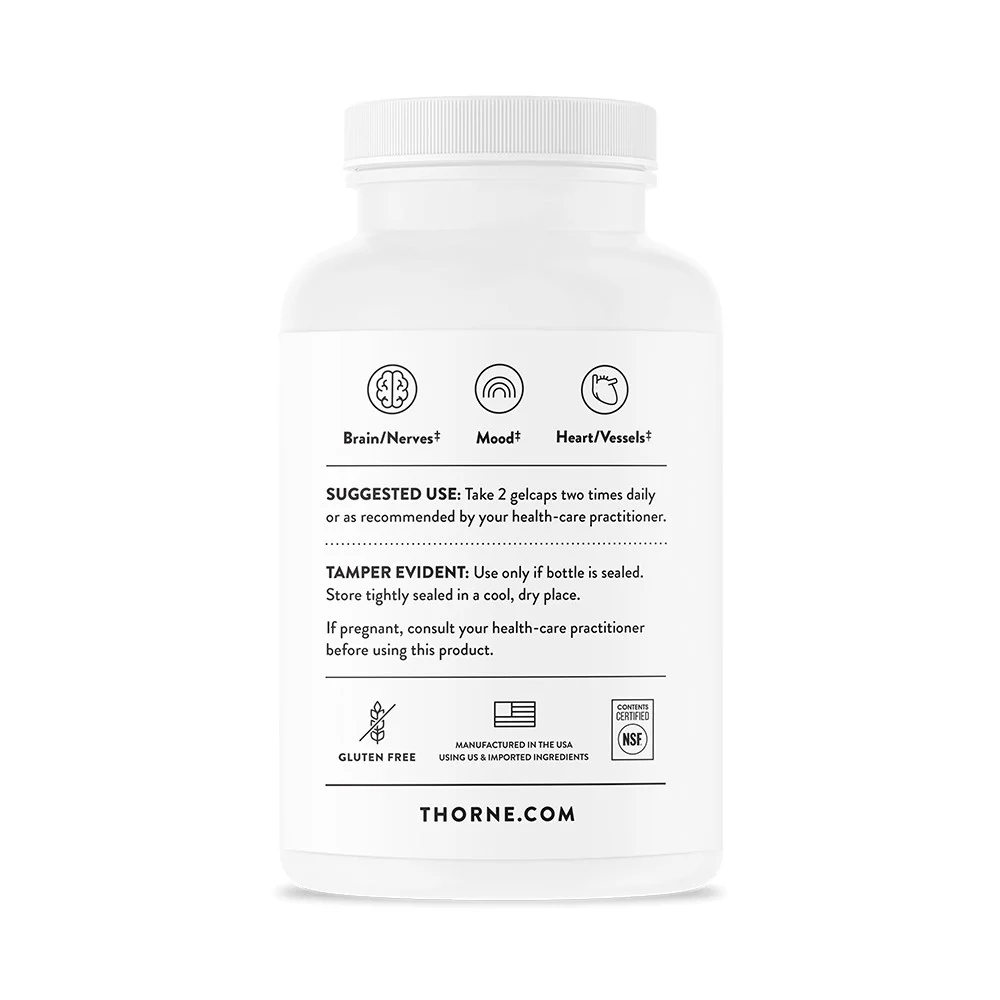
Top-scoring supplements in our catalog that list Docosahexaenoic Acid (DHA) on the label. Each product is graded on Formulate's ingredient-level rubric — dose accuracy, form, transparency, and third-party testing.


Evidence notes
Extensive RCT evidence supports DHA's role in brain health, cognitive function, and mood. Multiple large studies (VITAL, OmegAD trials) demonstrate cognitive benefits in aging populations. Strong evidence for visual and cardiovascular health.
Grade A: Multiple well-designed human trials support the main claims.
Cited research for Docosahexaenoic Acid (DHA)
Clinical studies referenced across Formulate guides that mention docosahexaenoic acid (dha). Each links to the full study page with PubMed source + the guides that cite it.
- Nicholls et al. (2020)JAMA
Effect of High-Dose Omega-3 Fatty Acids vs Corn Oil on Major Adverse Cardiovascular Events (STRENGTH)
- Skulas-Ray et al. (2019)Circulation
Omega-3 Fatty Acids for the Management of Hypertriglyceridemia: A Science Advisory From the American Heart Association
- Liao et al. (2019)Translational Psychiatry
Efficacy of omega-3 PUFAs in depression: a meta-analysis
- Mori (2014)Fitoterapia
Omega-3 fatty acids and hypertension in humans
- Makrides et al. (2010)JAMA
Effect of DHA supplementation during pregnancy on maternal depression and neurodevelopment (MFGD)
Related in Fatty Acid
Check a full stack
Formulate's free interaction checker lets you paste in any combination of supplements and medications at once — every pairing flags severity, timing, and cited evidence.
Open the checkerWhere does Docosahexaenoic Acid (DHA) fit in your stack?
Answer two questions and get a stack graded on research — every ingredient scored on the evidence behind it, not the marketing.
Build my stack2 questions · free · no account needed to start
Also on iPhone — get the free app
Evidence-based supplement guides, no spam
We send a short digest when new guides drop — nothing else. No affiliate pushes, no sponsored content, unsubscribe anytime.
Medical disclaimer. This page is educational and does not replace advice from a qualified healthcare provider. Individual needs and risks vary — consult a professional before starting, stopping, or combining supplements, especially if you are pregnant or nursing, taking medication, or managing a health condition.