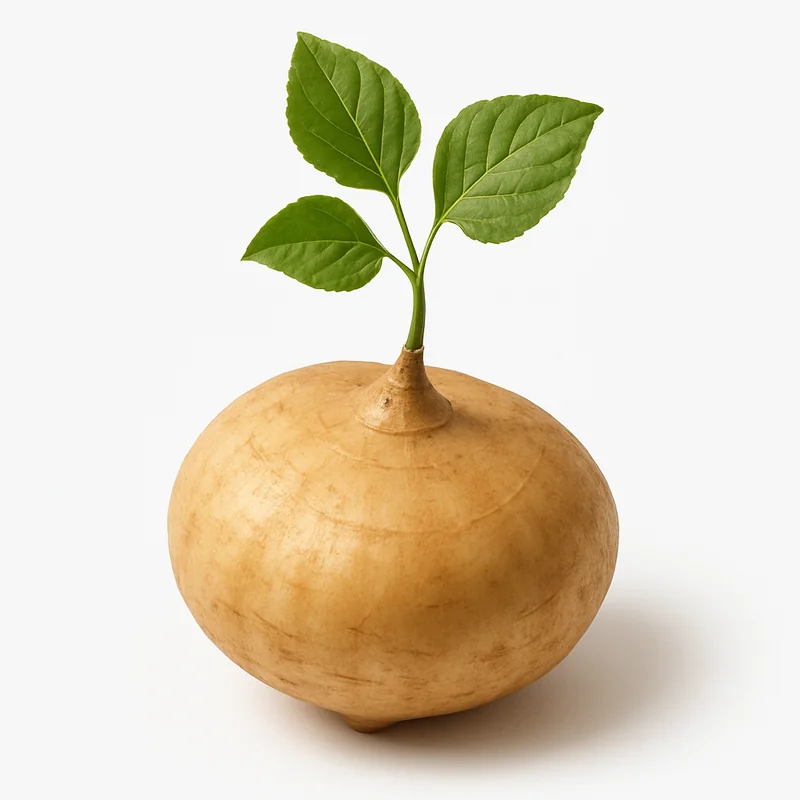
Yambean (Jicama)
ScoreA
Jicama is a crisp, low-calorie root vegetable rich in inulin and soluble fiber, providing sustained satiety with minimal glycemic impact. Its high water content (86-90%) and modest micronutrient profile make it ideal for weight management and metabolic health.
Why Yambean (Jicama) scores 88
% Daily Value per ½ cup (85 g)
Nutrition
per 100 g
Health benefits
Supports healthy weight management through improved satiety and reduced caloric load
moderate evidenceHigh water content (86-90%) and fiber create volume and fullness signals while providing minimal calories; inulin promotes prolonged satiety by modulating gut hormones like GLP-1 and peptide YY
Promotes prebiotic-driven microbiome diversity and short-chain fatty acid production
moderate evidenceInulin selectively feeds Bifidobacterium and Faecalibacterium prausnitzii, increasing butyrate and propionate production; butyrate strengthens intestinal barrier and reduces systemic inflammation
Maintains stable blood glucose and improves insulin sensitivity
moderate evidenceLow glycemic index (~15) and high insoluble fiber slow glucose absorption; inulin fermentation produces short-chain fatty acids that improve hepatic and peripheral insulin sensitivity
Supports cardiovascular health through potassium and fiber intake
moderate evidencePotassium regulates blood pressure via vasodilation and sodium balance; soluble fiber reduces LDL cholesterol oxidation and supports endothelial function
Enhances cognitive function and liver health via choline
moderate evidenceCholine is a precursor for acetylcholine (neurotransmitter) and phosphatidylcholine (neuronal membrane integrity); supports methylation reactions and hepatic lipid export
Pairs well with
- ·Pair with fat sources (olive oil, avocado) because fat-soluble vitamin absorption is enhanced and the lipid promotes slower gastric emptying, extending satiety
- ·Combine with fermented foods (sauerkraut, miso, yogurt) because exogenous probiotics work synergistically with jicama's inulin to expand beneficial bacterial populations
- ·Pair with vitamin C-rich foods (citrus, bell pepper) because jicama's modest vitamin C (20.2mg) combines with exogenous sources to maximize antioxidant load and iron bioavailability if consumed with plant proteins
- ·Combine with protein sources (legumes, fish) because protein slows carbohydrate absorption and jicama's fiber prevents postprandial glucose spikes in mixed meals
Practical tips
- ·Best timing: Jicama's low glycemic load and high satiety make it suitable for any meal or snack; inulin fermentation occurs throughout the day and benefits from consistent, distributed intake. As a snack, it supports appetite suppression between meals without disrupting circadian rhythms.
- ·Select firm, unblemished tubers without soft spots; store in cool, dark, well-ventilated spaces (45-50°F ideal) for 2-3 weeks; avoid plastic wrapping to prevent moisture accumulation
- ·Consume raw to preserve inulin and vitamin C content; raw jicama sticks work as a low-calorie snack with hummus or almond butter for macro-balanced satiety
- ·If digestive sensitivity occurs with raw jicama, introduce small portions gradually (¼ cup 2-3× weekly) to allow microbiota adaptation to increased inulin intake
- ·Pair with meals containing resistant starch (cooled potatoes, legumes) to amplify short-chain fatty acid production and glycemic control benefits
- ·Peel just before consumption; exposed flesh oxidizes rapidly; cut jicama into sticks or cubes for convenient portion control and consistent intake tracking
Related foods
What is Yambean (Jicama) actually covering?
See which nutrients your diet already delivers and which ones your supplements still need to — food and pills measured on the same scale.
Check my nutrients2 questions · free · no account needed to start
Also on iPhone — get the free app
Evidence-based supplement guides, no spam
We send a short digest when new guides drop — nothing else. No affiliate pushes, no sponsored content, unsubscribe anytime.