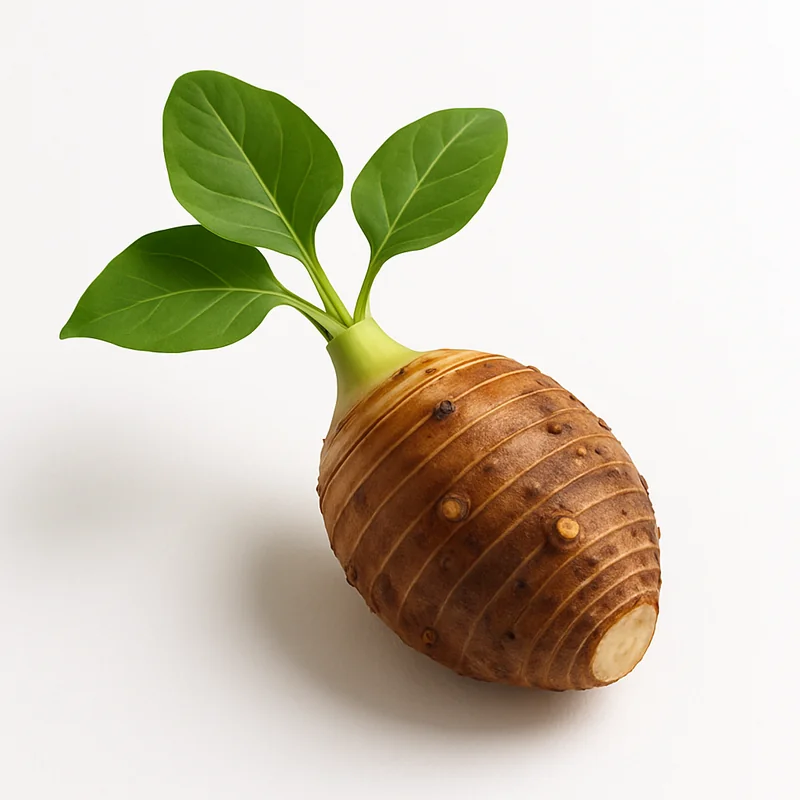
Taro
ScoreA
Taro is a starchy root vegetable rich in resistant starch, fiber, and potassium, offering sustained energy and digestive benefits with a low glycemic impact compared to refined carbohydrates.
Why Taro scores 76
% Daily Value per ½ cup (85 g)
Nutrition
per 100 g
Health benefits
Improved glycemic control and sustained energy through resistant starch
strong evidenceResistant starch escapes small intestinal digestion, producing slower glucose absorption and greater butyrate production by colonic bacteria, reducing blood sugar spikes
Enhanced cardiovascular health via potassium and prebiotic fiber
moderate evidenceHigh potassium content supports healthy blood pressure regulation; soluble fiber and resistant starch lower LDL cholesterol and improve endothelial function through microbial metabolites
Improved digestive health and microbiota diversity
moderate evidenceResistant starch and fiber act as prebiotics, selectively feeding beneficial bacteria (Faecalibacterium, Roseburia) that produce anti-inflammatory short-chain fatty acids
Cognitive support through choline and folate
moderate evidenceCholine is a precursor to acetylcholine (neurotransmitter) and supports phosphatidylcholine synthesis for neuronal membrane integrity; folate supports one-carbon methylation pathways essential for neurotransmitter synthesis
Potential anti-inflammatory effects from polysaccharides
emerging evidenceTaro's mucilaginous compounds and soluble fiber modulate intestinal barrier function and reduce lipopolysaccharide translocation, lowering systemic inflammation markers
Pairs well with
- ·Pair with olive oil and lemon: Vitamin E in taro is fat-soluble, and healthy fat enhances absorption while lemon's vitamin C aids mineral bioavailability
- ·Combine with fatty fish (salmon, mackerel): Omega-3 PUFAs synergize with taro's prebiotic fiber to amplify anti-inflammatory signaling and support microbiota that produce anti-inflammatory metabolites
- ·Mix with leafy greens (spinach, kale): Complements taro's potassium with additional magnesium and calcium, creating an optimal electrolyte and mineral profile for cardiovascular health
- ·Pair with legumes (lentils, black beans): Combines taro's resistant starch with legume protein and polyphenols for extended satiety, improved amino acid profile, and enhanced antioxidant potency
Practical tips
- ·Best timing: midday
- ·Cook taro, then cool completely (refrigerate 12+ hours) before consuming to maximize resistant starch content, which increases during storage as gelatinized starch retrogrades
- ·Peel with gloves or under running water to prevent skin irritation from calcium oxalate crystals; boiling for 5-10 minutes before peeling also degrades oxalates
- ·Select firm, unblemished corms without soft spots; store in a cool, dark, well-ventilated place (50-60°F ideal) for up to 2-3 weeks to preserve starch stability
- ·Consume reheated cooked taro rather than fresh-cooked for maximum prebiotic benefits, as reheating further increases resistant starch through continued retrogradation
- ·Portion size: 100-150g (1/2 to 3/4 cup cooked) as a starch side provides meaningful prebiotic dose without excessive caloric load; suitable for daily consumption
Related foods
What is Taro actually covering?
See which nutrients your diet already delivers and which ones your supplements still need to — food and pills measured on the same scale.
Check my nutrients2 questions · free · no account needed to start
Also on iPhone — get the free app
Evidence-based supplement guides, no spam
We send a short digest when new guides drop — nothing else. No affiliate pushes, no sponsored content, unsubscribe anytime.