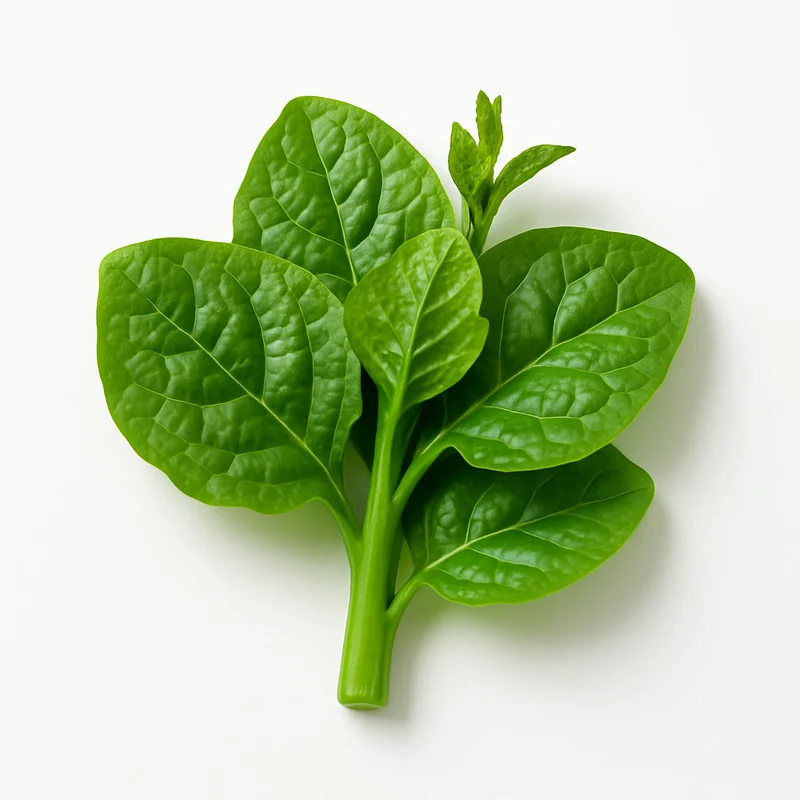
Malabar Spinach
ScoreA+
Malabar spinach is a heat-tolerant leafy green vegetable rich in calcium, folate, and iron, offering substantial micronutrient density at minimal calories.
Why Malabar Spinach scores 90
% Daily Value per ½ cup (85 g)
Nutrition
per 100 g
Health benefits
Supports bone mineral density and cardiovascular health
strong evidenceHigh calcium (124 mg/100g) and magnesium (48 mg/100g) work synergistically to regulate bone mineralization and vascular function, while potassium (256 mg/100g) supports blood pressure regulation
Reduces homocysteine levels and supports vascular health
strong evidenceFolate (114 mcg/100g) functions as a methyl donor in homocysteine metabolism, helping reduce this independent risk factor for cardiovascular disease
Enhances oxygen transport and energy production
strong evidenceIron (1.48 mg/100g) serves as a critical component of hemoglobin and cytochrome oxidase, while the vegetable's modest vitamin C content (5.9 mg/100g) improves non-heme iron bioavailability
Provides antioxidant and anti-inflammatory protection
moderate evidenceFlavonoids and carotenoid compounds present in Malabar spinach scavenge free radicals and modulate inflammatory signaling pathways
Pairs well with
- ·Pair with citrus (lemon, lime) or tomato because vitamin C enhances absorption of non-heme iron in this leafy green
- ·Combine with healthy fats (olive oil, avocado, nuts) because fat-soluble carotenoids and vitamin A require lipids for optimal absorption
- ·Serve with garlic and onions because sulfur compounds support detoxification enzyme activation and enhance flavor without adding sodium
- ·Pair with legumes (lentils, chickpeas) because complementary amino acid profiles create a complete protein, and both are iron-rich
Practical tips
- ·Best timing: As a low-glycemic, micronutrient-dense vegetable, Malabar spinach can be consumed at any time of day. Its mineral and folate content support steady energy and metabolic function throughout the day without spiking blood glucose.
- ·Store fresh Malabar spinach in a cool, humid environment (refrigerator crisper drawer) for up to 5 days; it wilts faster than true spinach due to higher water content
- ·Lightly steam or sauté for 2-3 minutes rather than eating raw—brief cooking can increase bioavailability of minerals while preserving heat-sensitive vitamins
- ·Select tender young leaves and shoots for milder flavor; mature leaves develop a more pronounced earthiness and slightly mucilaginous texture
- ·Consume regularly in warm/tropical climates where it grows abundantly, or source frozen varieties which preserve nutrient density well
Related foods
What is Malabar Spinach actually covering?
See which nutrients your diet already delivers and which ones your supplements still need to — food and pills measured on the same scale.
Check my nutrients2 questions · free · no account needed to start
Also on iPhone — get the free app
Evidence-based supplement guides, no spam
We send a short digest when new guides drop — nothing else. No affiliate pushes, no sponsored content, unsubscribe anytime.