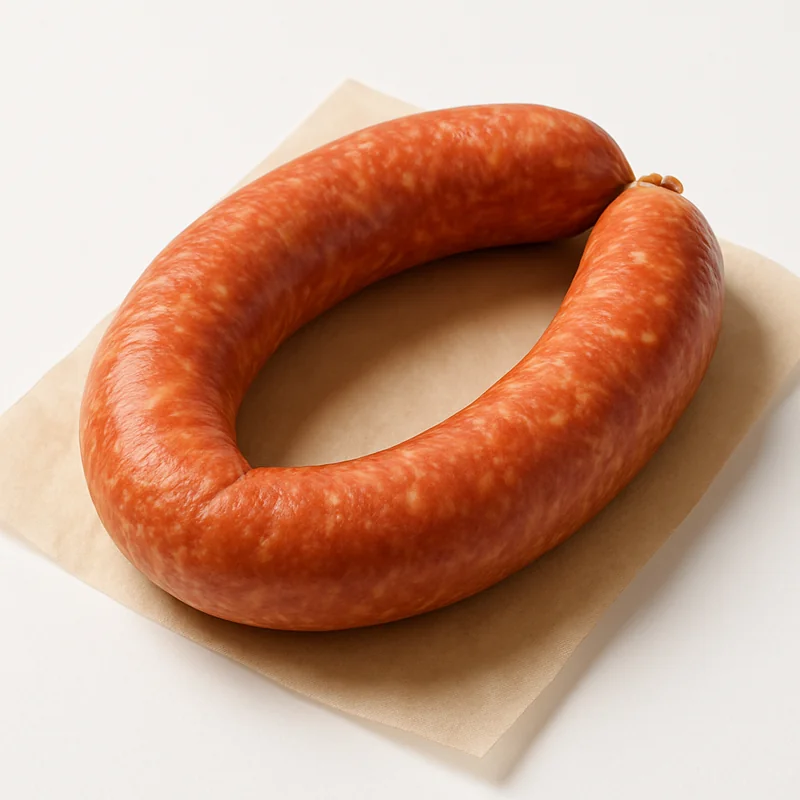
Kielbasa
ScoreC
Kielbasa is a high-protein, calorie-dense smoked sausage traditionally made from pork, offering substantial selenium and choline but characterized by very high sodium content (1,062 mg per 100g).
Why Kielbasa scores 58
% Daily Value per 3 oz (85 g)
Nutrition
per 100 g
Health benefits
Supports cognitive function and nervous system health
strong evidenceCholine (41.8 mg) is a precursor to acetylcholine, a neurotransmitter essential for memory formation, attention, and neuroplasticity
Promotes thyroid function and selenoprotein synthesis
strong evidenceSelenium (19.8 mcg) is incorporated into selenoproteins including glutathione peroxidase, critical for thyroid hormone metabolism and antioxidant defense
Provides bioavailable heme iron for oxygen transport
strong evidenceHeme iron from meat sources has 15-35% absorption rate compared to 2-20% for plant-based iron, supporting hemoglobin formation
Supports muscle protein synthesis and repair
strong evidenceComplete protein containing all essential amino acids (12.45g per 100g) activates mTOR pathway for muscle maintenance, particularly important with aging
Pairs well with
- ·Pair with sauerkraut or fermented vegetables because the probiotics and fiber support gut health and may reduce inflammatory markers associated with processed meat consumption
- ·Combine with leafy greens (spinach, kale) because the vitamin K and polyphenols help offset oxidative stress from processed meat and support cardiovascular function
- ·Serve with legumes (lentils, beans) because the polyphenols and soluble fiber enhance mineral absorption and provide additional plant-based antioxidants to balance the meal's nutrient density
- ·Pair with vitamin C-rich foods (bell peppers, tomato sauce) because ascorbic acid enhances non-heme iron absorption and provides antioxidant protection against lipid peroxidation
Practical tips
- ·Best timing: midday
- ·Limit portion size to 50-75g per serving (approximately 1-2 ounces) to keep sodium intake under 500-800 mg per meal while still obtaining micronutrient benefits
- ·Select varieties labeled 'uncured' or with lower sodium content (<800 mg per 100g) when available, as conventional kielbasa often exceeds 1,200 mg sodium
- ·Pair with high-water-content vegetables and whole grains to increase satiety and nutrient density relative to caloric intake, moderating the energy-dense nature (337 kcal per 100g)
- ·Store in refrigerator at 40°F or below for no more than 3-5 days after opening, or freeze in individual portions for extended storage, as the processing allows some bacterial growth over time
- ·Consider kielbasa as a flavor component or seasoning agent in vegetable-based soups and stews rather than the protein centerpiece, maximizing nutritional synergy while managing sodium burden
Related foods
What is Kielbasa actually covering?
See which nutrients your diet already delivers and which ones your supplements still need to — food and pills measured on the same scale.
Check my nutrients2 questions · free · no account needed to start
Also on iPhone — get the free app
Evidence-based supplement guides, no spam
We send a short digest when new guides drop — nothing else. No affiliate pushes, no sponsored content, unsubscribe anytime.