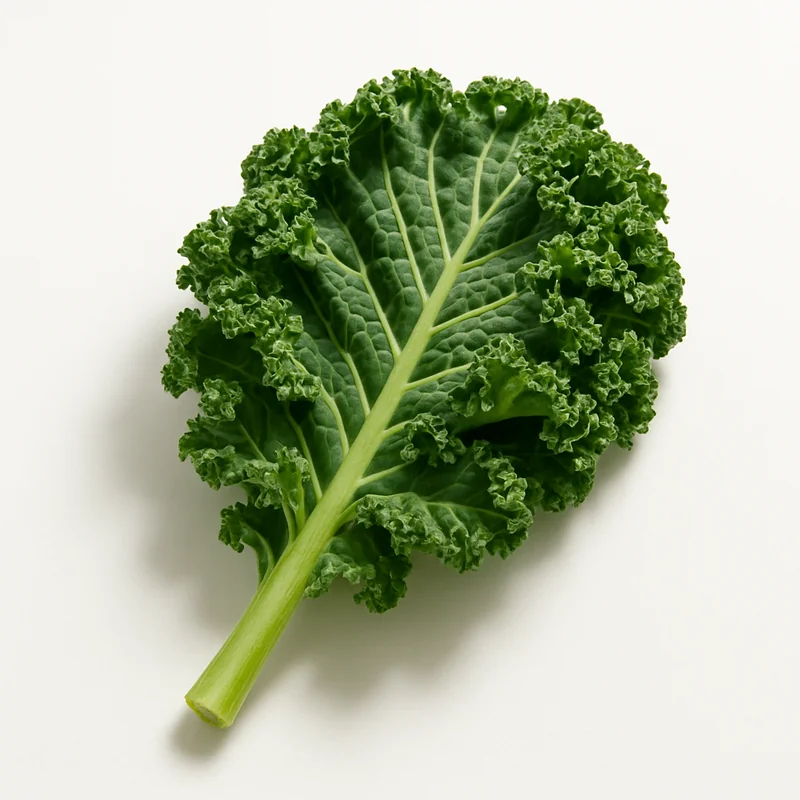
Kale
ScoreA+
Kale is a nutrient-dense cruciferous vegetable exceptionally rich in vitamin K, vitamin A, and antioxidants, making it one of the most micronutrient-concentrated foods available.
Why Kale scores 98
% Daily Value per a handful (40 g)
Nutrition
per 100 g
Health benefits
Supports bone health and cardiovascular function through vitamin K activation of osteocalcin and matrix Gla-protein
strong evidenceVitamin K (705 mcg per 100g) acts as a cofactor for gamma-carboxylation of bone proteins, promoting calcium deposition in bone matrix rather than arterial walls, reducing fracture risk and arterial calcification
Reduces systemic inflammation and oxidative stress through glucosinolate-derived sulforaphane
moderate evidenceGlucosinolates in kale are converted to sulforaphane via myrosinase enzyme, which activates the Nrf2 antioxidant response pathway, upregulating detoxification enzymes and reducing NF-κB inflammatory signaling
Supports ocular health and prevents age-related macular degeneration through lutein and zeaxanthin accumulation
moderate evidenceHigh carotenoid content (vitamin A as provitamin A) provides lutein and zeaxanthin, which accumulate in the macula and filter harmful blue light, protecting photoreceptors from oxidative damage
Enhances detoxification capacity and phase 2 enzyme activity
moderate evidenceIndole-3-carbinol and sulforaphane from kale's glucosinolates induce upregulation of glutathione S-transferases and UDP-glucuronosyltransferases, improving elimination of xenobiotics and estrogen metabolites
Supports cognitive function and neuroprotection through polyphenol-mediated anti-neuroinflammation
emerging evidenceQuercetin and kaempferol polyphenols inhibit microglial activation and reduce pro-inflammatory cytokine production (IL-6, TNF-α) in the central nervous system
Pairs well with
- ·Pair with olive oil or avocado because fat-soluble vitamins A and K require dietary lipids for optimal absorption and transport across the intestinal epithelium
- ·Combine with fermented foods (sauerkraut, kimchi, miso) because the glucosinolates in raw or lightly cooked kale undergo enzymatic conversion enhanced by gut microbiota, and fermented foods provide beneficial bacterial species
- ·Serve with citrus (lemon, lime) or tomatoes because vitamin C enhances non-heme iron bioavailability from kale and synergistically boosts antioxidant activity through polyphenol interactions
- ·Pair with sulfur-rich alliums (garlic, onions) because both provide glucosinolates and organosulfur compounds that activate complementary detoxification pathways through Nrf2 signaling
Practical tips
- ·Best timing: Kale's nutrient profile—high in bone-supporting minerals, detoxification compounds, and polyphenols—provides benefits throughout the day. Consumption with meals containing fat maximizes micronutrient absorption. Evening consumption is acceptable; vitamin K does not interfere with sleep physiology.
- ·Lightly steam or sauté kale for 3-5 minutes rather than consuming raw to optimize sulforaphane production: myrosinase enzyme requires brief heat activation, and light cooking preserves enzyme activity better than extended cooking
- ·Store kale unwashed in a breathable bag in the refrigerator crisper drawer for up to 10 days; washing before storage accelerates decay due to excess moisture
- ·Add kale to warm foods (soups, stir-fries) rather than cold salads when aiming to maximize fat-soluble vitamin absorption, as heat-induced cell wall breakdown increases bioaccessibility
- ·Consume kale stems as well as leaves; stems contain comparable glucosinolate concentrations and can be chopped finely and added to broths or smoothies for additional fiber and micronutrients
- ·Massage raw kale with salt and a small amount of oil before serving to break down cell walls, reduce bitter compounds, and improve palatability without cooking
Related foods
What is Kale actually covering?
See which nutrients your diet already delivers and which ones your supplements still need to — food and pills measured on the same scale.
Check my nutrients2 questions · free · no account needed to start
Also on iPhone — get the free app
Evidence-based supplement guides, no spam
We send a short digest when new guides drop — nothing else. No affiliate pushes, no sponsored content, unsubscribe anytime.