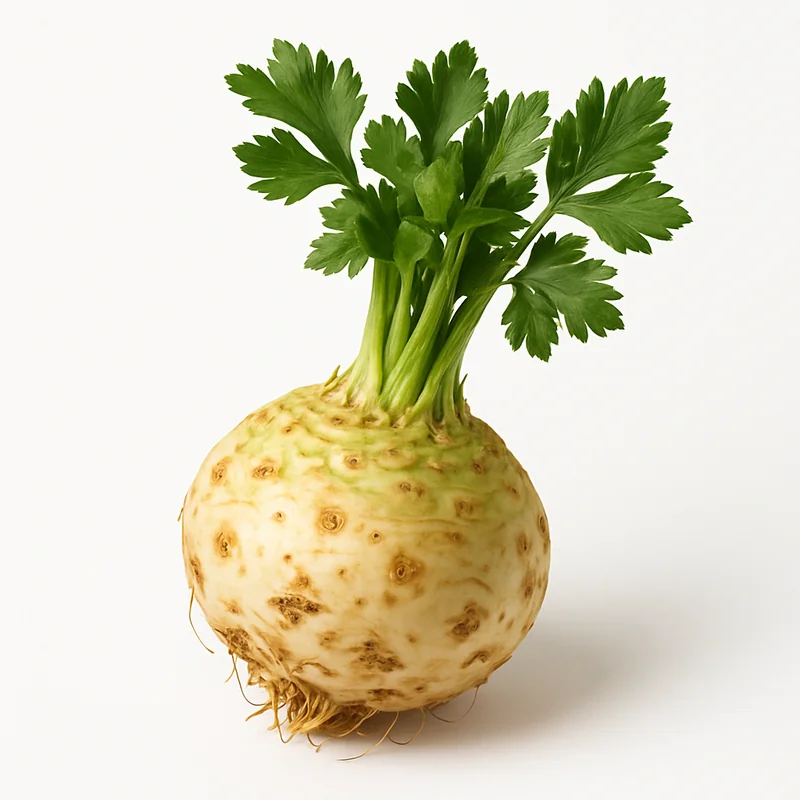
Celeriac
ScoreA
Celeriac (celery root) is a starchy cruciferous vegetable rich in potassium, fiber, and vitamin K, offering anti-inflammatory and cardiovascular support with minimal caloric density.
Why Celeriac scores 89
% Daily Value per ½ cup (85 g)
Nutrition
per 100 g
Health benefits
Supports cardiovascular health through potassium and blood pressure regulation
strong evidencePotassium acts as a vasodilator and counterbalances sodium's effects on blood pressure; adequate intake is associated with reduced hypertension risk and improved arterial elasticity.
Enhances digestive health and gut microbiome diversity
moderate evidenceInulin and other soluble fibers act as prebiotics, selectively feeding beneficial bacteria like Bifidobacterium and Faecalibacterium, which produce short-chain fatty acids essential for colonic health.
Supports bone health and blood clotting through vitamin K
strong evidenceVitamin K activates osteocalcin, which binds calcium to the bone matrix, and carboxylates clotting factors II, VII, IX, and X for proper hemostasis.
Promotes cognitive function and liver detoxification via choline
moderate evidenceCholine is a precursor for acetylcholine (neurotransmitter) and phosphatidylcholine (cell membrane integrity); supports hepatic Phase I and II detoxification pathways.
Reduces inflammation through glucosinolates and phytochemicals
emerging evidenceGlucosinolates convert to sulforaphane and other isothiocyanates, activating Nrf2 signaling pathway to upregulate antioxidant and anti-inflammatory gene expression.
Pairs well with
- ·Pair with olive oil because fat-soluble vitamins K, A, and E require dietary lipids for absorption and transport; monounsaturated fats enhance bioavailability.
- ·Combine with leafy greens (kale, spinach) because both provide complementary phytonutrients (glucosinolates and lutein) that synergistically activate detoxification pathways.
- ·Serve with legumes (lentils, chickpeas) because legume polyphenols enhance celeriac's prebiotic effect and increase microbial fermentation of fiber.
- ·Pair with mushrooms because ergothioneine and beta-glucans in mushrooms amplify celeriac's anti-inflammatory effect through complementary immune mechanisms.
Practical tips
- ·Best timing: Celeriac is nutrient-dense but low-glycemic, making it suitable for any meal. Consuming with lunch or dinner ensures adequate fat intake for fat-soluble vitamin absorption. No time-restricted benefit exists.
- ·Select smaller, firmer celeriac roots (2-4 inches diameter) over large ones; larger roots tend to be woody and fibrous with less tender flesh.
- ·Store unwashed celeriac in a cool, humid environment (refrigerator crisper drawer) for up to 3 weeks; peel just before use to minimize nutrient oxidation.
- ·Roast at 425°F (220°C) for 25-30 minutes to caramelize and enhance sweetness; this cooking method preserves more vitamin K than boiling (which causes leaching).
- ·Consume raw in thin slices or julienne form in salads to maximize enzyme activity and preserve heat-sensitive vitamin C; raw preparation also optimizes glucosinolate conversion.
Related foods
What is Celeriac actually covering?
See which nutrients your diet already delivers and which ones your supplements still need to — food and pills measured on the same scale.
Check my nutrients2 questions · free · no account needed to start
Also on iPhone — get the free app
Evidence-based supplement guides, no spam
We send a short digest when new guides drop — nothing else. No affiliate pushes, no sponsored content, unsubscribe anytime.