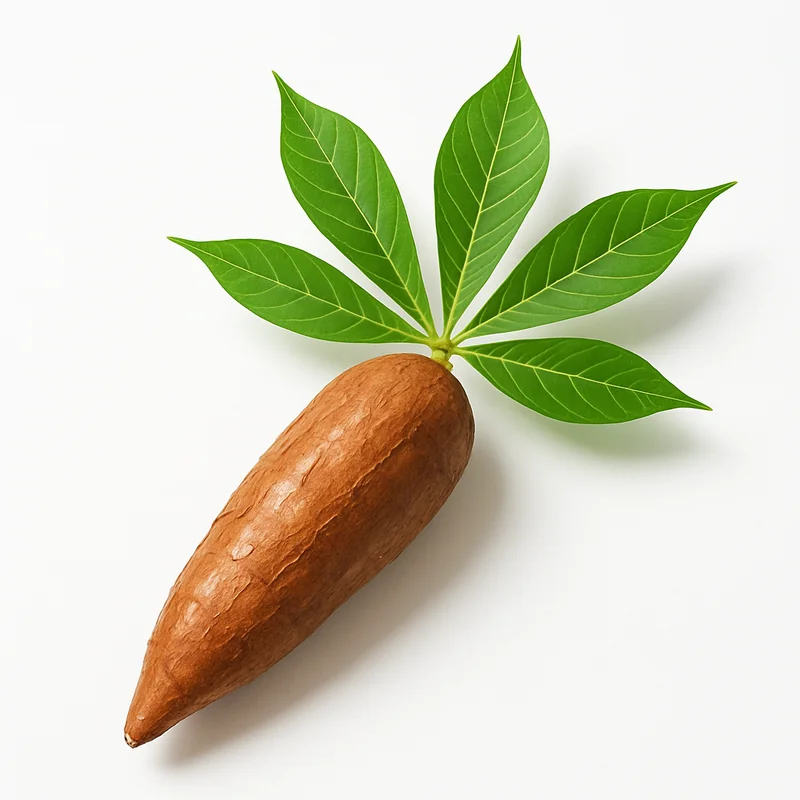
Cassava
ScoreC
Cassava is a starchy root vegetable rich in carbohydrates and resistant starch, providing sustained energy with moderate micronutrient content including potassium and folate.
Why Cassava scores 44
% Daily Value per ½ cup (85 g)
Nutrition
per 100 g
Health benefits
Supports blood sugar stability through resistant starch
moderate evidenceWhen cooked then cooled, cassava forms resistant starch that resists digestion in the small intestine, reaching the colon where it feeds beneficial bacteria and produces short-chain fatty acids, reducing glucose spikes
Provides folate for cardiovascular and DNA health
strong evidenceFolate (27 mcg per 100g) participates in homocysteine methylation; elevated homocysteine is a cardiovascular risk factor, and adequate folate intake supports healthy aging markers
Supports potassium-dependent blood pressure regulation
strong evidenceCassava provides 271 mg potassium per 100g, which balances sodium's vasoconstrictive effects and supports vascular endothelial function through multiple signaling pathways
Promotes prebiotic-driven microbiota diversity
moderate evidenceResistant starch and fiber in properly prepared cassava selectively feed beneficial bacteria (Faecalibacterium, Roseburia), enhancing short-chain fatty acid production and gut barrier integrity
Pairs well with
- ·Pair with olive oil: Fat-soluble compounds in olive oil enhance absorption of cassava's fat-soluble micronutrients and improve resistant starch bioavailability
- ·Combine with leafy greens (spinach, kale): Greens provide additional folate and vitamin K to complement cassava's folate, supporting bone and vascular health synergistically
- ·Serve with legumes (beans, lentils): Legumes supply complementary proteins and additional resistant starch, creating a complete amino acid profile and enhanced prebiotic effect
- ·Add to bone broth-based dishes: The gelatin and collagen from broth enhance mineral bioavailability, while cassava's potassium supports electrolyte balance
Practical tips
- ·Best timing: midday
- ·Always cook cassava thoroughly: Raw or undercooked cassava contains cyanogenic glycosides that must be neutralized by boiling for at least 15-20 minutes; fermentation or sun-drying are alternative traditional methods
- ·Cool cooked cassava before eating to maximize resistant starch: Refrigerate for at least 4 hours post-cooking; cooling converts digestible starch to resistant starch with prebiotic benefits
- ·Choose firm, unblemished roots with no soft spots: Quality selection ensures lower spoilage risk and optimal nutrient retention; store in cool, dry, dark places for up to 2 weeks
- ·Prepare in larger batches: Cook cassava and portion into cool/refrigerated servings to maintain resistant starch content throughout the week
- ·Monitor portion sizes: At 160 kcal per 100g, cassava is calorie-dense; pair with high-protein, high-fiber foods to prevent overeating
Related foods
What is Cassava actually covering?
See which nutrients your diet already delivers and which ones your supplements still need to — food and pills measured on the same scale.
Check my nutrients2 questions · free · no account needed to start
Also on iPhone — get the free app
Evidence-based supplement guides, no spam
We send a short digest when new guides drop — nothing else. No affiliate pushes, no sponsored content, unsubscribe anytime.