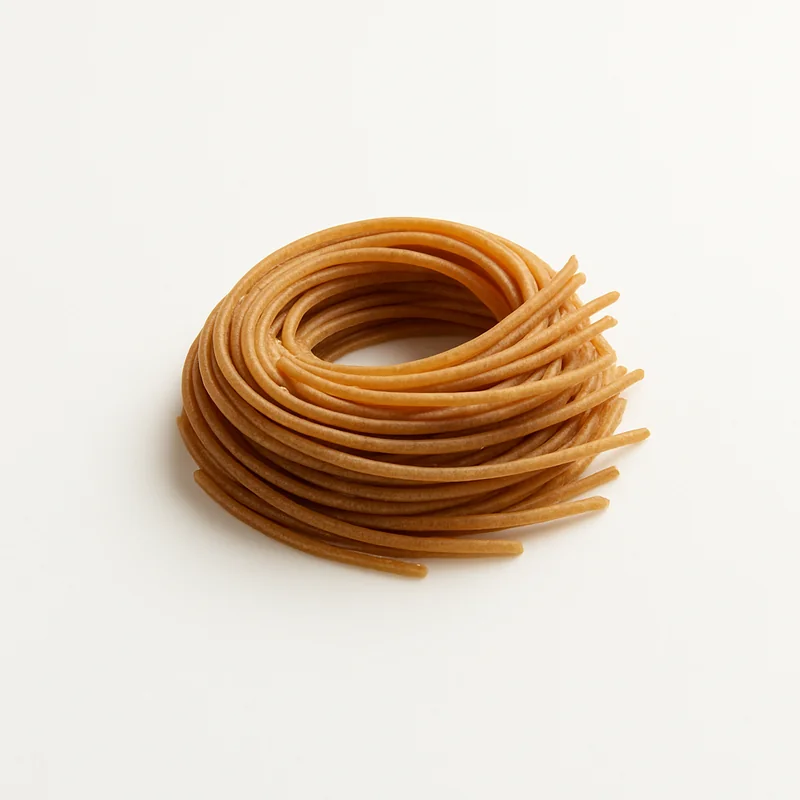
Spaghetti
ScoreA+
Spaghetti is a refined wheat pasta that provides carbohydrates for energy along with plant-based protein and essential minerals like magnesium and selenium.
Why Spaghetti scores 91
% Daily Value per ½ cup (50 g)
Nutrition
per 100 g
Health benefits
Sustained energy and stable blood glucose
strong evidenceHigh fiber content (10.6g/100g) slows gastric emptying and delays glucose absorption, preventing blood sugar spikes and energy crashes
Magnesium-dependent cellular energy production
strong evidenceMagnesium (174mg/100g) is essential for ATP synthesis and mitochondrial respiration, supporting aerobic capacity and muscle function
Selenium-based antioxidant defense
strong evidenceSelenium (63.5mcg/100g) is incorporated into glutathione peroxidase and thioredoxin reductase enzymes, protecting cells from oxidative damage and reducing inflammation
Plant-based protein contribution to muscle maintenance
moderate evidence13.35g protein per 100g supports protein synthesis in skeletal muscle, important for preserving lean mass during aging
Bone mineral density support via phosphorus
moderate evidencePhosphorus (332mg/100g) works synergistically with calcium to maintain hydroxyapatite crystal structure in bone matrix
Pairs well with
- ·Pair with olive oil and cruciferous vegetables (broccoli, kale) because fat-soluble vitamins in oil enhance nutrient absorption while vegetables add polyphenols and fiber
- ·Combine with legumes (lentil pasta or chickpea-based sauces) to create complete amino acid profiles and increase total protein bioavailability
- ·Top with fatty fish (salmon, sardines) or grass-fed beef to add heme iron, B12, and omega-3s that reduce inflammation and support cognitive function
- ·Pair with tomato-based sauce containing garlic because lycopene in tomatoes and organosulfur compounds in garlic synergize as anti-inflammatory agents
Practical tips
- ·Best timing: midday
- ·Choose whole grain or legume-based spaghetti varieties over refined white pasta to maximize fiber intake (aim for ≥6g fiber per 100g) and minimize glycemic load
- ·Cook al dente (firm to bite) to reduce starch digestibility and lower post-meal blood glucose response by 20-30%
- ·Store in airtight containers away from heat and light; whole grain spaghetti is more prone to lipid oxidation than refined pasta, so consume within 3-4 months of opening
- ·Portion control: limit to 80-100g dry weight (cooked portion ~230g) to maintain carbohydrate balance; pair with protein and fat to slow absorption
- ·Cook with added salt in water, then rinse lightly if needed; the starch water can be reserved to thicken sauces, reducing reliance on added fats
Related foods
What is Spaghetti actually covering?
See which nutrients your diet already delivers and which ones your supplements still need to — food and pills measured on the same scale.
Check my nutrients2 questions · free · no account needed to start
Also on iPhone — get the free app
Evidence-based supplement guides, no spam
We send a short digest when new guides drop — nothing else. No affiliate pushes, no sponsored content, unsubscribe anytime.