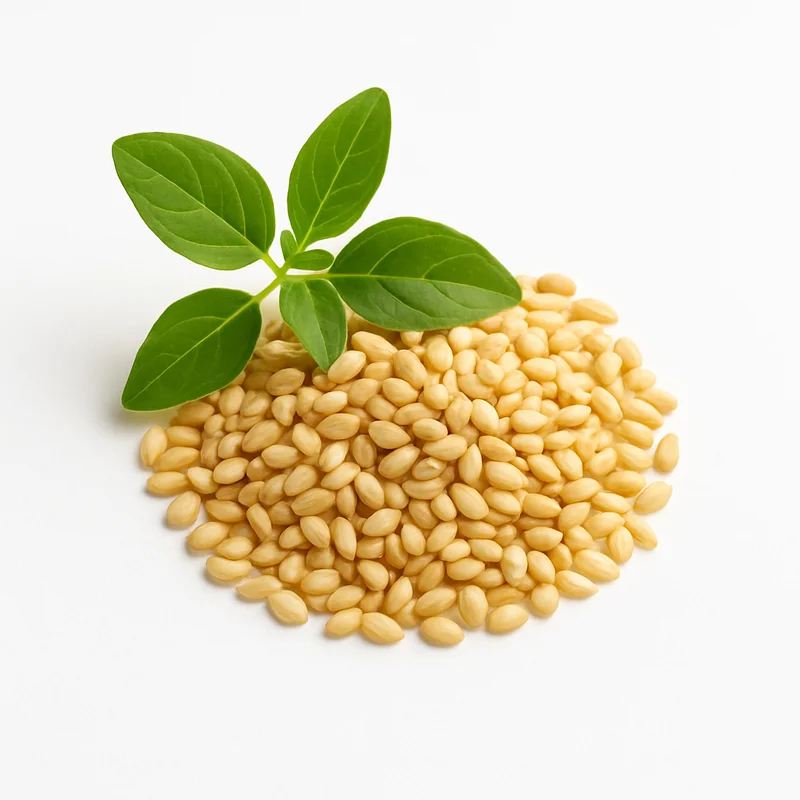
Sesame Seed
ScoreA+
Sesame seeds are oil-rich seeds exceptionally dense in calcium, copper, and manganese and the source of the lignans sesamin and sesamolin.
Why Sesame Seed scores 95
% Daily Value per a pinch (2 g)
Nutrition
per 100 g
Health benefits
Supports bone mineral density
moderate evidenceExceptional calcium, magnesium, copper, and manganese content supplies the mineral cofactors required for collagen cross-linking and bone matrix formation
Helps lower LDL cholesterol and oxidative stress
moderate evidenceSesamin and sesamolin inhibit cholesterol absorption and synthesis while sparing gamma-tocopherol, enhancing systemic antioxidant capacity
Supports liver function and lipid metabolism
moderate evidenceSesamin upregulates hepatic fatty-acid oxidation enzymes and reduces lipid peroxidation
Pairs well with
- ·Pair with leafy greens or tahini-based dressings because the seeds' fat improves absorption of fat-soluble carotenoids and vitamin K
- ·Combine with vitamin-C-rich foods because ascorbate enhances absorption of sesame's non-heme iron
Practical tips
- ·Best timing: Sesame's minerals and lignans have no circadian dependency and benefit from steady daily intake.
- ·Toast lightly before use to develop sesamol and deepen flavor, but avoid scorching which degrades the oils
- ·Grind or chew thoroughly because whole seeds often pass undigested, limiting mineral and lignan uptake
- ·Choose unhulled seeds for far higher calcium content
Related foods
What is Sesame Seed actually covering?
See which nutrients your diet already delivers and which ones your supplements still need to — food and pills measured on the same scale.
Check my nutrients2 questions · free · no account needed to start
Also on iPhone — get the free app
Evidence-based supplement guides, no spam
We send a short digest when new guides drop — nothing else. No affiliate pushes, no sponsored content, unsubscribe anytime.