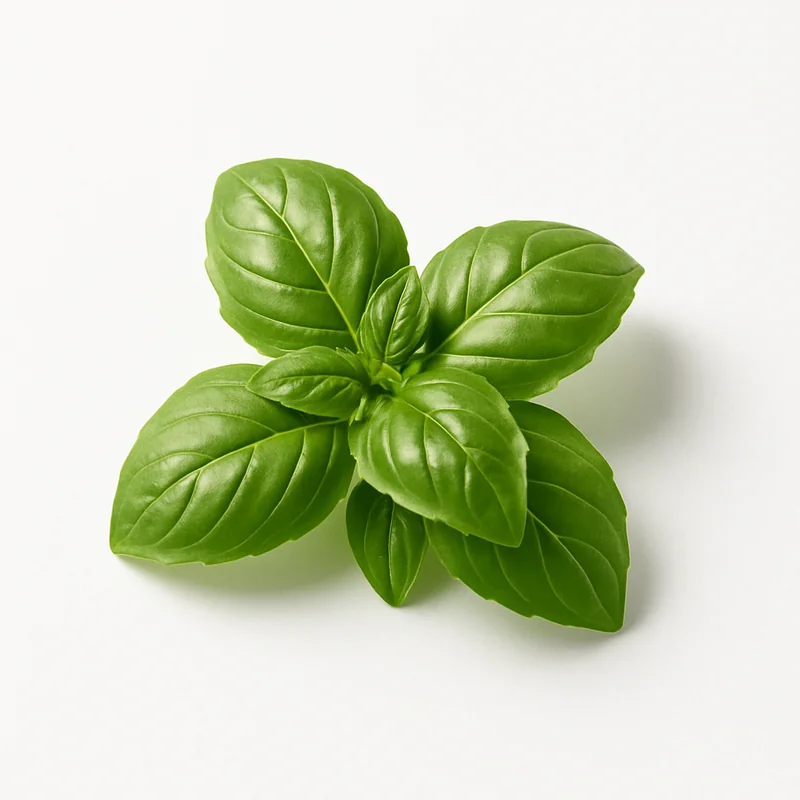
Basil
ScoreA+
Basil is an aromatic herb rich in vitamin K and polyphenols, offering anti-inflammatory and antioxidant benefits with minimal calories. Fresh basil supports bone health, cardiovascular function, and cognitive longevity through its bioactive compound profile.
Why Basil scores 94
% Daily Value per a pinch (2 g)
Nutrition
per 100 g
Health benefits
Supports bone health and vascular calcification prevention
strong evidenceHigh vitamin K content activates osteocalcin and matrix Gla protein, directing calcium to bone matrix while preventing pathological arterial calcification
Reduces systemic inflammation and oxidative stress
moderate evidenceRosmarinic acid and eugenol inhibit NF-κB signaling and scavenge free radicals, reducing pro-inflammatory cytokine production
Supports cardiovascular endothelial function
moderate evidencePolyphenols enhance nitric oxide bioavailability and improve arterial compliance, reducing atherosclerosis risk
May enhance cognitive function and neuroprotection
emerging evidenceLinalool and eugenol cross the blood-brain barrier, reducing neuroinflammation and supporting acetylcholine signaling
Pairs well with
- ·Pair with olive oil because polyphenols in basil are fat-soluble; oil enhances absorption of eugenol and rosmarinic acid while synergistically boosting antioxidant effects
- ·Combine with tomatoes because lycopene absorption increases with basil's volatile oils, creating synergistic cardioprotective effects
- ·Use with fatty fish (salmon, mackerel) because basil's vitamin K supports bone health while omega-3s reduce inflammation; compounds work additively on endothelial function
- ·Pair with legumes because basil's polyphenols enhance iron bioavailability from plant-based sources through chelation mechanisms
Practical tips
- ·Best timing: Basil's bioactives have no circadian dependency and benefit from consistent daily consumption. Include at multiple meals for cumulative polyphenol intake and sustained anti-inflammatory effects. Morning or midday consumption aids digestion, while evening use supports overnight antioxidant processes.
- ·Store fresh basil at room temperature in a glass of water (stem-down, loosely covered) rather than refrigerated to preserve volatile oils; change water daily and use within 5-7 days
- ·Add basil at the end of cooking when possible—brief heating (under 60°C) preserves polyphenols, but prolonged cooking degrades linalool and eugenol
- ·Consume 5-10g fresh basil daily (roughly 1-2 tablespoons) as a practical dose delivering meaningful vitamin K and polyphenols without excess volume
- ·Dry basil loses 60-70% of volatile oils but retains reasonable polyphenol content; use dried basil in cooked dishes (soups, sauces) but prefer fresh for maximum bioactive density
- ·Grow basil indoors on a sunny windowsill to ensure year-round access; home-grown basil typically contains higher polyphenol concentrations than commercial varieties due to harvest timing
Related foods
What is Basil actually covering?
See which nutrients your diet already delivers and which ones your supplements still need to — food and pills measured on the same scale.
Check my nutrients2 questions · free · no account needed to start
Also on iPhone — get the free app
Evidence-based supplement guides, no spam
We send a short digest when new guides drop — nothing else. No affiliate pushes, no sponsored content, unsubscribe anytime.