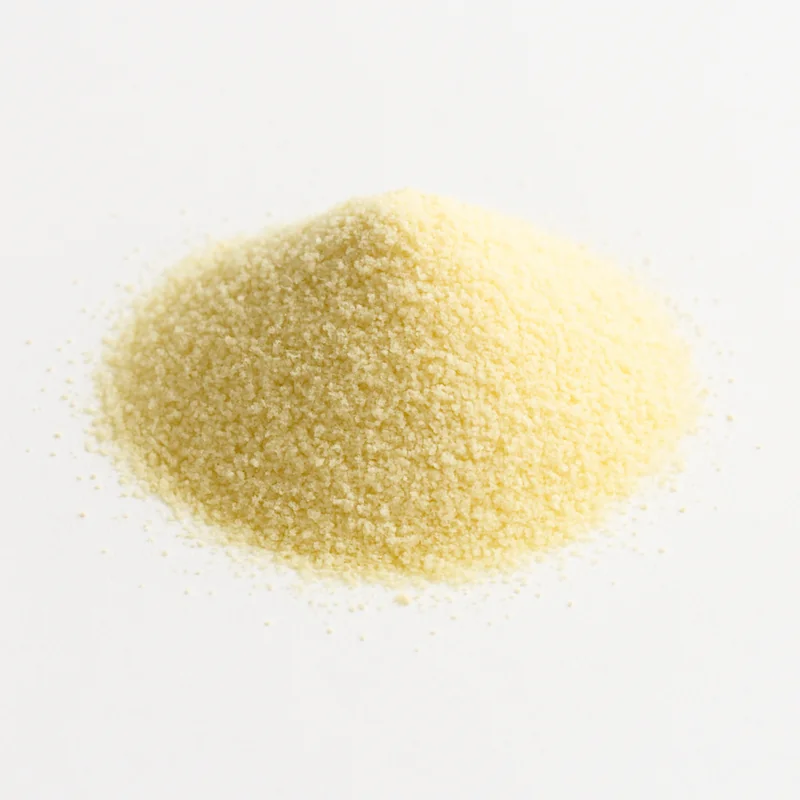
Semolina
ScoreC
Semolina is a coarse flour made from durum wheat with a high protein content and moderate fiber, providing sustained energy and micronutrients including B vitamins and iron.
Why Semolina scores 53
% Daily Value per ½ cup (50 g)
Nutrition
per 100 g
Health benefits
Sustained energy and stable blood glucose
moderate evidenceModerate glycemic index combined with 12.7g protein per 100g slows carbohydrate absorption, preventing rapid blood sugar spikes and promoting satiety
Improved bone mineral density
moderate evidenceHigh phosphorus (136mg) and magnesium (47mg) content support calcium metabolism and bone mineralization; manganese (0.619mg) is essential for bone matrix formation
Enhanced iron bioavailability and anemia prevention
moderate evidenceContains 1.23mg iron per 100g; niacin (3.31mg) improves iron absorption and supports red blood cell formation and oxygen transport
Prebiotic-mediated gut health
emerging evidenceResistant starch formation (particularly in cooked semolina) feeds beneficial gut bacteria, promoting short-chain fatty acid production and colonic health
Metabolic regulation via B vitamins
moderate evidenceHigh niacin content supports energy metabolism; folate (72mcg) and B vitamins regulate homocysteine and support cardiovascular health
Pairs well with
- ·Pair with legumes (lentils, chickpeas) because their lysine content complements semolina's amino acid profile, creating a complete protein source for sustained energy
- ·Combine with vitamin C-rich foods (tomatoes, bell peppers, citrus) because ascorbic acid enhances non-heme iron absorption, critical for maintaining healthy hemoglobin
- ·Pair with leafy greens (spinach, kale) because the magnesium and phosphorus in semolina work synergistically with greens' calcium to optimize bone mineralization
- ·Mix into milk or yogurt-based dishes because dairy calcium and vitamin D enhance the bioavailability of semolina's phosphorus and magnesium for bone health
Practical tips
- ·Best timing: midday
- ·Store semolina in an airtight container in a cool, dry place to prevent rancidity; durum wheat's higher fat content (1.05g) makes it more prone to oxidation than refined flours
- ·Choose durum semolina over refined white semolina when possible; the more intact bran and germ layers retain more manganese, magnesium, and fiber
- ·Cook semolina porridge with a large volume of water or milk and allow it to cool before consumption to maximize resistant starch formation and prebiotic benefits
- ·Use semolina pasta as a base for vegetable-rich dishes rather than meat-heavy sauces to improve fiber intake and nutrient density relative to calories
Related foods
What is Semolina actually covering?
See which nutrients your diet already delivers and which ones your supplements still need to — food and pills measured on the same scale.
Check my nutrients2 questions · free · no account needed to start
Also on iPhone — get the free app
Evidence-based supplement guides, no spam
We send a short digest when new guides drop — nothing else. No affiliate pushes, no sponsored content, unsubscribe anytime.