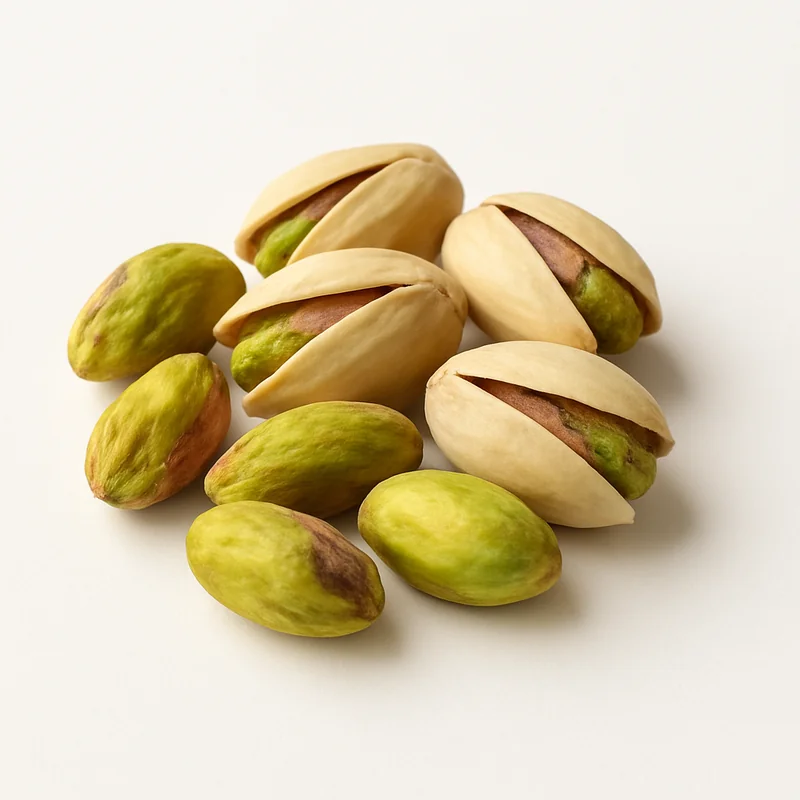
Pistachio Nut
ScoreA
Pistachios are nutrient-dense tree nuts rich in plant-based protein, healthy monounsaturated fats, and bioactive polyphenols. They offer cardiovascular and metabolic benefits with a distinctive nutritional profile supporting healthy aging.
Why Pistachio Nut scores 85
% Daily Value per 1 oz (28 g)
Nutrition
per 100 g
Health benefits
Improved cardiovascular health and cholesterol management
strong evidencePlant sterols and monounsaturated fats reduce LDL cholesterol; polyphenols improve endothelial function and reduce arterial inflammation
Enhanced eye health and reduced age-related macular degeneration risk
strong evidenceLutein and zeaxanthin concentrate in the retina, filtering harmful blue light and reducing oxidative damage to photoreceptor cells
Improved metabolic health and blood glucose control
moderate evidenceHigh fiber and protein content slow digestion and nutrient absorption; polyphenols enhance insulin sensitivity and reduce postprandial glucose spikes
Reduced chronic inflammation and oxidative stress
moderate evidenceAnthocyanins, flavonoids, and proanthocyanidins neutralize free radicals and suppress pro-inflammatory cytokine production
Optimized gut microbiome composition
emerging evidencePrebiotic fiber and polyphenols serve as substrates for beneficial bacteria, increasing short-chain fatty acid production and intestinal barrier integrity
Pairs well with
- ·Pair with berries (blueberries, pomegranate) because both contain complementary polyphenol families that synergistically enhance antioxidant and anti-inflammatory effects
- ·Pair with leafy greens (spinach, kale) because fat-soluble lutein and zeaxanthin absorption increases significantly with dietary fat from nuts
- ·Pair with whole grains (oats, farro) because combined fiber and protein create sustained satiety and stable blood glucose, amplifying metabolic benefits
- ·Pair with olive oil because both provide monounsaturated fats and polyphenols that work synergistically to improve endothelial function and reduce cardiovascular inflammation
Practical tips
- ·Best timing: midday
- ·Choose in-shell pistachios over shelled varieties—the red skin contains 30% more polyphenols than the kernel alone, maximizing antioxidant intake
- ·Store in cool, dry conditions or refrigerate opened packages; pistachios' unsaturated fats are vulnerable to oxidation, which diminishes their bioactive compounds
- ·Select unsalted varieties to avoid excess sodium intake; if salted, rinse briefly under cool water to reduce sodium while retaining nutrients
- ·Consume 1 ounce (28g or ~23 kernels) daily as an optimal portion for cardiovascular and metabolic benefits without excessive calorie density
- ·Soak or lightly roast pistachios to slightly reduce phytic acid, which can modestly enhance mineral bioavailability, particularly for magnesium and zinc
Related foods
What is Pistachio Nut actually covering?
See which nutrients your diet already delivers and which ones your supplements still need to — food and pills measured on the same scale.
Check my nutrients2 questions · free · no account needed to start
Also on iPhone — get the free app
Evidence-based supplement guides, no spam
We send a short digest when new guides drop — nothing else. No affiliate pushes, no sponsored content, unsubscribe anytime.