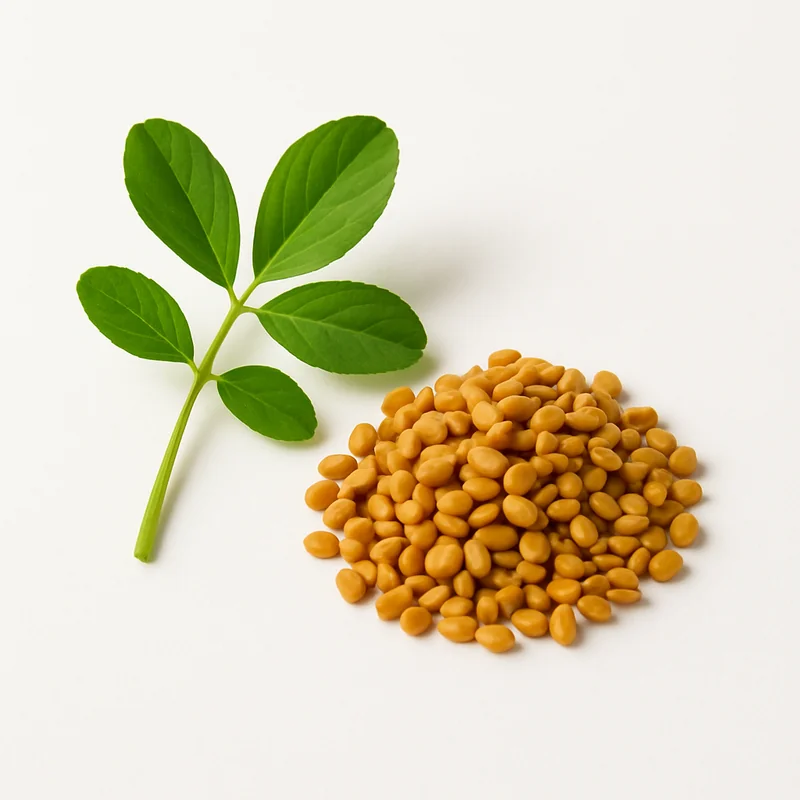
Fenugreek Seed
ScoreA+
Fenugreek seed is a maple-scented legume spice with the strongest clinical evidence of any culinary seed for lowering blood sugar and cholesterol, driven by soluble galactomannan fiber and the compounds trigonelline and 4-hydroxyisoleucine.
Why Fenugreek Seed scores 95
% Daily Value per a pinch (2 g)
Nutrition
per 100 g
Health benefits
Lowers fasting and post-meal blood glucose
strong evidenceSoluble galactomannan fiber slows carbohydrate absorption while 4-hydroxyisoleucine stimulates insulin secretion and trigonelline improves glucose handling; trials show reduced fasting glucose and HbA1c
Reduces total and LDL cholesterol
moderate evidenceViscous soluble fiber binds bile acids and the steroidal saponin diosgenin reduces cholesterol absorption, lowering serum lipids in multiple studies
Supports lactation (galactagogue)
emerging evidenceTraditional and small-trial evidence indicates fenugreek increases breast-milk production, attributed to phytoestrogenic and galactagogue compounds
Delivers exceptional iron, protein, and folate
strong evidence33.5mg iron, 23g protein, and 57mcg folate per 100g support oxygen transport, tissue maintenance, and cell division
Pairs well with
- ·Pair with vitamin C-rich vegetables or citrus because ascorbate sharply increases absorption of fenugreek's abundant non-heme iron
- ·Combine with cumin, coriander, and turmeric because they form the aromatic base of curry blends and balance fenugreek's bitterness
- ·Use with high-carbohydrate meals because its soluble fiber and insulinotropic compounds blunt the post-meal glucose rise
- ·Add to tomatoes and tamarind because acidity and sweetness counter the seed's natural bitterness
Practical tips
- ·Best timing: with meals
- ·Toast whole seeds only briefly; over-toasting turns fenugreek acrid rather than maple-sweet
- ·Soak or sprout the seeds to soften bitterness and improve digestibility
- ·Buy whole seeds; they keep for 3-4 years while ground fenugreek loses aroma and grows more bitter within months
- ·Expect a harmless maple smell in sweat or urine after eating large amounts, a documented and benign effect
- ·Store in an airtight container in a cool, dark pantry
Related foods
What is Fenugreek Seed actually covering?
See which nutrients your diet already delivers and which ones your supplements still need to — food and pills measured on the same scale.
Check my nutrients2 questions · free · no account needed to start
Also on iPhone — get the free app
Evidence-based supplement guides, no spam
We send a short digest when new guides drop — nothing else. No affiliate pushes, no sponsored content, unsubscribe anytime.