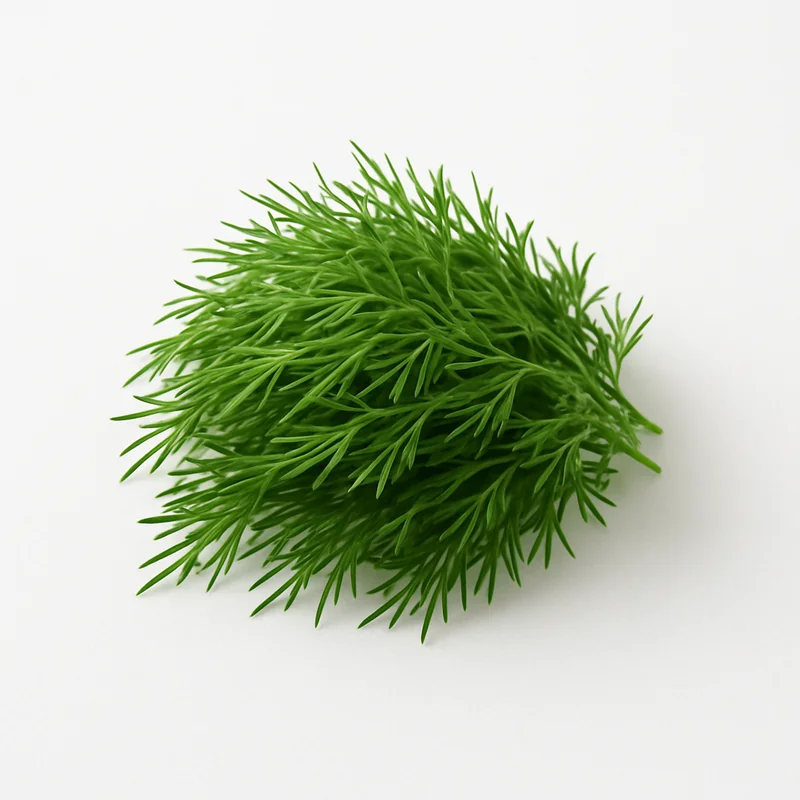
Dill Weed
ScoreA+
Dill weed is a fragrant herb rich in micronutrients, particularly iron, potassium, and vitamin C, with traditionally recognized digestive and anti-inflammatory properties.
Why Dill Weed scores 96
% Daily Value per a pinch (2 g)
Nutrition
per 100 g
Health benefits
Enhanced digestive health and reduced bloating
moderate evidenceVolatile oils (carvone and limonene) in dill stimulate digestive enzyme secretion and reduce intestinal gas formation, supporting optimal nutrient absorption and gut comfort
Improved bone health through mineral density
moderate evidenceHigh calcium (208mg/100g) and favorable calcium-to-phosphorus ratio support bone mineral metabolism; vitamin K (though not quantified in this profile) in fresh dill contributes to osteocalcin activation
Cardiovascular support via potassium
strong evidence738mg potassium per 100g helps regulate blood pressure through vasodilation and sodium-potassium pump function, reducing hypertension risk
Antioxidant and anti-inflammatory effects
emerging evidenceFlavonoids and volatile compounds reduce oxidative stress and inflammatory markers, supporting cellular longevity and reducing age-related disease risk
Iron bioavailability improvement
strong evidenceHigh vitamin C content (85mg/100g) enhances non-heme iron absorption (6.59mg/100g), particularly beneficial for plant-based diets
Pairs well with
- ·Pair with fatty fish (salmon, sardines) because dill's volatile oils enhance flavor while complementing omega-3s, and vitamin C boosts iron absorption from both sources
- ·Combine with leafy greens (spinach, kale) because dill's vitamin C increases non-heme iron bioavailability from greens, maximizing mineral intake
- ·Pair with yogurt or fermented dairy because dill's digestive compounds enhance probiotic efficacy and support gut microbiome diversity
- ·Combine with potassium-rich foods (sweet potato, avocado) because dill adds mineral density without sodium, creating synergistic cardiovascular benefits
Practical tips
- ·Best timing: Dill is best consumed fresh with meals to optimize digestive enzyme stimulation and mineral absorption. For digestive benefits, consuming with lunch or dinner is ideal. For iron absorption, pair with vitamin C-rich meals.
- ·Store fresh dill in a damp paper towel inside a sealed container in the refrigerator for up to 2 weeks; alternatively, freeze chopped dill in olive oil ice cube trays for year-round access
- ·Add fresh dill at the end of cooking to preserve volatile oils and vitamin C; heat degrades these heat-sensitive bioactive compounds
- ·Use 1-2 tablespoons of fresh dill as a sodium-free seasoning alternative to salt in salads, fish dishes, and soups to reduce daily sodium intake
- ·Drink dill seed tea (steep 1 teaspoon crushed seeds in 8oz hot water) before meals to activate digestive enzyme secretion and reduce post-meal bloating
- ·Select bright green, fragrant dill with no browning or wilting; paler color indicates reduced nutrient density and volatile oil content
Related foods
What is Dill Weed actually covering?
See which nutrients your diet already delivers and which ones your supplements still need to — food and pills measured on the same scale.
Check my nutrients2 questions · free · no account needed to start
Also on iPhone — get the free app
Evidence-based supplement guides, no spam
We send a short digest when new guides drop — nothing else. No affiliate pushes, no sponsored content, unsubscribe anytime.