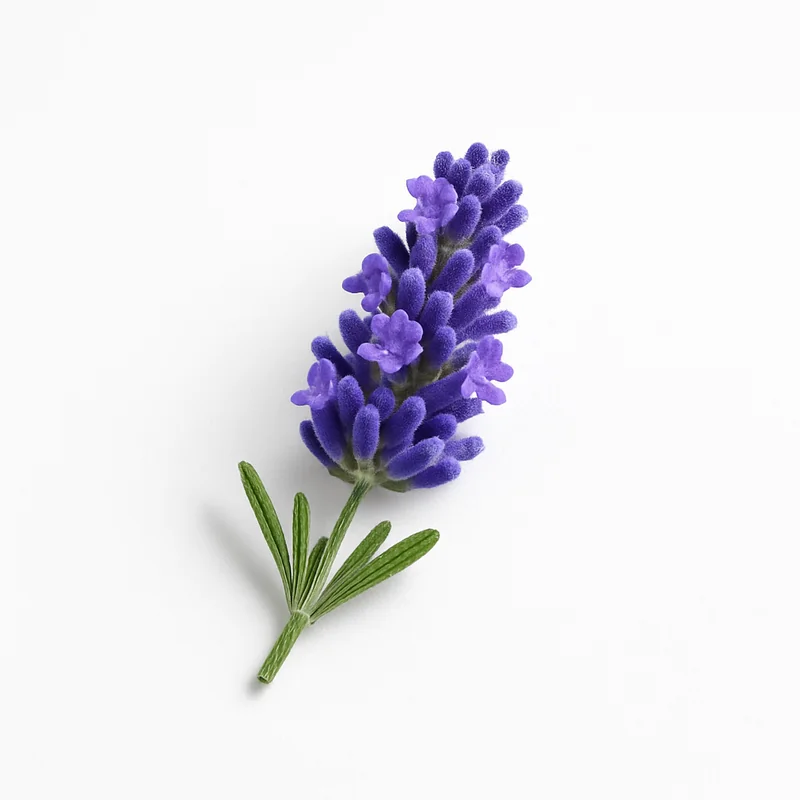
Culinary Lavender
ScoreA
Culinary lavender is an intensely aromatic flower used in tea and baking, rich in the relaxing terpene linalool and antioxidant polyphenols.
Why Culinary Lavender scores 86
% Daily Value per a pinch (2 g)
Nutrition
per 100 g
Health benefits
Promotes relaxation and reduces anxiety
moderate evidenceLinalool and linalyl acetate modulate GABAergic and glutamatergic neurotransmission and inhibit voltage-gated calcium channels, producing a calming, anxiolytic effect demonstrated for oral and inhaled lavender oil
Supports sleep onset and quality
moderate evidenceThe same terpenes lower autonomic arousal and sympathetic tone, easing the transition to sleep when taken as an evening infusion
Provides antioxidant protection
limited evidenceRosmarinic acid and related polyphenols scavenge free radicals and inhibit lipid peroxidation
Pairs well with
- ·Pair with honey and lemon because their sweetness and acidity balance lavender's perfumed intensity and prevent a soapy note
- ·Combine with chamomile in a tea blend because both contribute calming bioactives for an evening infusion
- ·Use with berries and vanilla because their fruity sweetness complements the floral terpenes in baking
Practical tips
- ·Best timing: evening
- ·Use only a pinch; food-grade English lavender turns soapy quickly when overdone
- ·Cover the cup while steeping to trap the volatile linalool that drives the calming effect
- ·Store buds airtight away from light and heat to preserve the aromatic oils
Related foods
What is Culinary Lavender actually covering?
See which nutrients your diet already delivers and which ones your supplements still need to — food and pills measured on the same scale.
Check my nutrients2 questions · free · no account needed to start
Also on iPhone — get the free app
Evidence-based supplement guides, no spam
We send a short digest when new guides drop — nothing else. No affiliate pushes, no sponsored content, unsubscribe anytime.