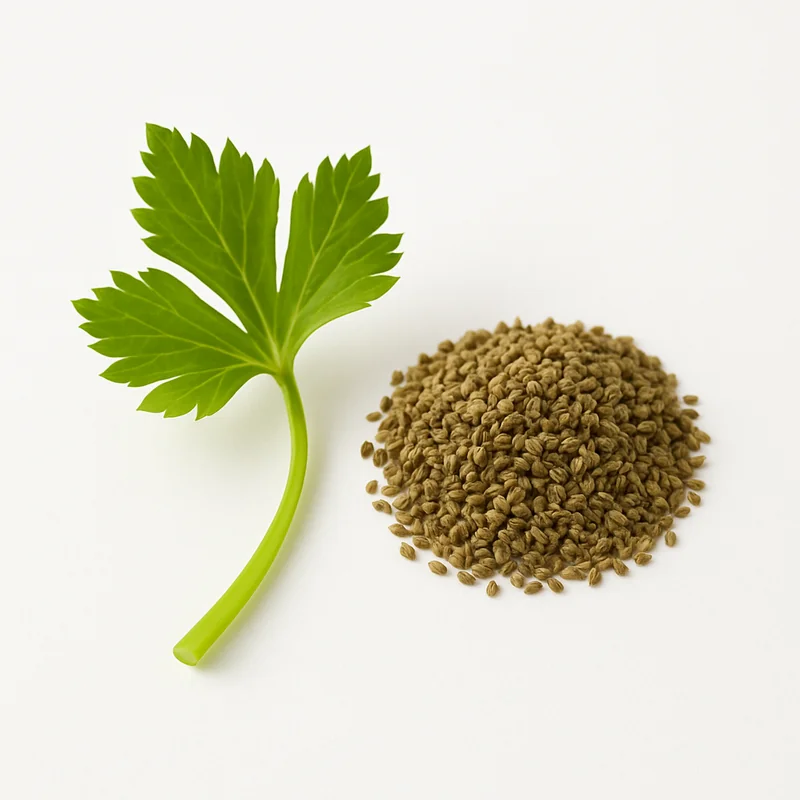
Celery Seed
ScoreA+
Celery seed is the tiny, intensely flavored fruit of Apium graveolens, an extraordinarily calcium- and iron-rich spice traditionally used for gout and hypertension via blood-pressure-lowering phthalides.
Why Celery Seed scores 97
% Daily Value per a pinch (2 g)
Nutrition
per 100 g
Health benefits
Supports healthy blood pressure
emerging evidencePhthalides, notably 3-n-butylphthalide, relax vascular smooth muscle, producing vasorelaxant and blood-pressure-lowering effects in animal and small human studies
Provides anti-inflammatory and antioxidant activity
moderate evidenceThe flavones apigenin and luteolin scavenge free radicals and inhibit inflammatory signaling, the basis for traditional use in gout and arthritis
Acts as a mild diuretic
emerging evidenceCelery seed compounds promote modest fluid excretion, underlying its folk use for water retention
Delivers exceptional calcium, iron, and manganese
strong evidenceAmong the most mineral-dense spices, supplying calcium (1767mg), iron (44.9mg), and manganese (7.6mg) per 100g for bone health and oxygen transport
Pairs well with
- ·Blend with salt to make celery salt for tomato-based drinks, hot dogs, and seafood boils
- ·Pair with vitamin C-rich tomato and citrus because ascorbate enhances absorption of celery seed's abundant non-heme iron
- ·Use in vinegar-based pickling brines and coleslaw because acidity carries and brightens its concentrated celery flavor
- ·Combine with cabbage and potato because the warm, savory seed deepens vegetable dishes when fresh celery is unavailable
Practical tips
- ·Best timing: Celery seed is a seasoning with no circadian dependency; its minerals and bioactives benefit any meal it flavors.
- ·Use celery seed sparingly; it is potent and turns bitter if overused
- ·Make fresh celery salt by grinding the seeds with coarse salt for a brighter flavor than store-bought
- ·Note that celery is a common allergen and the seed can be photosensitizing in very large amounts
- ·Buy whole seeds; they retain their potent oils for 3-4 years versus much less for ground celery seed
- ·Store in an airtight container away from heat, light, and moisture to prevent clumping
Related foods
What is Celery Seed actually covering?
See which nutrients your diet already delivers and which ones your supplements still need to — food and pills measured on the same scale.
Check my nutrients2 questions · free · no account needed to start
Also on iPhone — get the free app
Evidence-based supplement guides, no spam
We send a short digest when new guides drop — nothing else. No affiliate pushes, no sponsored content, unsubscribe anytime.