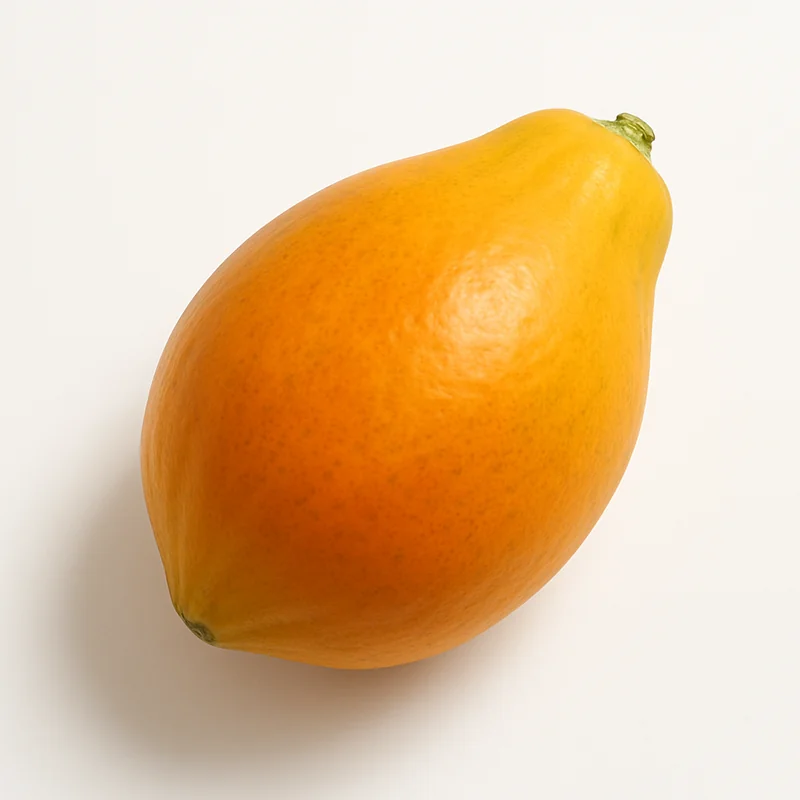
Papaya
ScoreA+
Papaya is a tropical fruit rich in vitamin C, potassium, and the digestive enzyme papain, making it valuable for immune support and gastrointestinal health.
Why Papaya scores 91
% Daily Value per 1 medium (140 g)
Nutrition
per 100 g
Health benefits
Enhanced digestive function and protein breakdown
moderate evidencePapain proteolytic enzyme cleaves peptide bonds, improving protein digestion and reducing bloating while increasing amino acid bioavailability
Improved immune function and antioxidant defense
strong evidenceHigh vitamin C content (61 mg/100g) supports neutrophil function, collagen synthesis, and acts as a direct free radical scavenger
Reduced systemic inflammation
moderate evidencePapain and chymopapain enzymes possess anti-inflammatory properties; carotenoids provide additional antioxidant protection against oxidative stress
Cardiovascular health maintenance
strong evidencePotassium (182 mg/100g) supports blood pressure regulation; vitamin C protects against LDL oxidation; fiber aids cholesterol metabolism
Enhanced gut barrier integrity
emerging evidencePapain reduces intestinal inflammation; improved protein digestion decreases putrefactive metabolites; prebiotic fiber supports beneficial microbiota
Pairs well with
- ·Pair with lime or lemon juice because citric acid enhances vitamin C absorption and papain enzyme activity while reducing oxidation of carotenoids
- ·Combine with leafy greens (spinach, kale) because papaya's vitamin C dramatically increases non-heme iron bioavailability from plant sources by 3-4 fold
- ·Eat with nuts (almonds, walnuts) because healthy fats enhance absorption of fat-soluble carotenoids while papain aids protein digestion of the nuts
- ·Mix with ginger because both contain proteolytic enzymes and anti-inflammatory compounds that synergistically reduce bloating and improve digestion
Practical tips
- ·Best timing: midday
- ·Select papayas with slight give when gently squeezed and a fragrant aroma; avoid hard or mushy fruit. Ripe papayas have higher enzyme activity and sweeter flavor
- ·Consume fresh papaya within 1-2 days of ripening, or refrigerate up to 5 days. Freeze cubed papaya for smoothies; freezing preserves papain activity
- ·Eat papaya seeds along with flesh—they contain additional proteolytic enzymes and may support digestive health; they have a peppery flavor
- ·Consume papaya between meals or 30+ minutes before protein-rich meals to maximize papain's digestive enzyme benefit without competition from stomach acid
- ·Choose ripe papayas over green for maximum enzyme activity and carotenoid content; the fruit's color intensity indicates higher provitamin A concentration
Related foods


What is Papaya actually covering?
See which nutrients your diet already delivers and which ones your supplements still need to — food and pills measured on the same scale.
Check my nutrients2 questions · free · no account needed to start
Also on iPhone — get the free app
Evidence-based supplement guides, no spam
We send a short digest when new guides drop — nothing else. No affiliate pushes, no sponsored content, unsubscribe anytime.