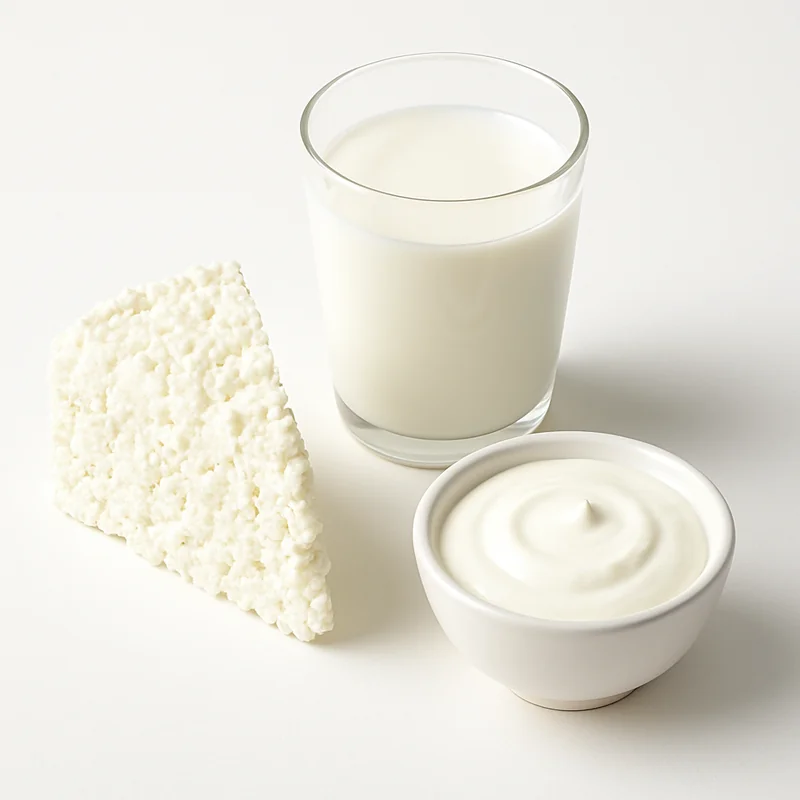
Cottage Cheese
ScoreB
Cottage cheese is a fresh dairy product made from milk curds, prized for its high protein content and low lactose levels. It delivers substantial casein protein, calcium, and B vitamins essential for muscle maintenance and metabolic health.
Why Cottage Cheese scores 63
% Daily Value per 1 oz (30 g)
Nutrition
per 100 g
Health benefits
Supports muscle protein synthesis and lean mass preservation
strong evidenceCottage cheese provides casein (slow-release) and whey proteins with complete amino acid profiles, including high leucine content that directly triggers mTOR signaling pathway for muscle protein building
Promotes sustained satiety and supports weight management
strong evidenceHigh protein content increases thermic effect of food (20-30% of calories burned during digestion) and activates satiety hormones GLP-1 and CCK, reducing subsequent calorie intake
Supports bone health through bioavailable calcium and phosphorus
moderate evidenceProvides readily absorbed calcium and phosphorus in optimal ratio (approximately 1.2:1), plus casein phosphopeptides that enhance mineral absorption in the intestine
Improves metabolic flexibility and blood sugar control
moderate evidenceHigh protein-to-carbohydrate ratio reduces postprandial glucose spikes and improves insulin sensitivity through amino acid-mediated effects on glucose metabolism
Supports gut health through lactose-reduced fermented options
emerging evidenceSome fermented cottage cheese varieties contain beneficial lactobacilli strains that support microbiome diversity and intestinal barrier function
Pairs well with
- ·Pair with berries (blueberries, raspberries) because polyphenols enhance protein absorption efficiency and provide synergistic anti-inflammatory benefits for muscle recovery
- ·Combine with ground flaxseeds or chia seeds because their ALA omega-3s complement protein for improved cardiovascular function and joint health
- ·Mix with raw almonds or walnuts because combined protein and fat promote sustained satiety and enhance fat-soluble vitamin absorption
- ·Pair with tomatoes and olive oil because lycopene absorption increases with dietary fat from cottage cheese, supporting prostate and cardiovascular health
- ·Serve with leafy greens (spinach, kale) because cottage cheese's phosphorus enhances calcium bioavailability while greens add magnesium for bone mineral density
Practical tips
- ·Best timing: post-workout
- ·Choose full-fat or 2% cottage cheese over non-fat versions; fat-soluble vitamins and satiety hormones respond better to dietary fat, improving nutrient absorption
- ·Check ingredient labels for added sodium and gums; select plain varieties with minimal additives, ideally containing only milk, cultures, and salt
- ·Consume within 7-10 days of purchase; cottage cheese has higher water content than aged cheeses, making it more perishable—store at coldest part of refrigerator (32-35°F)
- ·If lactose-sensitive, purchase varieties cultured for 12+ hours, which reduces lactose by 70-90% compared to standard products
- ·Add cottage cheese to smoothie bowls, savory grain bowls, or use as protein-rich Greek yogurt substitute; heating above 160°F damages casein structure, so keep warm applications brief
Related foods
What is Cottage Cheese actually covering?
See which nutrients your diet already delivers and which ones your supplements still need to — food and pills measured on the same scale.
Check my nutrients2 questions · free · no account needed to start
Also on iPhone — get the free app
Evidence-based supplement guides, no spam
We send a short digest when new guides drop — nothing else. No affiliate pushes, no sponsored content, unsubscribe anytime.