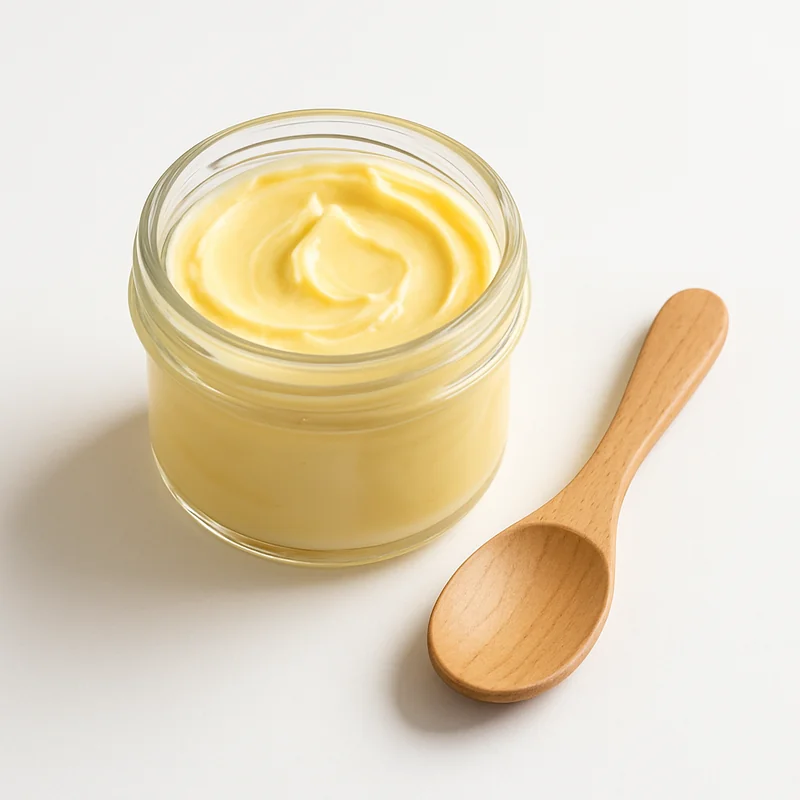
Butter
ScoreF
Butter is a concentrated source of milk fat containing fat-soluble vitamins (A, D, E, K2) and butyric acid, a short-chain fatty acid with emerging metabolic significance. It provides ~717 kcal per 100g, primarily from saturated and monounsaturated fats.
Why Butter scores 13
% Daily Value per 1 tbsp (14 g)
Nutrition
per 100 g
Health benefits
Supports gut barrier integrity and anti-inflammatory signaling
moderate evidenceButyric acid, a short-chain fatty acid composing ~4% of butter, serves as the primary fuel for colonocytes and stimulates production of tight junction proteins, strengthening intestinal barrier function and reducing systemic inflammation
Enhances fat-soluble vitamin absorption
strong evidenceButter's fat matrix facilitates absorption of vitamins A, D, E, and K2 from other foods; fat-soluble vitamins require dietary fat for intestinal uptake and transport
Supports bone and vascular health via vitamin K2
moderate evidenceGrass-fed butter is rich in menaquinone (K2), which activates osteocalcin and matrix Gla protein, directing calcium to bones and arteries rather than soft tissues
Promotes satiety and supports metabolic flexibility
emerging evidenceButter's high fat content activates CCK signaling and provides sustained energy; conjugated linoleic acid may enhance fat oxidation and preserve lean mass
Provides choline for cognitive and liver health
moderate evidenceButter contains choline, essential for acetylcholine synthesis, myelin formation, and phosphatidylcholine-dependent hepatic lipid transport
Pairs well with
- ·Pair with leafy greens (spinach, kale) because the fat in butter enhances absorption of fat-soluble vitamins A, D, E, and K present in vegetables
- ·Combine with orange-pigmented vegetables (carrots, sweet potatoes) to maximize beta-carotene bioavailability, as carotenoids require dietary fat for efficient intestinal absorption and conversion
- ·Use with whole grains or legumes to promote satiety, slow carbohydrate absorption, and provide complementary micronutrients (fiber, polyphenols) that reduce postprandial inflammation
- ·Pair with mushrooms (especially maitake or shiitake) to enhance vitamin D synergy, as butter's fat content aids vitamin D absorption while mushrooms provide additional bioactive polysaccharides
Practical tips
- ·Best timing: midday
- ·Choose grass-fed butter over conventional butter; grass-fed varieties contain 3-5 times more conjugated linoleic acid (CLA) and significantly higher K2 levels due to the alpha-linolenic acid in pasture grass
- ·Store butter in a cool, dark place or refrigerate; oxidation of unsaturated fatty acids is limited, but light exposure can degrade fat-soluble vitamins, particularly vitamin A and D
- ·Use for low-to-medium heat cooking only; butter's smoke point (~350°F/177°C) is lower than ghee or refined oils, and high heat can damage heat-sensitive micronutrients
- ·Consume butter with meals rather than alone on an empty stomach to maximize satiety signaling, improve nutrient absorption of co-ingested foods, and maintain stable blood glucose
- ·Target 10-14g daily (approximately 1 tablespoon) as part of a balanced diet; this quantity provides micronutrient benefits while maintaining appropriate caloric and saturated fat intake
Related foods
What is Butter actually covering?
See which nutrients your diet already delivers and which ones your supplements still need to — food and pills measured on the same scale.
Check my nutrients2 questions · free · no account needed to start
Also on iPhone — get the free app
Evidence-based supplement guides, no spam
We send a short digest when new guides drop — nothing else. No affiliate pushes, no sponsored content, unsubscribe anytime.